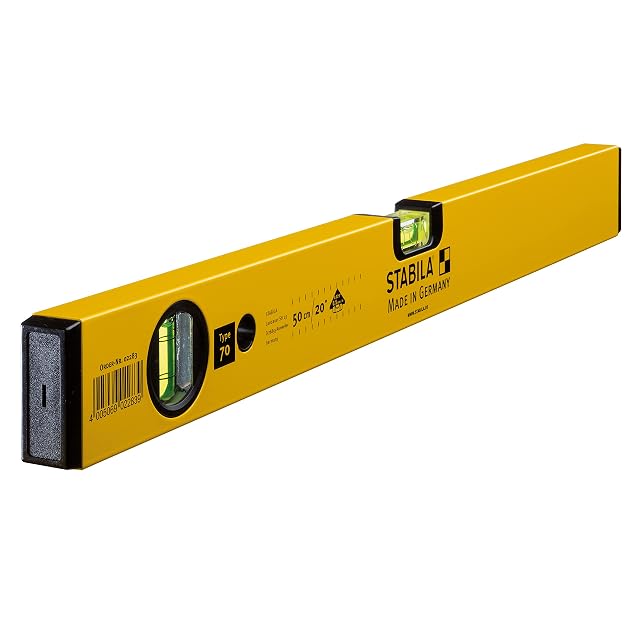
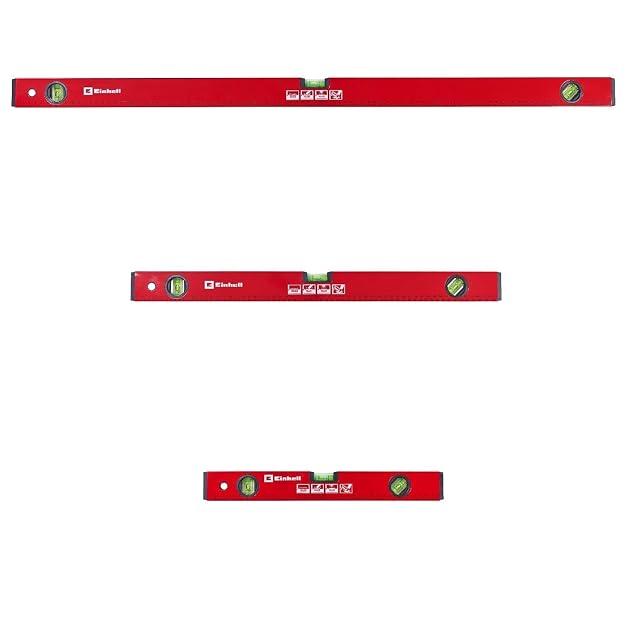
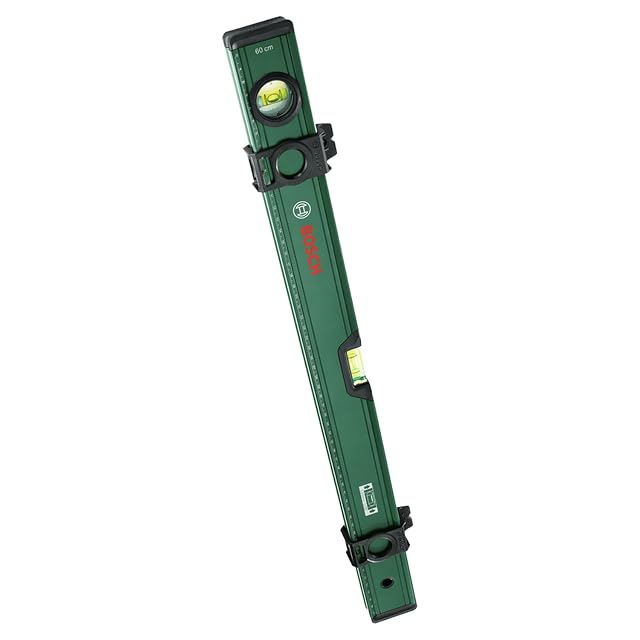
The check
- Put the level on a flat surface — a worktop, a windowsill, anything reasonably level. It does not have to be truly level.
- Read the bubble and note exactly where it sits between the lines.
- Lift the level, turn it end for end, and put it back in the same place, on the same face.
- Read again.
The bubble should sit identically. If it has moved, the level is wrong, and the size of the error is half the apparent difference.
Why half
Turning the level end for end doubles the error: on the first reading the tool’s error adds to the surface’s slope, on the second it subtracts. The gap between the two readings is therefore twice the tool’s own error.
Why this is the only check available
Every other test of a level requires a reference — a known-flat, known-level surface, which almost nobody has. The turn-over check needs no reference at all, because the level is being compared to itself.
That is why the turn-over accuracy figure matters. Across the levels we compare, only the Einhell set publishes one (± 0.75 mm (0.03 in)): it is the maker stating in advance what this check will show.
The same idea, on other tools
- A caliper: close the jaws fully; the display should read zero. If it does not, zero it — that is the equivalent check, and it takes a second.
- A micrometer: close it on its setting standard, if one came in the box. A micrometer with no standard is a micrometer you cannot check.
- A laser: set it against a wall, mark the line, rotate the laser 180° in place, and mark again. The two marks should coincide.
What none of this is
Calibration. Calibration is a formal procedure against a traceable reference, performed by someone equipped to do it, and it produces a certificate. This is a self-check, and its only claim is that a tool which fails it is definitely wrong.
What gets asked here
How often should I check?
After any drop, and once a season otherwise. The failure is gradual and silent, so there is no symptom to prompt you.
What if it fails the check?
Half the apparent difference is the tool's error. Some levels have adjustable vials; most do not, and a level that fails by a visible amount should be retired from work where it matters.
Does this work on a digital level?
Yes, and it is more important there — a digital level with a relative-zero function can hide the error entirely until you take an absolute reading.
Last reviewed 31 August 2026