Skip to content

The best insulation testers for 2026

An insulation tester applies a known direct voltage — commonly 250 V, 500 V or 1000 V — and measures the resistance that flows across it, in megohms. The selectable test voltage is the specification that decides whether the instrument suits the circuits you work on, because applying too high a voltage to sensitive equipment damages it. Most also do low-resistance continuity. We compare available test voltages, resistance range, continuity testing, the stated measurement category, and automatic discharge after a test.

The models we recommend

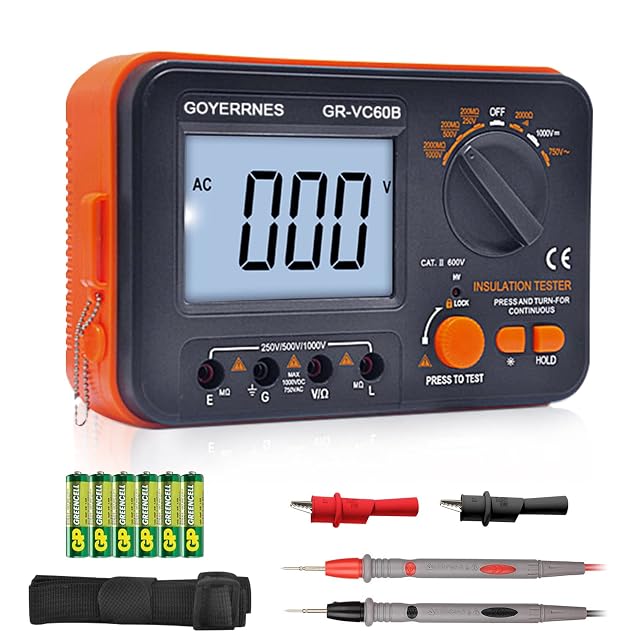
  1. GOYERRNES Insulation resistance tester

    Insulation resistance · multiple ranges · manual selection · backlit LCD

    The entry point into insulation testing: a megohmmeter with several selectable ranges, manual measurement modes and a large backlit display.

    Best for: Learning what an insulation test looks like, on equipment that is disconnected and safe to experiment on.
    7.5/10

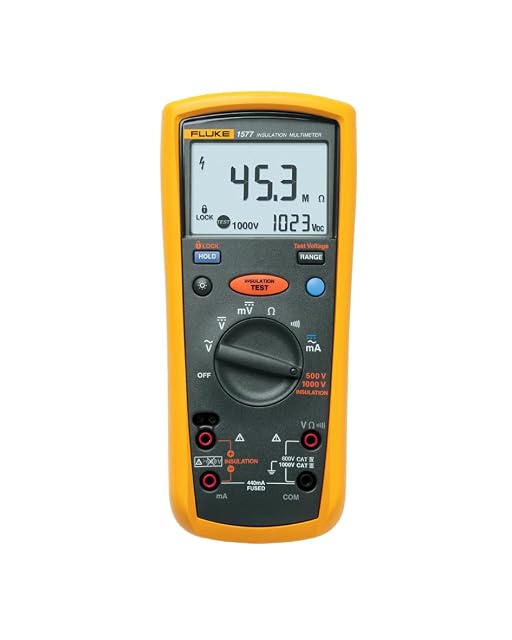
  2. Fluke Insulation multimeter, 500 and 1000 V

    500 and 1000 V test · 600 MΩ · combined insulation tester and multimeter

    A combined insulation tester and digital multimeter with 500 V and 1000 V test voltages and a 600 MΩ range, at the top of this hub by a factor of four.

    Best for: Carrying one instrument instead of two, in a trade where that trade-off is worth the price.

    8.1/10

    ≈ $799

Need by need, within insulation testers

Testing at the required test voltage

The insulation test voltage depends on the nominal voltage of the circuit being checked. An instrument that does not offer it does not allow the expected test.

Fluke 1577

Reading high enough in resistance

An instrument that tops out at twenty megohms cannot tell good insulation from excellent. The stated resistance range decides what the measurement allows you to conclude.

Fluke 1577

Discharging the circuit after the test

An insulation test leaves a charge on a long cable, and discharging is a safety step. A stated automatic discharge function is what protects the next person to touch it.

Fluke 1577

Who each family suits, across insulation testers

Installation testing
The insulation measurement is a regulatory check as part of installation verification. It is carried out dead and locked off.
Finding which circuit leaks to earth
Degraded insulation explains repeated RCD tripping with no apparent cause. A diagnosis nothing else provides.
Non-professional use
These instruments apply a high test voltage. Their use assumes knowing how to lock off and knowing the expected values.

What you gain and what you give up, on insulation testers

Test voltage against connected equipment
The applied voltage can destroy electronics left connected to the circuit. Disconnecting the loads first is imperative.
Combined multimeter against dedicated instrument
Multimeters with an insulation function get you out of trouble; dedicated instruments offer the standard voltages and better measurement stability.
Simplicity against interpretation
The instrument shows a value. Knowing whether it is acceptable means knowing the threshold applicable to the circuit tested.

Frequent questions on insulation testers

Does the power have to be off?

Imperatively, and the installation locked off. The insulation measurement is made dead, never otherwise.

Do the appliances have to be disconnected?

Yes: the test voltage can destroy electronics left connected. The most expensive mistake of this test.

Which test voltage should be applied?

It depends on the circuit's nominal voltage and is set out in the applicable standards. Not a setting to guess at.

What value is acceptable?

The thresholds are set by the standards in force according to the type of circuit. A raw value cannot be judged without that reference.

Can a live installation be tested?

No. The instrument applies a high DC voltage, incompatible with an installation under voltage.

Is a multimeter with an insulation function enough?

It gets you out of trouble. Dedicated instruments offer the standard voltages and a measurement more stable over time.

What do I do about low insulation?

It signals a degradation that is a matter for a professional. Measuring it does not say where the fault is or how to treat it.

Can a live installation be tested?

No: the test applies a high direct voltage and assumes a circuit that is dead and disconnected. Serious instruments refuse to start if they detect voltage, and that is a function worth looking for.

What stays with you, on insulation testers

The measurement is made dead and locked off, with appliances disconnected: the test voltage destroys electronics left connected. The voltage applied and the acceptable threshold come from the standards, not from judgment — and low insulation is a matter for a professional.

Summed up: insulation testers

    The full table of insulation testers

    A column is raised only if four instruments in five publish the value. Below that, it would be measuring the silence of the manuals.

    ModelPriceInsulation test
    Fluke 1577$799500 and 1000 V test · combined insulation tester and multimeter
    GOYERRNES GR-VC60B+—Insulation resistance
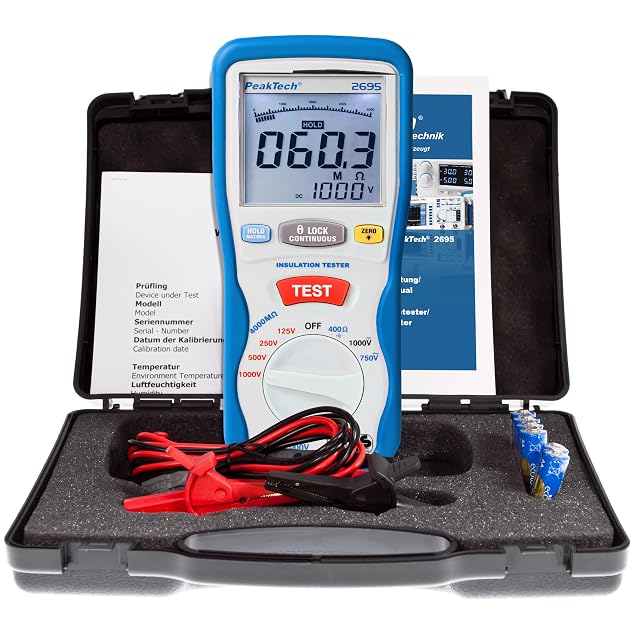
    PeakTech P 2695—125 / 250 / 500 / 1000 V test
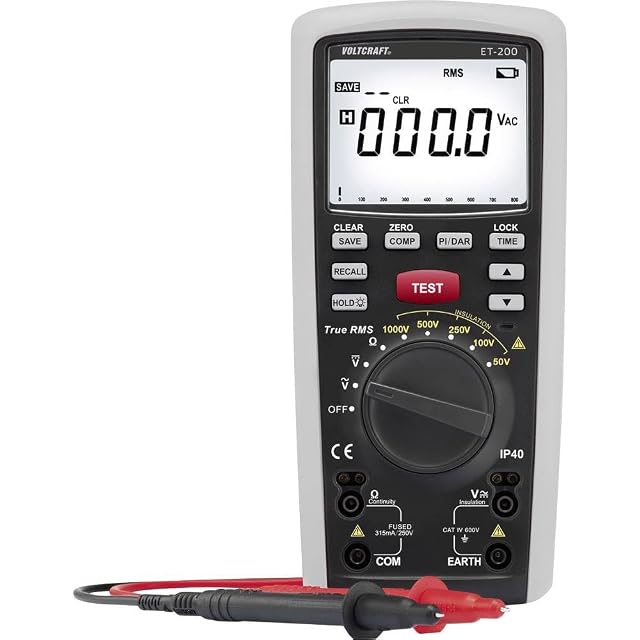
    Voltcraft ET-200—50 / 100 / 250 / 500 / 1000 V · insulation to 20 GΩ

    Where the figures are read

    Specifications: manufacturer sheets for measuring instruments and the matching Amazon product pages. Prices and availability: Keepa. Every figure in this table names its source.

    Most recent revision in this category: August 31, 2026.

    The method applied to insulation testers

    Prices quoted in these summaries are dated readings. The live price is shown next to each product.