A glass fuse in a meter that specifies ceramic is not a substitute
The best multimeter fuses for 2026
The fuse in a multimeter's current input is a safety component, and the manufacturer specifies four things about it: dimensions, current rating, voltage rating and breaking characteristic. Ceramic sand-filled bodies are specified where the meter must interrupt a high-energy fault; a glass fuse of the same current rating does not do the same job and can fail violently. We compare body type, dimensions, current and voltage ratings, and fast or time-delay behavior.
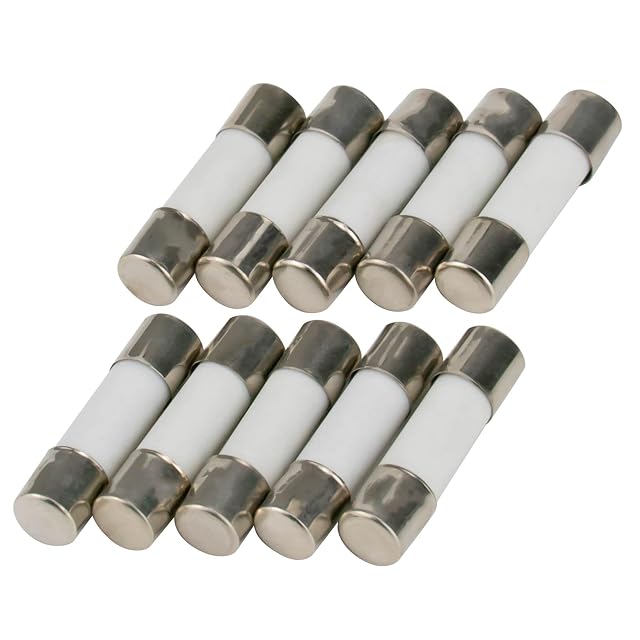
Ten ceramic fuses with all four specifications stated — size, current, voltage and characteristic — which is the only way a replacement fuse can be chosen.
Amazon reference
B0CVXQGP7P (identical on 5 markets)
EAN
4053171962161
Stated dimension or range
5 × 20 mm (0.20 × 0.79 in) ceramic
Fuse rating
10 A / 250 V · time-delay (T)
All four figures published: 5 × 20 mm (0.20 × 0.79 in), 10 A, 250 V, time-delay
Ceramic bodies, which is what a meter's current input normally specifies
A 250 V rating is below what many meters specify for the current input
Best for: The meter whose manual specifies exactly 5 × 20 mm (0.20 × 0.79 in), 10 A, 250 V, time-delay — and no other.
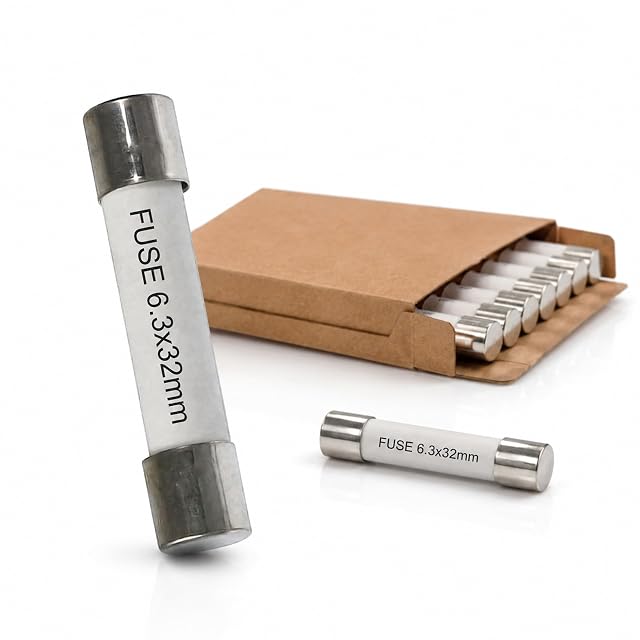
The instrument-grade format: 6.3 × 32 mm (0.25 × 1.26 in) at a rated 690 V, super fast-acting, which is what a properly specified meter current input takes.
Amazon reference
B07SQQXXP3 (identical on 5 markets)
EAN
4250569402852
Stated dimension or range
6.3 × 32 mm (0.25 × 1.26 in)
Fuse rating
500 mA · 690 V rated · super fast-acting (FF)
A 690 V rating, far above the 250 V of the general-purpose fuses here
The 6.3 × 32 mm (0.25 × 1.26 in) format used by instrument current inputs
One value only — 500 mA, which fits the low current range and not the 10 A input
Best for: The meter whose manual specifies exactly this — and it should be checked, not assumed.
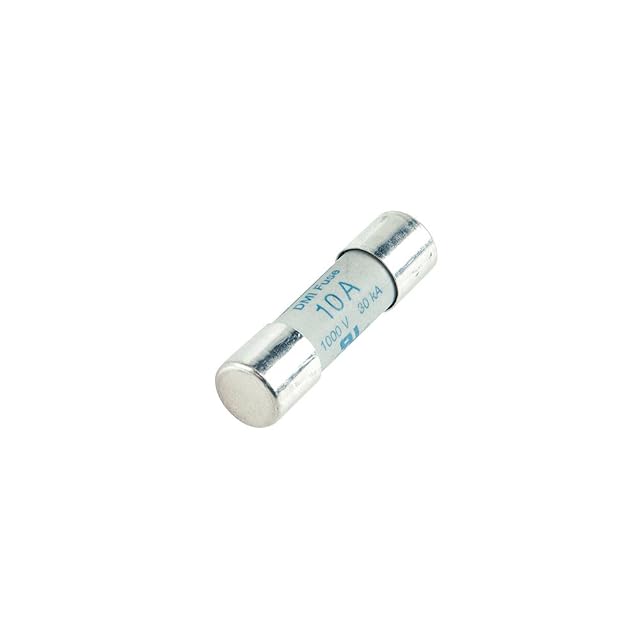
The only fuse here that states dimensions, current, voltage and body material — and the most expensive per piece by a wide margin.
Body type
FAST-ACTING CERAMIC, stated in so many words. This shelf's introduction says ceramic sand-filled bodies are specified where the meter must interrupt a high-energy fault and that a glass fuse of the same current rating does not do the same job. Of the three American fuses on this shelf, this is the ONLY one that puts its body material in writing
Stated dimension or range
10 × 38 mm (0.39 × 1.50 in), stated in the product title. That is the high-energy instrument format — markedly larger than the 5 × 20 mm (0.20 × 0.79 in) and 6.3 × 32 mm (0.25 × 1.26 in) bodies of the three fuses already published here
Current rating
10 A, stated. The two other American fuses on this shelf are both 11 A, so this is the only 10 A part of the three — and this shelf's introduction is explicit that you replace with the exact part the manual specifies, not with the fuse that fits
Voltage rating
1000 V, stated. No fuse previously published on this shelf is rated above 690 V. A 1000 V rating is what a CAT III or CAT IV current input needs, and it is the figure that most often differs between the right fuse and the one that fits the holder
Breaking characteristic
Fast-acting, stated. Klein adds that it "reduces the risk of internal arc flashes during operation" — which is the whole purpose this shelf's introduction describes: a fuse in a current input is a safety component before it is a consumable
Supplied
ONE fuse, at $15.99. That is the most expensive piece on this shelf by a long way: the YUNFOOK two-pack works out at $5.85 each and the Fluke five-pack at $8.48 each. Klein states compatibility with its MM600, MM700 and MM720 meters, and notes Cat. No. 69035 as a companion part
Also stated
Klein also claims "long-lasting performance" and "reliable and safe", which say nothing measurable. Two of the seven bullets on this listing are of that kind — and on a safety component, the four numbers matter and the adjectives do not
Amazon reference
B01JBMZ3B8
EAN
0092644690341
Says it is ceramic, which the other two never do
All four of the hub's numbers published
Fifteen ninety-nine for a single fuse
Best for: A Klein MM600, MM700 or MM720 whose current input has blown, where the manual names this part number
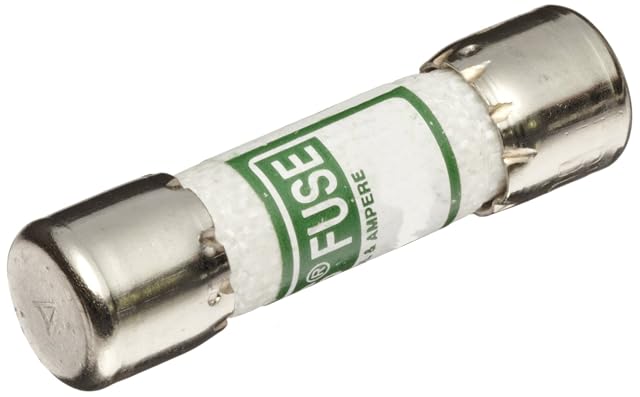
The Fluke part, five to a pack — and the only fuse on this shelf whose own page never states its size.
Current rating
11 A nominal, stated. This shelf's introduction asks for the current rating first among the electrical figures, and this is one of two things the page is clear about. It matches the YUNFOOK and differs from the Klein's 10 A, which is exactly the kind of difference this shelf's buying tip warns not to paper over
Voltage rating
1000 V, stated as "maximum voltage to ground: 1000V". That wording is more precise than the bare figure the other two give, and it is the right way to state it: what a fuse in a current input has to withstand is the potential between the input and earth
Breaking characteristic
Fast-acting, stated in the title. No breaking capacity in kiloamps is published, and neither of the other two American fuses on this shelf publishes one either
Stated dimension or range
NOT PUBLISHED. This shelf's introduction names dimensions as the FIRST of the four things a manufacturer specifies about this component, and the only dimensions on this page are the BLISTER's — 19.05 × 13.716 × 0.508 cm (7.5 × 5.4 × 0.2 in). The Klein and the YUNFOOK both state 10 × 38 mm (0.39 × 1.50 in); this page leaves a buyer to work it out from the part number
Body type
NOT PUBLISHED. Nothing on the page says ceramic or glass. The shelf's tag line is that a glass fuse in a meter specifying ceramic is not a substitute, and this is a 1000 V part — the energy level at which the distinction stops being academic
Supplied
FIVE fuses, $42.42, so $8.48 each. That sits between the YUNFOOK at $5.85 and the Klein at $15.99. A five-pack is the right quantity for a bench that blows them: the fuse in a current input is the component that goes when somebody probes a live circuit in the 10 A socket
Also stated
Country of origin: United States. The four bullets on this listing are generic catalog fields — "Product Type: Precision Measuring", "Package Dimensions", "Country Of Origin", "Package Quantity: 1" — rather than anything about the fuse. The whole specification is in the title and a two-line description
Amazon reference
B00937V94W
EAN
0009596904600
Eight forty-eight a fuse, five in the pack
The voltage stated properly, as potential to ground
No dimensions on the page — the hub asks for them first
Best for: A workshop running Fluke meters, where the part number in the manual is the specification and spares are kept by the handful
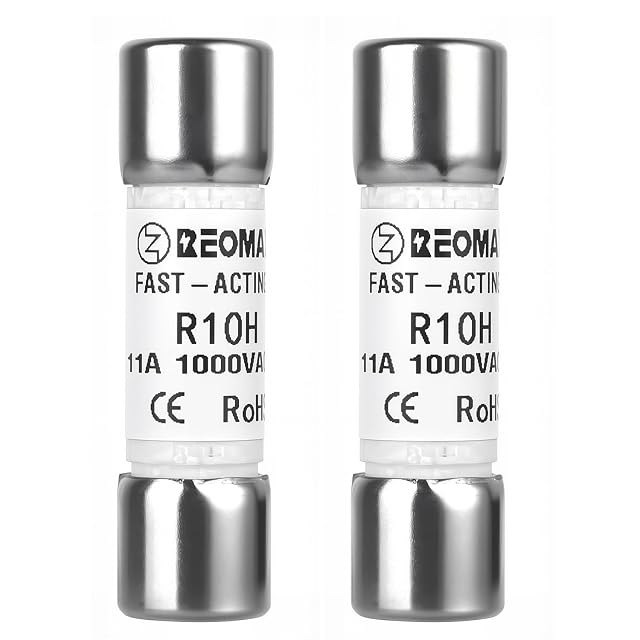
The cheapest 1000 V fuse per piece on this shelf, and the only one that names the part number it replaces.
Stated dimension or range
10 mm (0.39 in) × 38 mm (1.50 in), stated, and then repeated in inches as 0.41" × 1.50". That is the high-energy instrument format, the same as the Klein on this shelf — and more than the Fluke page gives, which publishes no fuse dimensions at all
Current rating
11 A, stated, matching the Fluke and differing from the Klein's 10 A. The listing adds a sentence the other two do not: "Always verify these specifications match your meter's original fuse before installation. Using an incorrect fuse can be a serious safety hazard" — which is this shelf's buying tip, written by the seller
Voltage rating
1000 V AC and DC, stated. Both polarities named, which the other two leave implicit. No fuse previously published on this shelf is rated above 690 V
Breaking characteristic
Fast-acting, stated, with the reason given: "rapid protection for your meter's sensitive internal circuitry (and for you) in case of accidental overload". No breaking capacity in kiloamps is published
Body type
NOT PUBLISHED. Five long bullets and a page of prose, and nowhere does it say ceramic or glass. The shelf's tag line is that a glass fuse in a meter specifying ceramic is not a substitute, and this is a 1000 V part — which is precisely where the distinction bites
Supplied
TWO fuses, $11.69, so $5.85 each — the cheapest 1000 V piece on this shelf. The Fluke five-pack is $8.48 each and the single Klein is $15.99. For a drawer that wants one spare rather than four, a pair is the sensible quantity
Also stated
A direct replacement for multimeter fuse part number 803293, and stated to suit meters from Fluke, Amprobe, BK Precision and Klein Tools that specify an 11 A / 1000 V fuse, with "check your meter's manual to confirm". It is the only fuse on this shelf that names the part number it stands in for, and it names BRANDS rather than models
Amazon reference
B0G8WXL5S7
EAN
0716841567298
Five eighty-five a fuse, the cheapest 1000 V part here
Dimensions in millimeters and in inches
No body material: ceramic or glass is never said
Best for: Keeping spares for an 11 A / 1000 V current input, where the manual gives a part number rather than a brand
A fuse of the same rating but a lower breaking capacity no longer protects the meter or the operator. The stated breaking capacity counts as much as the amperage, and is rarely read.
Measuring a voltage with the meter set to current blows the fuse. That is exactly what it exists for.
Keeping a spare fuse in the case
A spare fuse in the case avoids putting the instrument out of service at the wrong moment.
A twenty-year-old multimeter still in use
The availability of a fuse of the right rating and the right breaking capacity decides whether the instrument survives.
What you gain and what you give up, on multimeter fuses
Exact rating against availability
A fuse of an approximate rating is tempting and removes the protection provided. It is the one case in this range where a substitute is genuinely dangerous.
Breaking capacity against price
Multimeter fuses have a high breaking capacity, which explains their price. An ordinary fuse of the same rating does not do the same job.
Fast against time-delay
The fuse type is part of the specification. Changing it alters the instrument's protective behavior.
Frequent questions on multimeter fuses
Can I fit a fuse of a higher rating?
Never. The fuse is sized to break before the instrument becomes dangerous. A higher rating removes that protection.
Will an ordinary fuse of the same rating do?
No: multimeter fuses have a high breaking capacity, designed to interrupt a short circuit on a powerful source. An ordinary fuse can explode.
How do I know the fuse has blown?
The instrument no longer measures any current while the other functions work. A continuity test on the removed fuse confirms it.
Why did my fuse blow?
Almost always a voltage measurement taken with the meter set to current. It is the most frequent mistake and the fuse did its job.
Where do you read a multimeter fuse's rating?
On the fuse itself and in the instrument's manual. Rating, voltage, type and breaking capacity all have to match.
Do I have to disconnect before opening the instrument?
Leads removed and instrument switched off, every time. Opening a connected instrument is a direct risk.
Should I keep spares?
A set in the case avoids putting the instrument out of service. It is an inexpensive part and sometimes hard to find quickly.
Why is a meter fuse so expensive?
It is filled with quartz sand and breaks a short circuit of several thousand amps without bursting. A few-cent radio fuse does none of that.
What stays with you, on multimeter fuses
A multimeter fuse is a safety component, not an interchangeable consumable: rating, voltage, type and breaking capacity all have to match. An ordinary fuse of the same rating can explode instead of breaking.
Summed up: multimeter fuses
Current rating: 10 to 11 A, on 3 of the 6 models.
The full table of multimeter fuses
A column is raised only if four instruments in five publish the value. Below that, it would be measuring the silence of the manuals.
10 mm (0.39 in) × 38 mm (1.50 in), stated, and then repeated in inches as 0.41" × 1.50". That is the high-energy instrument format, the same as the Klein on this shelf — and more than the Fluke page gives, which publishes no fuse dimensions at all
10 × 38 mm (0.39 × 1.50 in), stated in the product title. That is the high-energy instrument format — markedly larger than the 5 × 20 mm (0.20 × 0.79 in) and 6.3 × 32 mm (0.25 × 1.26 in) bodies of the three fuses already published here
NOT PUBLISHED. This shelf's introduction names dimensions as the FIRST of the four things a manufacturer specifies about this component, and the only dimensions on this page are the BLISTER's — 19.05 × 13.716 × 0.508 cm (7.5 × 5.4 × 0.2 in). The Klein and the YUNFOOK both state 10 × 38 mm (0.39 × 1.50 in); this page leaves a buyer to work it out from the part number
Specifications: manufacturer sheets for measuring instruments and the matching Amazon product pages. Prices and availability: Keepa. Every figure in this table names its source.
Most recent revision in this category: October 8, 2026.