Skip to content

The best micrometers for 2026

A micrometer measures a narrow band — 0–25 mm (0 to 0.98 in), 25–50 mm (0.98 to 1.97 in), 50–75 mm (1.97 to 2.95 in) — so the first decision is which range you need, and whether a set is better value than one tool. Stated accuracy is typically an order of magnitude finer than a caliper's, which is the reason to own one. The ratchet or friction thimble is not a convenience: it stops the reading depending on how hard the operator squeezes, which is what makes two measurements of the same part agree. We compare range, stated accuracy and resolution, thimble type, carbide-tipped anvils, and digital or vernier reading.

The models we recommend

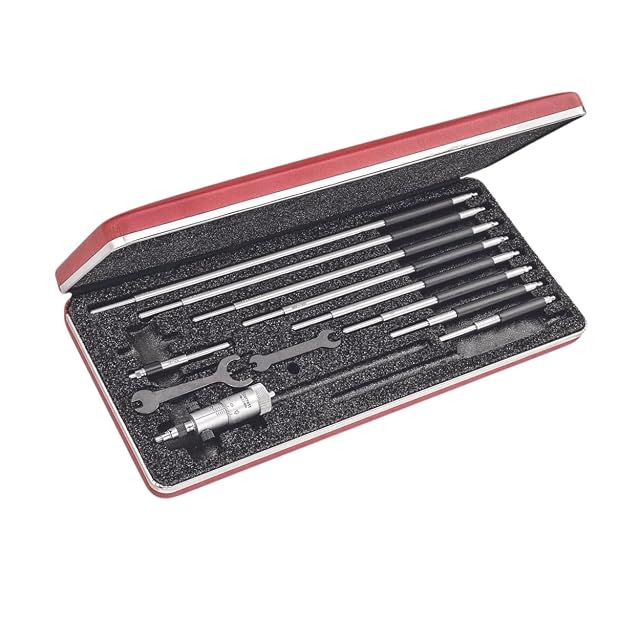
  1. Starrett Inside micrometer set, 50–300 mm (1.97 to 11.8 in), solid rod

    An INSIDE micrometer — it measures bores, not outside dimensions · 50 to 300 mm (1.97 to 11.8 in) from one head and a set of rods, a 250 mm (9.84 in) span assembled with spacing collars · graduated at 0.01 mm · INSULATED rods, each MARKED WITH ITS LENGTH, so the set checks itself · hardened and RADIUS-GROUND anvils · vinyl and steel case · NO accuracy figure and NO standard named

    The only micrometer the American relevé returned, and the only instrument on this shelf that measures a bore rather than a part.

    Best for: Bores, rings and parallel internal faces from 50 to 300 mm (1.97 to 11.8 in), in a shop that already owns outside micrometers

    ≈ $520

Need by need, within micrometers

Measuring larger parts

A micrometer covers only a narrow range, often twenty-five millimeters. You need one per range, which makes the capacity decisive.

Starrett 124MBZ

Reading finer

The resolution decides the smallest difference you can read. That is what separates a micrometer from a caliper.

Starrett 124MBZ

Checking itself against its own standard

A micrometer is checked on a gauge block before each run, otherwise the reading commits to nothing. A stated setting standard decides whether the instrument can be used on its own.

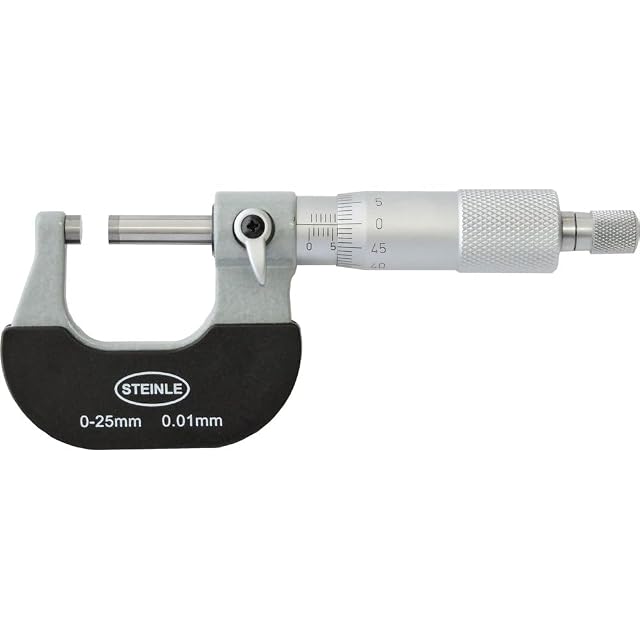
STEINLE 21300025

Who each family suits, across micrometers

Checking machined work
The reference instrument for tight tolerances. A caliper does not reach that level of fidelity.
Thicknesses
Sheet, foil, shim: the micrometer measures thicknesses no other instrument reads properly.
General workshop
One range covers few parts. The micrometer is a specialized instrument, not a do-everything one.

What you gain and what you give up, on micrometers

Narrow range against number of instruments
Covering a wide span of dimensions calls for several micrometers. The instrument's structuring constraint.
Ratchet against habit
The friction thimble applies a constant force and makes measurements repeatable. Tightening directly on the thimble skews the value.
Digital against graduated thimble
Digital is read with no error of interpretation and lives on batteries; the graduated thimble never fails and asks for a learned reading.

Frequent questions on micrometers

Should I use the ratchet?

Always: it applies an identical force at every measurement. Tightening on the thimble gives a value that depends on the hand.

How do I check the zero?

Anvils closed and clean for the small ranges, with the supplied setting standard for the others. A shifted zero skews every measurement.

Why such a narrow range?

The micrometer screw has only a limited travel. That is the instrument's very principle, and it is why they are sold by range.

Does temperature affect the measurement?

At this level of precision, yes: holding the instrument in the hand for long expands it. You hold it by its insulator where there is one.

How do I clean the anvils?

A clean sheet of paper, lightly clamped and then withdrawn. A speck of dust between the anvils is enough to shift the zero.

Should the micrometer be stored closed?

Slightly open, so as not to load the anvils. A micrometer stored clamped can distort.

Can plastic or rubber be measured?

Those materials compress under the anvils. The value then depends on the force, which the ratchet at least makes repeatable.

Do you tighten with the ratchet or the thimble?

With the friction ratchet, which limits the force and makes the reading repeatable. Tightening on the thimble gives a different figure for every operator, which empties the measurement of meaning.

What stays with you, on micrometers

The ratchet is not a refinement: without it, the measurement depends on the hand. Check the zero at every session, clean the anvils with a sheet of paper, and store the instrument slightly open rather than clamped.

Summed up: micrometers

  • Resolution: 0.001 to 0.01 mm intervals, on 4 of the 6 models.
  • Highest figure for stated dimension or range: Starrett 124MBZ (50 mm (1.97 in) to 300 mm (11.8 in), assembled from a micrometer head, rods and spacing collars, in a 10-piece set. This shelf's introduction says the first decision is which range you need and whether a set is better value than one tool; a 250 mm (9.84 in) span from one head is the strongest possible answer to that, because no single-range instrument covers it).

The full table of micrometers

A column is raised only if four instruments in five publish the value. Below that, it would be measuring the silence of the manuals.

ModelPriceStated dimension or range
Starrett 124MBZ$52050 mm (1.97 in) to 300 mm (11.8 in), assembled from a micrometer head, rods and spacing collars, in a 10-piece set. This shelf's introduction says the first decision is which range you need and whether a set is better value than one tool; a 250 mm (9.84 in) span from one head is the strongest possible answer to that, because no single-range instrument covers it
Beslands SXQFC-001eu—0–25 mm (0 to 0.98 in)
Mcbazel MT-gf-020734—0–25 mm (0 to 0.98 in)
QWORK WD45232—0–25 mm (0 to 0.98 in)
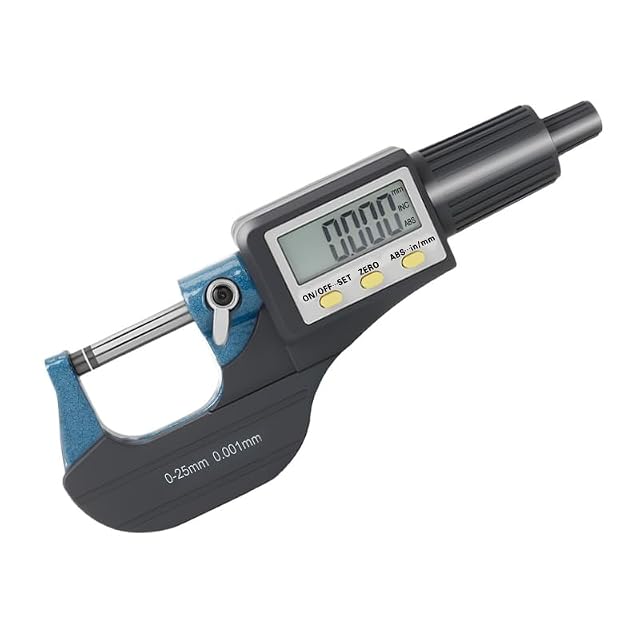
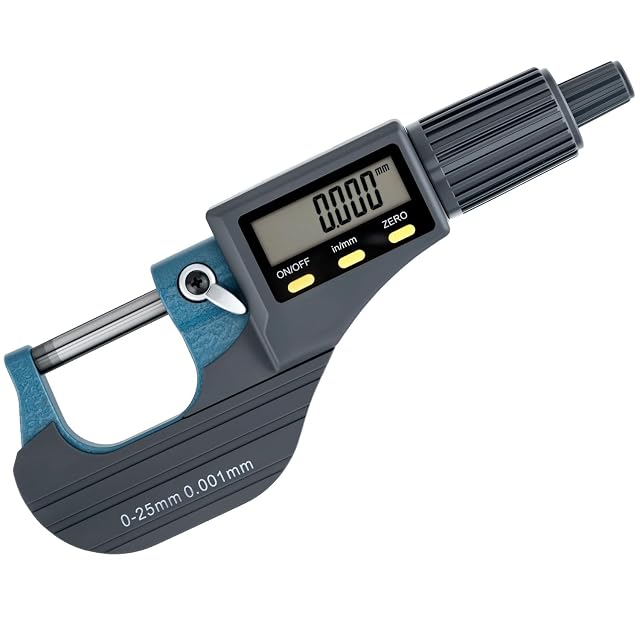
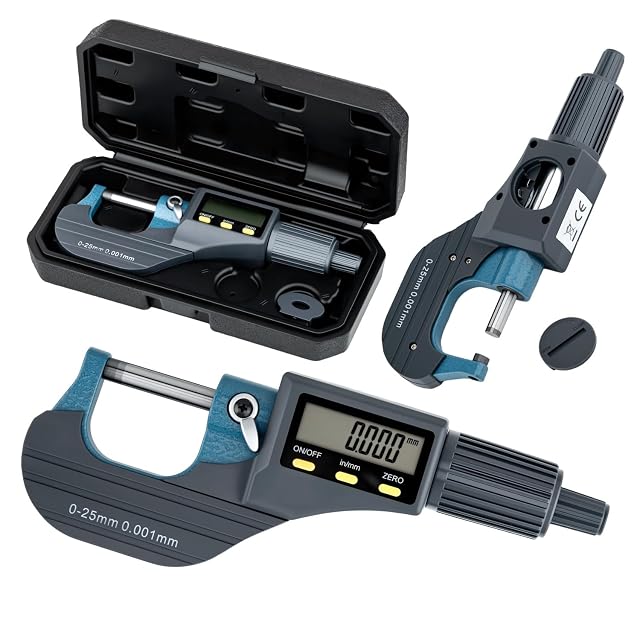
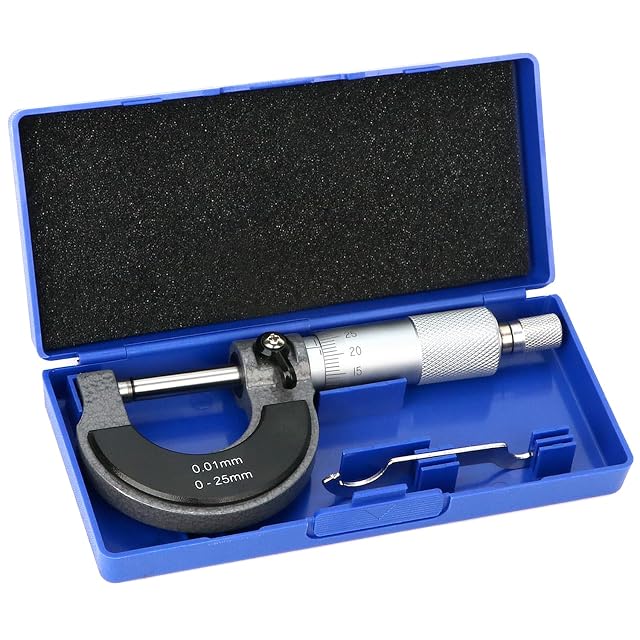
STEINLE 21300025—0–25 mm (0 to 0.98 in) · 0.01 mm reading
Tolesum S2P0309LY—0–25 mm (0 to 0.98 in)

Our guides on micrometers

Where the figures are read

Specifications: manufacturer sheets for measuring instruments and the matching Amazon product pages. Prices and availability: Keepa. Every figure in this table names its source.

Most recent revision in this category: October 8, 2026.

The method applied to micrometers

Prices quoted in these summaries are dated readings. The live price is shown next to each product.