Skip to content

The best steel rules for 2026

A steel rule is the reference the other tools are checked against, so the two things that matter are how the graduations are applied and how straight the edge is. Etched or engraved marks stay readable after the printing on a cheaper rule has worn off against a pocket. A satin-chrome or matt finish kills the glare that makes a polished rule unreadable under a work light. We compare graduation method, finish and corrosion resistance, edge straightness, available scales, and whether the rule carries a hanging hole or a conversion table.

The models we recommend

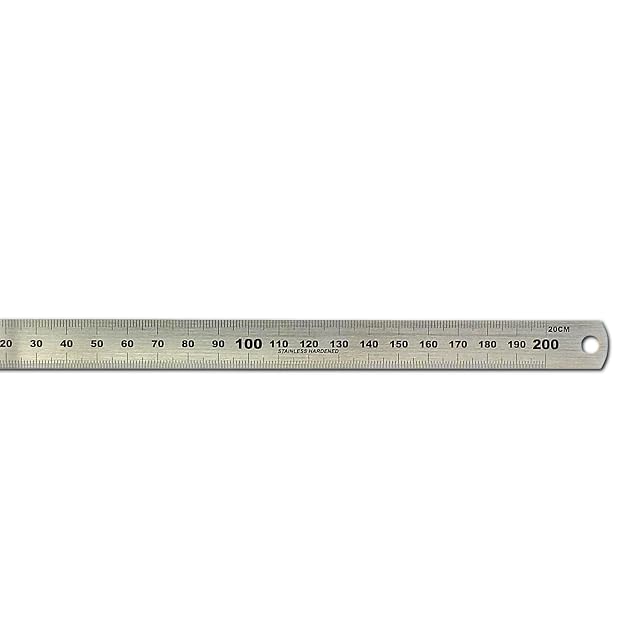
  1. Hedue Stainless steel rule, 200 mm (7.87 in)

    200 mm (7.87 in) stainless · etched scale both sides · non-glare finish

    A 200 mm (7.87 in) stainless rule with permanently etched graduations on both faces and a non-glare surface — the two construction choices that decide whether a rule is still readable in five years.

    Best for: Bench work where the rule is read dozens of times a day and needs to stay legible.

    8.2/10

Need by need, within steel rules

Marking out across the full length

A long steel rule serves as a marking straightedge as much as a measuring instrument. Its length decides what you can mark in one stroke.

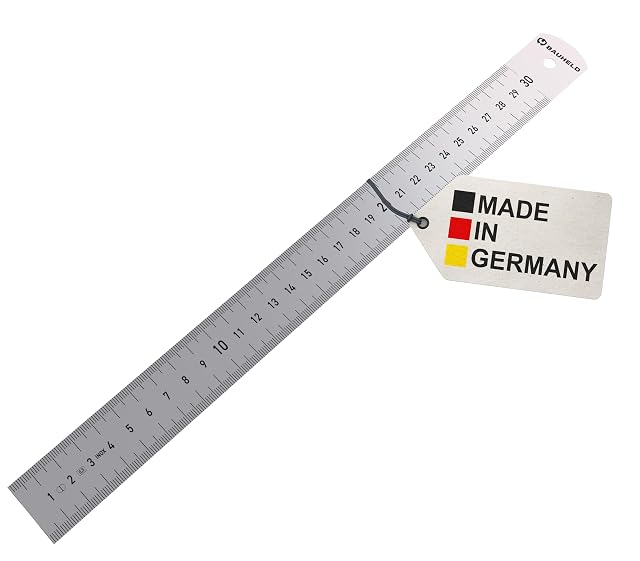
BAUHELD MASSSTAB300

A pocket rule

A short rule serves as a checking reference and slips in anywhere. The workshop's ready-to-hand standard.

Hedue B102

Staying legible under a grazing light

An unfilled engraving vanishes on polished stainless as soon as the light comes from the side. The stated surface finish, satin or blackened, decides legibility in the workshop.

BAUHELD MASSSTAB300

Who each family suits, across steel rules

Precise marking out
A ground edge gives a straight line no tape measure allows. The main use.
Checking flatness
A rule set on edge reveals a hollow against the light. A simple and formidably effective check.
Workshop reference
An engraved rule serves as a standard for checking other instruments. That is what keeps a whole workshop consistent.

What you gain and what you give up, on steel rules

Engraved against printed
Engraved graduations survive wear and solvents; printed ones rub off within a few years of use.
Thickness against knife marking
A thick rule resists the blade and lifts off the surface; a thin one follows the surface and gets nicked.
Stainless against ordinary steel
Stainless does not rust and costs more; ordinary steel pits if put away damp. In a wood workshop, stainless is less trouble.

Frequent questions on steel rules

Is a steel rule more accurate than a tape?

It has no hook, no play and no curve, and its ground edge lets you mark out. Over short lengths it is distinctly more reliable.

How do you check a steel rule for flatness?

Set the rule on edge and look for light passing underneath. A hollow invisible to the eye shows immediately.

Engraved or printed?

Engraved resists wear and solvents. Printed rubs off in the most handled areas.

Should I start from the end or from a graduation?

Starting from a round graduation avoids the error of a worn or slightly bevelled end. A useful workshop habit.

Can I cut against a steel rule with a knife?

A thick rule resists; a thin one gets nicked and becomes unusable as a reference. A dedicated cutting rule exists for that.

How should a rule be stored?

Flat and dry, never at the bottom of a toolbox where it warps. A bent rule no longer marks straight.

Do I need several lengths?

A short one for checking and a long one for marking out cover the essentials.

Should a steel rule be graduated from the very edge?

Yes for measuring into a corner, where zero must coincide with the edge. A rule whose scale starts two millimeters in forces a calculation at every measurement.

What stays with you, on steel rules

The steel rule has no hook and no play: over short lengths it beats the tape. Start from a round graduation rather than the end, check flatness by looking for light under the edge, and store it flat — a warped rule no longer marks straight.

Summed up: steel rules

  • Highest figure for stated dimension or range: SenZee SZYU18 (300 mm (11.8 in) (30 cm) + 15 cm (5.9 in)).

The full table of steel rules

A column is raised only if four instruments in five publish the value. Below that, it would be measuring the silence of the manuals.

ModelPriceStated dimension or range
BAUHELD MASSSTAB300—300 mm (11.8 in) stainless · 1 mm (0.04 in) thick
Bauster 1976——
Hedue B102—200 mm (7.87 in) stainless
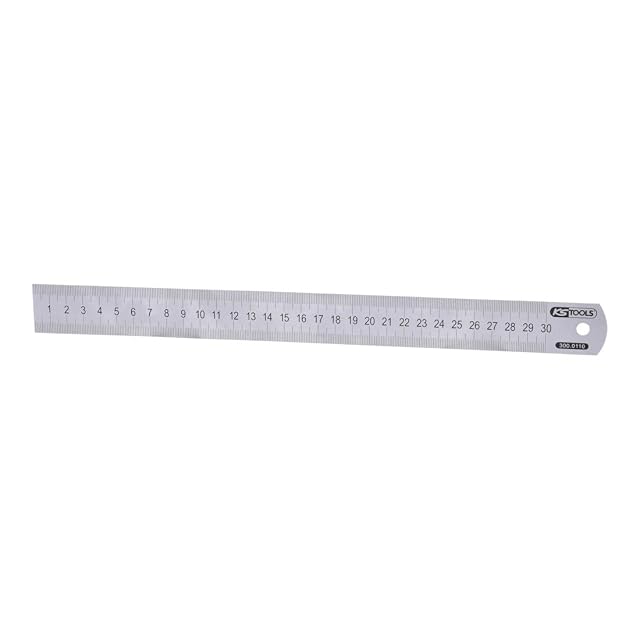
KS Tools 300.0110—300 mm (11.8 in)
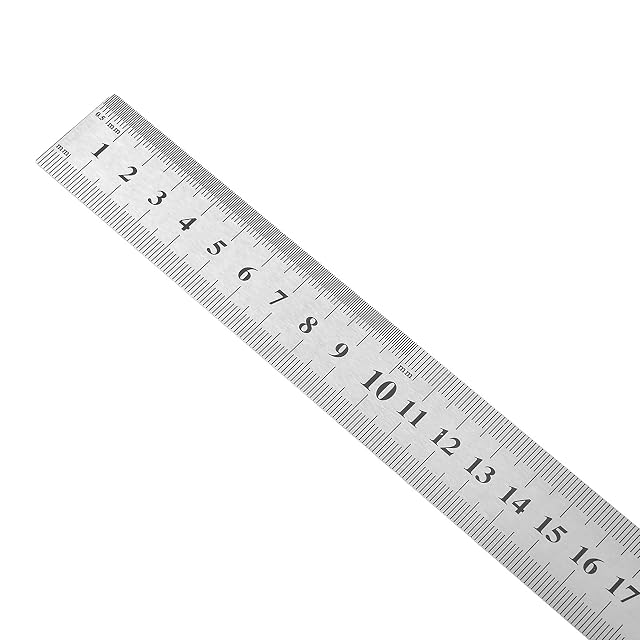
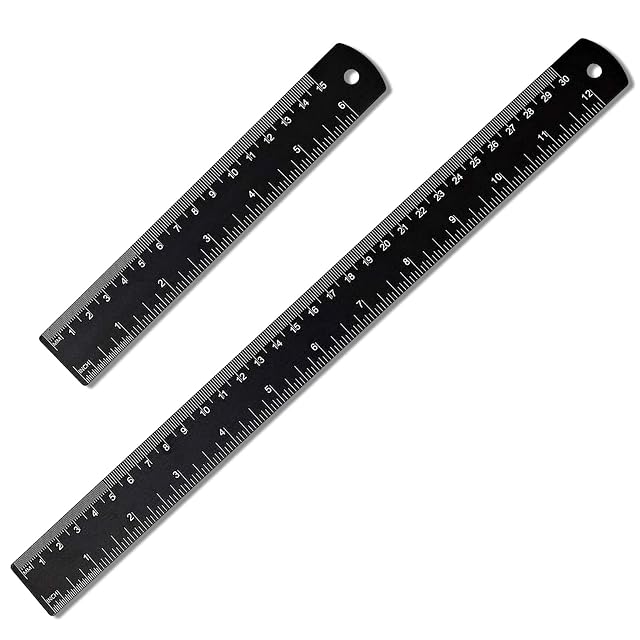
SenZee SZYU18—300 mm (11.8 in) (30 cm) + 15 cm (5.9 in)

Where the figures are read

Specifications: manufacturer sheets for measuring instruments and the matching Amazon product pages. Prices and availability: Keepa. Every figure in this table names its source.

Most recent revision in this category: August 31, 2026.

The method applied to steel rules