What the figures leave us with A working rule with almost nothing published about it. The BAUHELD costs less and states its class.
Sold on what it is for, rather than on what it is.
What the manufacturer publishes
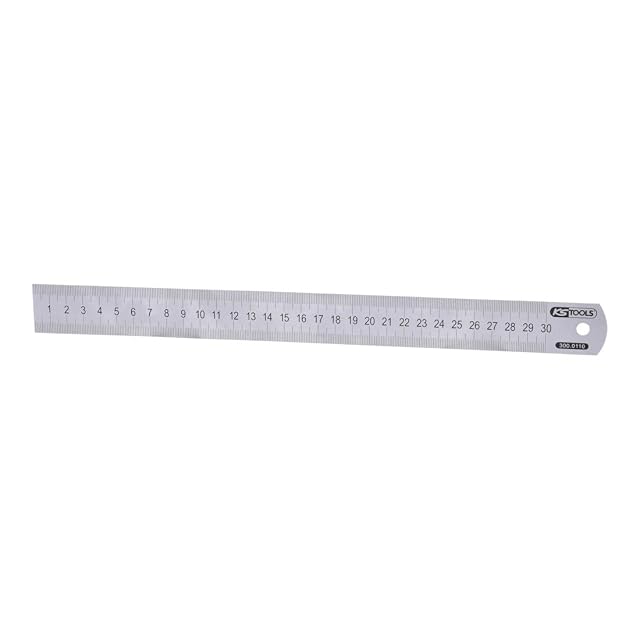
A metal rule described as indispensable for joinery, very durable and resistant to mechanical damage, allowing distances to be measured accurately. Stated as valued by renovation professionals, architects and technical draughtsmen, and as suitable for artists. Easy to keep clean.
Reading a listing like this one
Everything above is about use, not specification. There is no accuracy class, no statement of whether the graduations are etched, printed or lasered, and no steel grade. None of that means the rule is bad — it means there is nothing to compare it against, which is a different problem and the one this site exists to point out.
What to compare it to
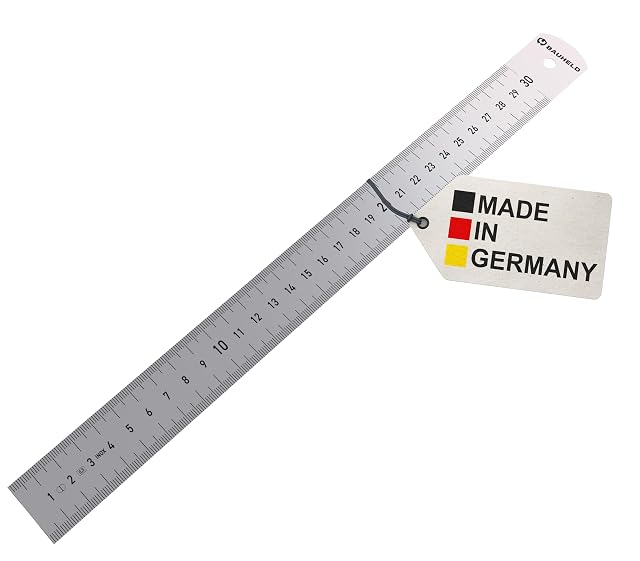
In this same hub, the BAUHELD rule states EC accuracy class I and deep-lasered graduations for less money, and the Hedue states etched scales on both faces for less again. Both tell you what you are buying.
Availability
No such listing: the American Amazon shop answers the reference with a search box rather than a page.
Read from Keepa on the day this page was last revised; stock and price both move without notice.
What it has, and what it lacks
Strengths
Offered in several lengths under one reference family, so the format matches the job
Stated as resistant to mechanical damage
Easy to clean, which matters on a rule used with adhesives and finishes
Compromises
No accuracy class, graduation method or material grade stated
The listing describes uses rather than specifications
Not found on the Spanish market
Specifications
Amazon reference
B0B6WQMMYY (identical on 4 markets)
EAN
5905191351847
Also stated
Metal rule · joinery, drawing and construction use
What gets asked here
What is published about this rule?
Its intended uses — joinery, renovation, architecture, technical drawing — and that it resists mechanical damage and cleans easily. No accuracy class, no graduation method and no steel grade appear in the listing.
Is that a problem?
It depends what you want the rule for. As a working rule it is fine. As the reference against which other instruments are checked, an undeclared tolerance is exactly the wrong property.
Which length should I buy?
Thirty centimeters is the general-purpose bench length; 15 cm (5.9 in) lives in a pocket; 100 cm (39.4 in) is for sheet goods. The listing covers several.
Our score
8.0/ 10
A working rule with almost nothing published about it. The BAUHELD costs less and states its class.
This one’s price among measuring instruments
A reference exists on these Amazon stores: France, Germany, Italy, United Kingdom. Listed is not the same as in stock — availability changes daily.
Details checked on August 31, 2026.
Who should pick this one, among measuring instruments
General workshop use where the rule is a tool among tools rather than a measuring reference.
Sources
Specifications: the manufacturer sheet for measuring instruments and the matching Amazon product page. Prices and availability: Keepa. Every figure on this page names its source.
300 mm (11.8 in) stainless · 1 mm (0.04 in) thick · EC accuracy class I · deep-lasered scale
The only rule in this hub that states an accuracy class, and it states the tightest one: EC class I, on 1 mm (0.04 in) stainless with a deep-lasered double scale, made in Germany.
Best for: The rule the other tools get checked against, and the one to scribe along.
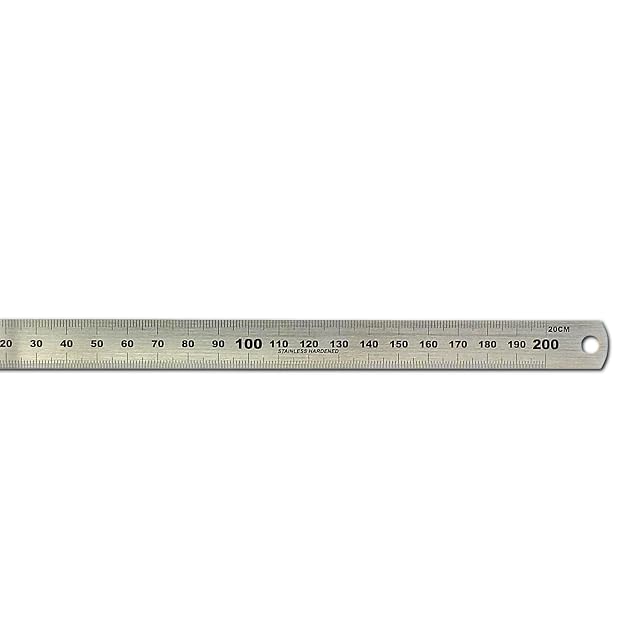
200 mm (7.87 in) stainless · etched scale both sides · non-glare finish
A 200 mm (7.87 in) stainless rule with permanently etched graduations on both faces and a non-glare surface — the two construction choices that decide whether a rule is still readable in five years.
Best for: Bench work where the rule is read dozens of times a day and needs to stay legible.