Skip to content

The best instrument batteries for 2026

Multimeters, moisture meters and detectors run on 9 V blocks and AA cells, and they run on them for years — which is exactly the problem. A cell left in a tool it powers slowly is the one that leaks, and the corrosion ruins the battery compartment and often the board behind it. Lithium chemistry costs more, holds voltage flatter and tolerates cold. We compare formats, chemistry, stated shelf life, leak-protection claims, and pack economics.

What we recommend

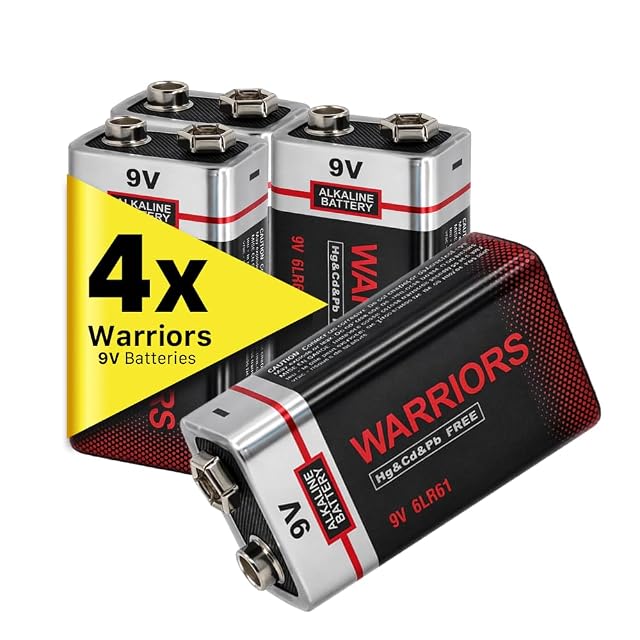
  1. Warriors 9 volt alkaline block batteries in their four-pack

    Warriors 9 V alkaline batteries, four-pack

    The cheap four-pack for instruments that run on a 9 V block, with a stated three-year shelf life — the figure that matters for a cell that sits in a drawer.

    Amazon reference
    B0BYD6PXZH (identical on 6 markets)
    EAN
    9358199002307
    Power
    9 V 6LR61 · stated three-year shelf life
    Supplied
    four-pack
    • A stated three-year shelf life, which is the relevant number for an instrument used twice a year
    • A design the maker describes as protecting the device, with leak resistance in mind
    • No leak-protection guarantee published beyond the description

    Best for: Instruments used often enough that the cell is replaced before it ages.

    Check price on Amazon
  2. VARTA 9 volt alkaline block batteries in recyclable packaging

    VARTA 9 V alkaline batteries, four-pack

    The four-pack from a manufacturer that makes its own cells rather than badging them, at twice the price of the no-name pack.

    Amazon reference
    B0BTYPS4PW (identical on 6 markets)
    EAN
    4008496059133
    Power
    9 V alkaline
    Supplied
    four-pack · recyclable packaging
    • Made by a cell manufacturer rather than a rebrander, stated as produced in Germany
    • Four in a pack, in recyclable packaging
    • No shelf life figure published, unlike the cheaper Warriors pack

    Best for: Instruments you intend to keep, where the cell is the cheapest insurance available.

    Check price on Amazon
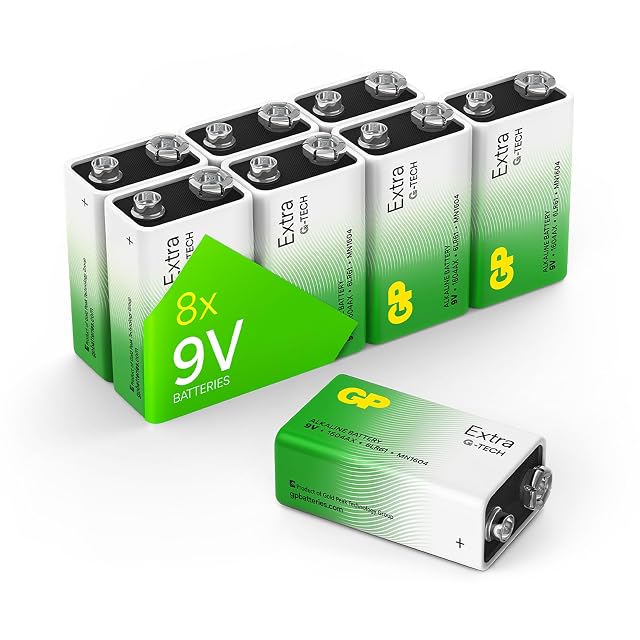
  3. GP Extra Alkaline 9 volt block batteries, eight in a pack

    GP 9 V alkaline batteries, eight-pack

    Eight cells in one pack — the pack size that means a flat instrument never waits, from a maker that names measuring instruments as an intended use.

    Amazon reference
    B07QLTD2Q8 (identical on 6 markets)
    EAN
    4891199181955
    Power
    9 V alkaline
    Supplied
    eight-pack
    Body and fittings
    G-TECH construction
    • Eight in a pack, so there is always a spare in the bag and one in the drawer
    • The maker names measuring instruments among the intended uses, which most cell listings do not
    • On sale on the German and British markets only

    Best for: A workshop with several 9 V instruments, where the spare has to be somewhere findable.

    Check price on Amazon

Who each family suits, across instrument batteries

Rarely used instruments
A distance meter or a multimeter taken out twice a year ends up with flat or leaked cells. It is the most frequent case.
A laser on all day on site
Lasers and cameras consume a lot. Rechargeable cells work out markedly cheaper.
An instrument left in a drawer for a year
A cell left in an instrument for years eventually leaks and destroys the contacts. It is the most ordinary failure across a set of instruments.

What you gain and what you give up, on instrument batteries

Alkaline against rechargeable
Alkaline keeps for a long time at rest and is thrown away; rechargeable costs less in use and self-discharges in storage. Use decides.
Nominal voltage against display
A rechargeable cell has a lower nominal voltage than a disposable one. Some instruments read that as a low charge.
Lithium against price
Lithium cells hold up better in the cold and keep for years, at a higher cost. On a field instrument, that is justified.

Frequent questions on instrument batteries

Should I take the batteries out for storage?

On a rarely used instrument, yes. A cell that leaks destroys the contacts and finishes the instrument, which is the most ordinary failure across a set of instruments.

Are rechargeables suitable?

Their nominal voltage is lower, which some instruments read as a low charge. On power-hungry instruments they remain worthwhile.

How do I know a battery is failing?

Readings become unstable or drift before shutdown. On a measuring instrument, that is a signal not to ignore.

Do measuring instruments need lithium cells?

They hold up better in the cold and keep for a long time. On a field instrument used in all weathers, the difference is real.

Can I mix batteries?

Never: cells of different ages or types discharge unevenly and can leak. Always change the complete set.

How do you store instrument batteries?

Dry, at a moderate temperature and in their blister, so that no terminal touches another. Loose in the bottom of a toolbox, two cells eventually short each other.

Where do you drop off used instrument batteries?

At the collection points provided. It is a legal requirement, and batteries contain metals worth recovering.

Should cells come out of a stored instrument?

For a device sleeping more than three months, yes, and that is the only certain protection against a leak. A small bag taped to the case saves hunting for the cells later.

What stays with you, on instrument batteries

Take the batteries out of rarely used instruments: a cell that leaks destroys the contacts, and it is the most ordinary failure across a set. Never mix cells of different ages, and readings that drift before shutdown mean a weak battery.

Summed up: instrument batteries

    The full table of instrument batteries

    A column is raised only if four instruments in five publish the value. Below that, it would be measuring the silence of the manuals.

    ModelPricePowerSupplied
    GP Extra Alkaline 9V—9 V alkalineeight-pack
    Warriors 9V Alkaline 4-pack—9 V 6LR61 · stated three-year shelf lifefour-pack
    VARTA 9V Power on Demand 4-pack—9 V alkalinefour-pack · recyclable packaging

    Where the figures are read

    Specifications: manufacturer sheets for measuring instruments and the matching Amazon product pages. Prices and availability: Keepa. Every figure in this table names its source.

    Most recent revision in this category: August 31, 2026.

    The method applied to instrument batteries