Skip to content

The best non-contact voltage testers for 2026

A voltage pen detects the electric field around a live conductor without touching it, which makes it the fastest tool in the box and the easiest to misread. It answers "there is probably voltage here", never "this is safe" — insulation thickness, screening and the way it is held all change what it senses. A self-test function matters more than sensitivity, because it is what tells you the pen still works. We compare stated detection range, adjustable sensitivity, self-test, torch and audible alert, and the manufacturer's stated category.

The models we recommend

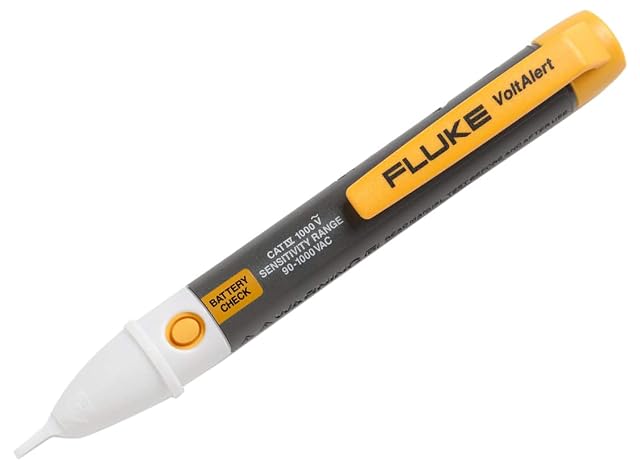
  1. Fluke VoltAlert 2AC, 90–1000 V

    90–1000 V AC · flat tip · industrial reference

    Fluke's industrial detector, 90 to 1000 V AC with a flat tip. The listing states almost nothing beyond the range and the form.

    Best for: A workshop standardized on Fluke, where the catalog reference is worth more than the listing.

    8.4/10

    ≈ $36

Need by need, within non-contact voltage testers

Detecting across the useful range

The detection range decides what the instrument signals. Below its threshold it stays silent, which proves nothing.

Fluke FLK2AC/90-1000V

Signaling even in a noisy site

A tester that only flashes goes unnoticed above head height on a working site. A stated audible alarm decides how reliably the warning gets through.

Fluke FLK2AC/90-1000V

Testing itself before you conclude

A non-contact tester can fail silently, and the absence of a signal proves nothing. A stated self-test function is what lets you check the device on a known live source before each use.

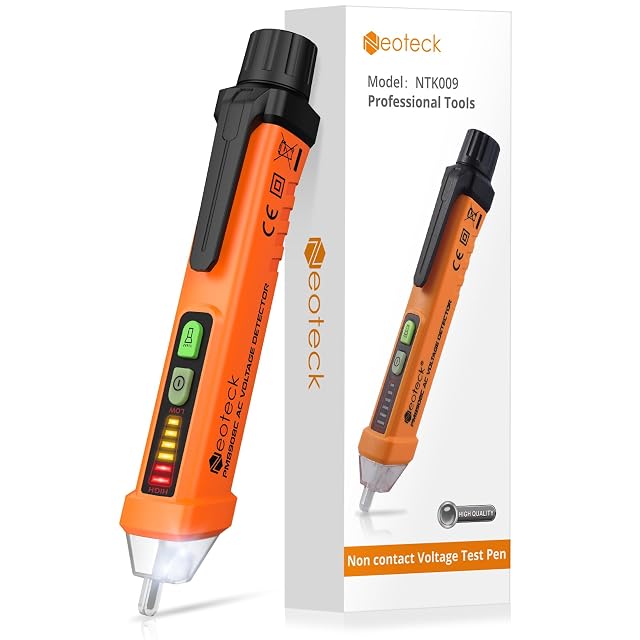
Neoteck TL163-US

Who each family suits, across non-contact voltage testers

Quick identification
Identifying a live conductor without touching anything is what these instruments do best. A locating tool.
Finding cable in a wall
Detection through a partition is approximate and gives an indication of area. It does not replace a dedicated detector.
Confirming absence of voltage
These instruments are not suitable for that use. A screened conductor, deep in a chase or behind metal, may trigger nothing.

What you gain and what you give up, on non-contact voltage testers

No contact against reliability of the verdict
Touching nothing is convenient and makes the result depend on the environment. An absent signal never proves an absence of voltage.
High sensitivity against false positives
High sensitivity detects through more material and triggers on neighboring fields. Adjustable sensitivity limits false alarms.
A non-contact tester does not replace locking off
The fastest instrument in the aisle and the least conclusive. It points you somewhere; it does not conclude.

Frequent questions on non-contact voltage testers

Can I confirm an absence of voltage with this instrument?

No, never. A screened conductor, deep in a chase or behind an obstacle, may trigger nothing. Only a two-pole tester confirms an absence of voltage.

Why does the instrument trigger for no reason?

Static electricity and neighboring fields cause triggering. Adjustable sensitivity strongly reduces those false positives.

Should it be tested before use?

On a known source, every time. An instrument with a weak battery can stay silent in front of a voltage that is present.

Does it detect through a wall?

Sometimes, very approximately. A dedicated cable detector is built for that task.

Does it detect direct current?

These instruments detect an alternating field. A DC installation does not trigger them.

Does it work inside a metal enclosure?

Metal screens it. One of the situations where an absent signal is misleading.

What is it for, then?

For quickly picking out a live conductor among others, without touching anything. A locating tool, and very useful in that role.

Why does the tester beep near a dead cable?

A live conductor alongside induces a field strong enough to trigger the device. A non-contact tester indicates a possible presence, never a certain absence.

What stays with you, on non-contact voltage testers

An absent signal never proves an absence of voltage: screening, depth or metal are enough to silence the instrument. It is a locating tool, never a confirming one — that function belongs to the two-pole tester, and to it alone.

Summed up: non-contact voltage testers

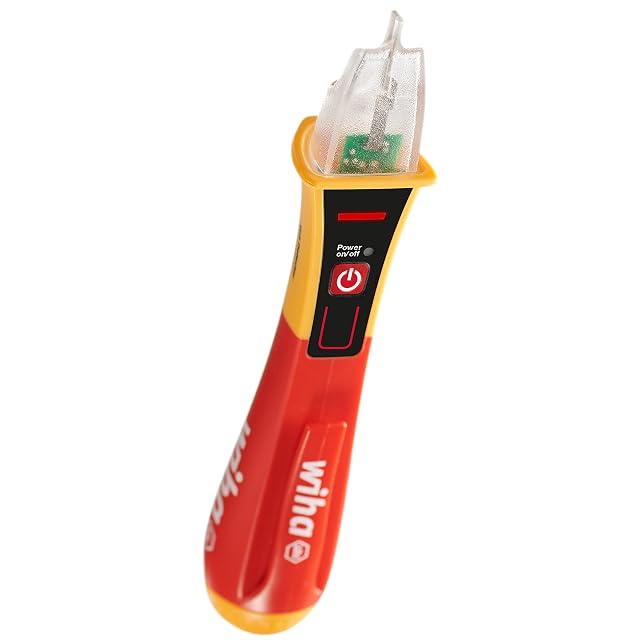
  • Highest figure for voltage measurement: Wiha 43798 (90–1000 V AC).

The full table of non-contact voltage testers

A column is raised only if four instruments in five publish the value. Below that, it would be measuring the silence of the manuals.

ModelPriceVoltage measurement
Neoteck TL163-US$1012–1000 V AC
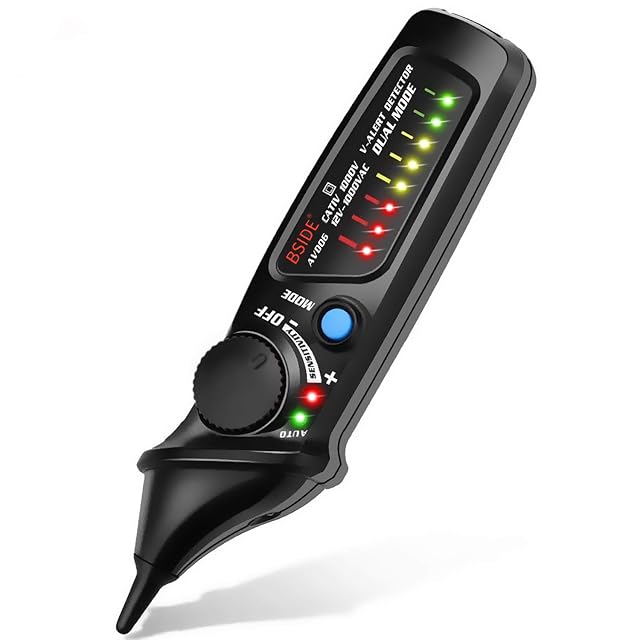
BSIDE AVD06$1612–1000 V AC
Fluke FLK2AC/90-1000V$3690–1000 V AC
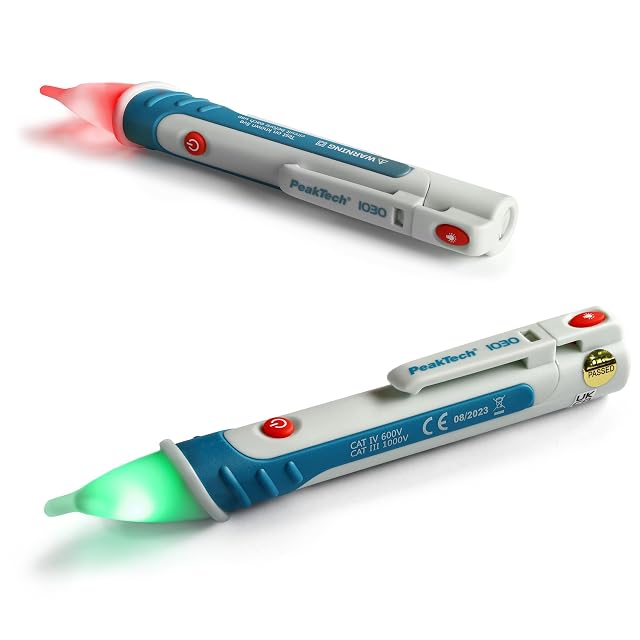
PeakTech P 1030—50–1000 V AC
Wiha 43798—90–1000 V AC

Our guides on non-contact voltage testers

Where the figures are read

Specifications: manufacturer sheets for measuring instruments and the matching Amazon product pages. Prices and availability: Keepa. Every figure in this table names its source.

Most recent revision in this category: August 31, 2026.

The method applied to non-contact voltage testers

Prices quoted in these summaries are dated readings. The live price is shown next to each product.