Skip to content

The best stud and cable detectors for 2026

Manufacturers publish detection depth per material — one figure for wood, another for non-magnetic metal, another for live cable — because the physics differs in each case. A single headline depth on the box is the deepest of them, not the one that applies to the joist you are looking for. Damp plaster and foil-backed board both change what the tool sees. We compare stated depth by material, the modes offered, how the tool calibrates when placed on the wall, and marking aids.

The models we recommend

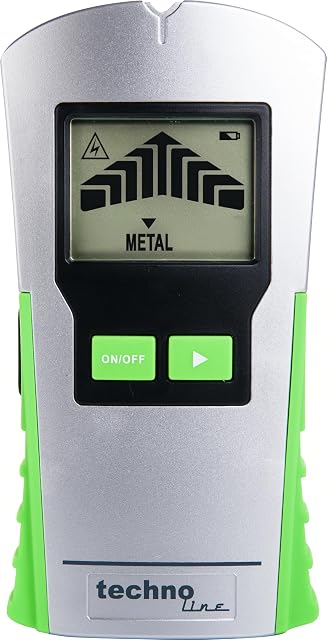
  1. Technoline Multi-detector, four modes

    Wood 19 mm (0.75 in) · metal 30 mm (1.18 in) · deep 38 mm (1.50 in) · live cable 50 mm (1.97 in) at 230 V

    The only detector here that publishes a depth for every material it claims: wood to 19 mm (0.75 in), metal to 30 mm (1.18 in), deep scan to 38 mm (1.50 in) and live cable to 50 mm (1.97 in) at 230 V.

    Best for: Anyone who wants to know what the depth figure means before trusting it.
    6.8/10

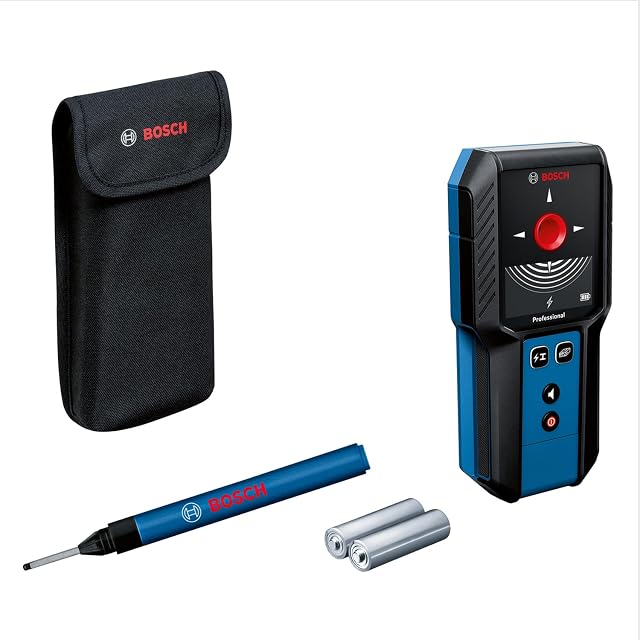
  2. Bosch Professional Wall scanner with material identification

    Metal, live cable and timber · three-color LED ring · center indication · IP54

    A site-rated scanner that identifies which material it has found and rings the marking hole with a three-color LED — red on the object, yellow approaching, in an IP54 rubber housing.

    Best for: Repeated drilling on site, where finding the center of the stud quickly matters more than reading a depth.

    8.2/10

    ≈ $99

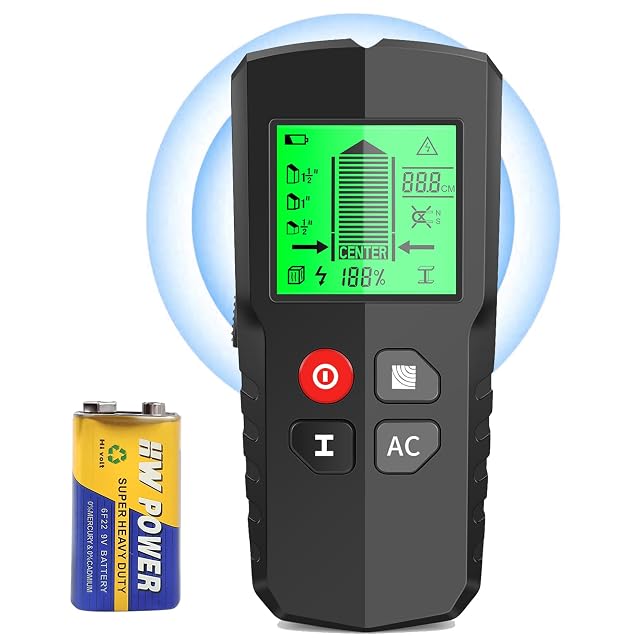
  3. EXTSUD Wall scanner, five modes

    Five detection modes · wood, metal and AC cable · works through several wall finishes

    A five-mode wall scanner covering wood, metal and live AC cables, stated to work on lath, wallpaper, wooden floors, acoustic ceilings and painted walls.

    Best for: General household scanning where the question is "is there anything there" rather than "how deep".

    7.4/10

Need by need, within stud and cable detectors

Detecting several kinds of material

A detector that only sees timber lets cables and pipes through. The range of detection modes is what decides how safe the drilling is.

Bosch Professional GMS 120-27

Finding a stud

A simple detector locates a plasterboard stud, which is the most frequent need before fixing anything.

Bosch Professional GMS 120-27

Reaching through the lining's depth

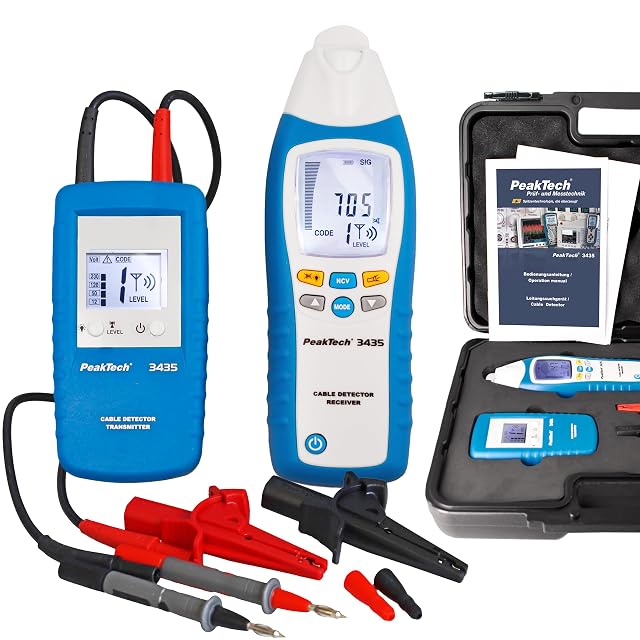
A detector limited to twenty millimeters sees nothing behind a forty-millimeter lining. The stated detection depth, per material, decides its usefulness on the wall you have.

PeakTech P 3435

Who each family suits, across stud and cable detectors

Fixing into a partition
Finding a stud means fixing into something solid rather than into a board. This is the most common use.
Drilling into a solid wall
A buried cable or a pipe drilled through is a serious accident. Detecting before drilling is not an optional precaution.
Drilling a wall whose structure you do not know
Existing runs do not always follow the installation rules. A detector reduces the risk without removing it.

What you gain and what you give up, on stud and cable detectors

Detection against certainty
No detector guarantees the absence of a cable or a pipe. It reduces the risk, it does not remove it, and isolating the circuit first remains the real safety measure.
Stated depth against material
Detection depth depends heavily on the material being crossed. In dense concrete it drops well below the stated figure.
Multiple modes against false readings
A sensitive unit flags a lot of things, artefacts included. An insensitive one misses some, which is the worse failure.

Frequent questions on stud and cable detectors

Does a detector guarantee there is no cable?

No, never. It reduces the risk. Isolating the circuit concerned before drilling remains the only real safety measure.

Does it need calibrating before use?

Most units calibrate on an area assumed to be empty at start-up. Calibrating over a stud throws the whole search off.

Why does the unit detect everywhere?

Calibration done over an occupied area, a damp wall, or sensitivity set too high. Start the calibration again somewhere else.

Does detection work in concrete?

The usable depth drops sharply in dense materials. Stated figures correspond to favorable conditions.

How do I confirm a stud?

By sweeping in both directions to find both edges, and by checking the spacing is regular against the neighboring studs.

Does the detector see de-energized cables?

Metal detection modes sometimes see them; live voltage modes do not. That is a limit worth knowing.

Should I drill gradually?

Slow, attentive penetration leaves time to feel a change in resistance. It is one more precaution, not a guarantee.

Does a detector find an electric cable?

Multifunction models flag a live conductor, not a dead buried cable. Before drilling, you switch the circuit off and assume a cable may run where you do not expect it.

What stays with you, on stud and cable detectors

No detector guarantees the absence of a cable: isolating the circuit before drilling remains the only real safety measure. Calibrate on an area assumed to be empty — calibrating over a stud throws the whole search off — and the stated depth collapses in concrete.

Summed up: stud and cable detectors

    Stud and cable detectors, side by side

    There is no table here, and the reason is in the listings. The figure published most often across these 4 products is measuring mode, given by 3 of them — short of the four in five a column needs to compare rather than to display gaps. Each product page says what its own maker published.

    Our guides on stud and cable detectors

    Where the figures are read

    Specifications: manufacturer sheets for measuring instruments and the matching Amazon product pages. Prices and availability: Keepa.

    Most recent revision in this category: August 31, 2026.

    The method applied to stud and cable detectors