Detection depth is stated per material, never as one number · review
PeakTech Cable tracer, transmitter and receiver, 2 m (7 ft) review
Not a wall scanner but a cable tracer: a transmitter injects a signal into a conductor and a receiver follows it, to a stated depth of 2 m (7 ft), on live or dead cables.
What the figures leave us with A different instrument in the same hub. If the question is "which cable is this", nothing else here answers it.
The only instrument here that follows a specific conductor.
What the manufacturer publishes
A cable locator detecting both de-energized and live conductors. A transmitter and a receiver allowing non-contact tracing of surface and concealed cables, with a stated reception depth of up to 2 m (7 ft). Selectable transmitter channels allowing up to seven transmitters to be used simultaneously, with high sensitivity. A bright LCD with bar graph for tracing cables in walls, ceilings and floors.
Detection against tracing
A wall scanner responds to whatever is behind the plaster, which on a busy wall is several things. It cannot tell you which of them is the circuit you switched off. A tracer puts a signal on that circuit and follows only that signal, which is the difference between “there is a cable here” and “this is the cable”.
Where the two meters go
Through a floor slab, a stud wall and a suspended ceiling. That is the reach that makes it possible to follow a circuit from a distribution board to an outlet on another story — a job no detector in this hub can attempt.
Availability
No such listing: the American Amazon shop answers the reference with a search box rather than a page.
Read from Keepa on the day this page was last revised; stock and price both move without notice.
What it has, and what it lacks
Strengths
Traces a specific cable rather than detecting anything present — a fundamentally different capability
A stated reception depth of up to 2 m (7 ft), forty times the cable depth of the scanners here
Works on de-energized as well as live cables
Up to seven transmitters usable simultaneously on selectable channels
A bar-graph LCD for following signal strength
Compromises
Two units to carry, set up and keep charged
The most expensive instrument in this hub
Not found on the American market
Specifications
Amazon reference
B01M7PPFAR (identical on 5 markets)
EAN
4250569402425
Also stated
Transmitter plus receiver
Stated dimension or range
up to 2 m (7 ft) reception depth
Channels
7 channels
Measuring mode
live and dead cables
What gets asked here
How is this different from a stud detector?
A scanner asks "is there anything behind this wall". A tracer asks "where does this particular cable go". The transmitter is clipped to the conductor you care about and the receiver follows only that signal — through walls, ceilings and floors, past every other cable in the building.
What does 2 m (7 ft) reception depth mean?
The receiver can pick up the injected signal through up to two meters of material. That is a different order of capability from the 50 mm (1.97 in) a wall scanner reaches on a live cable, and it is what makes tracing through a floor slab possible.
Why seven channels?
So several transmitters can be attached to different conductors at once and told apart. On a distribution board with unlabelled circuits, that turns a day of switching breakers into an afternoon.
Our score
8.8/ 10
A different instrument in the same hub. If the question is "which cable is this", nothing else here answers it.
This one’s price among measuring instruments
A reference exists on these Amazon stores: France, Germany, Italy, Spain, United Kingdom. Listed is not the same as in stock — availability changes daily.
Details checked on August 31, 2026.
Who should pick this one, among measuring instruments
Following one specific cable through a building, which no wall scanner can do at all.
Sources
Specifications: the manufacturer sheet for measuring instruments and the matching Amazon product page. Prices and availability: Keepa. Every figure on this page names its source.
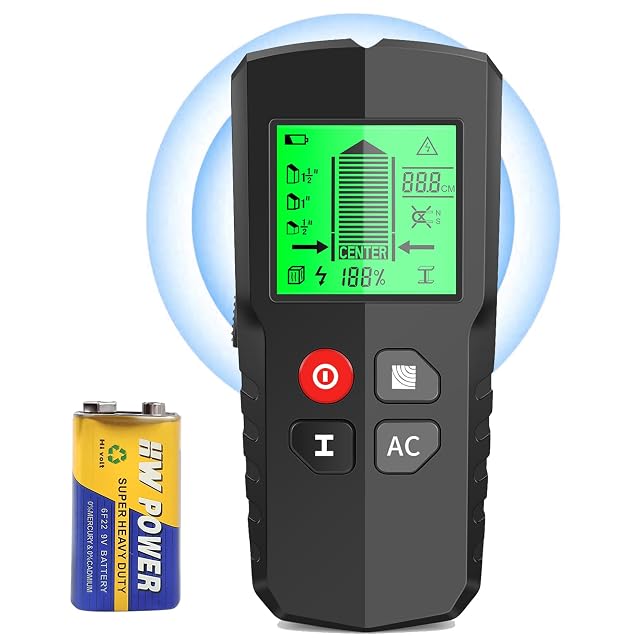
Five detection modes · wood, metal and AC cable · works through several wall finishes
A five-mode wall scanner covering wood, metal and live AC cables, stated to work on lath, wallpaper, wooden floors, acoustic ceilings and painted walls.
Best for: General household scanning where the question is "is there anything there" rather than "how deep".
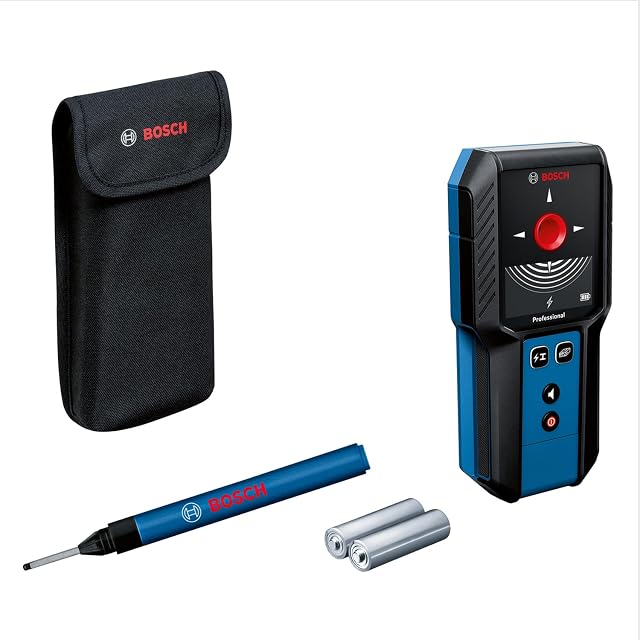
Metal, live cable and timber · three-color LED ring · center indication · IP54
A site-rated scanner that identifies which material it has found and rings the marking hole with a three-color LED — red on the object, yellow approaching, in an IP54 rubber housing.
Best for: Repeated drilling on site, where finding the center of the stud quickly matters more than reading a depth.
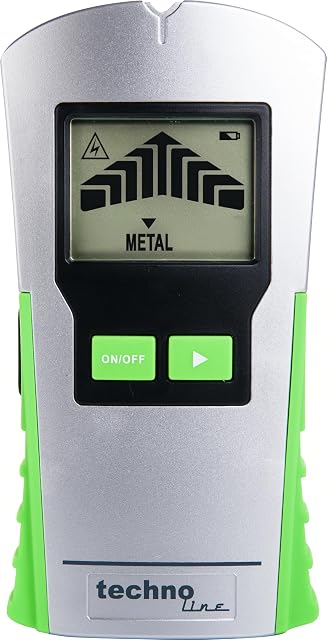
Wood 19 mm (0.75 in) · metal 30 mm (1.18 in) · deep 38 mm (1.50 in) · live cable 50 mm (1.97 in) at 230 V
The only detector here that publishes a depth for every material it claims: wood to 19 mm (0.75 in), metal to 30 mm (1.18 in), deep scan to 38 mm (1.50 in) and live cable to 50 mm (1.97 in) at 230 V.
Best for: Anyone who wants to know what the depth figure means before trusting it.