The first measuring kit: five tools, under a hundred dollars
Almost every measuring question in a house is answered by five tools, and the order matters more than the brands. Buy a tape first because everything else assumes one; buy a level second because a wrong vertical is visible forever; buy a distance meter third because it turns a two-person job into a one-person one. The electrical tools come last, and only if the work goes there.
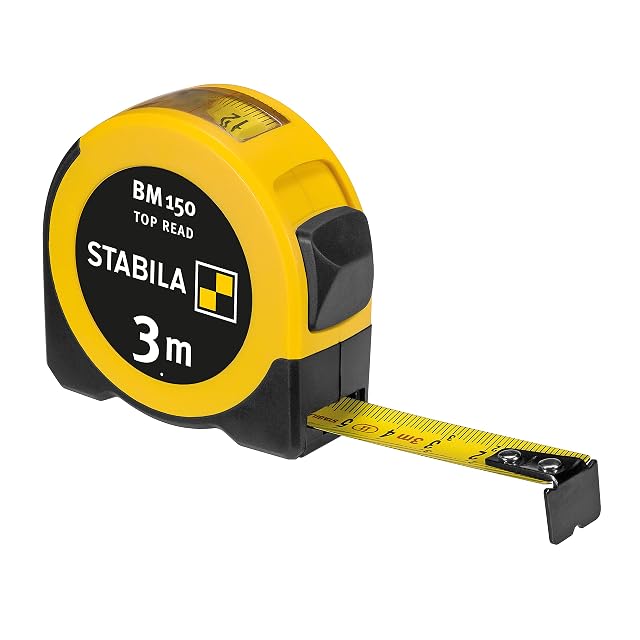
A tape is the tool other tools are checked against and the one you reach for without thinking. Three meters covers a room, a worktop and a cupboard run. The window in the top of the Stabila case matters more than it sounds: measuring the clear width of an opening otherwise means reading the blade and adding the case length, and that addition is where the error goes.
2. A level, because a wrong vertical is permanent
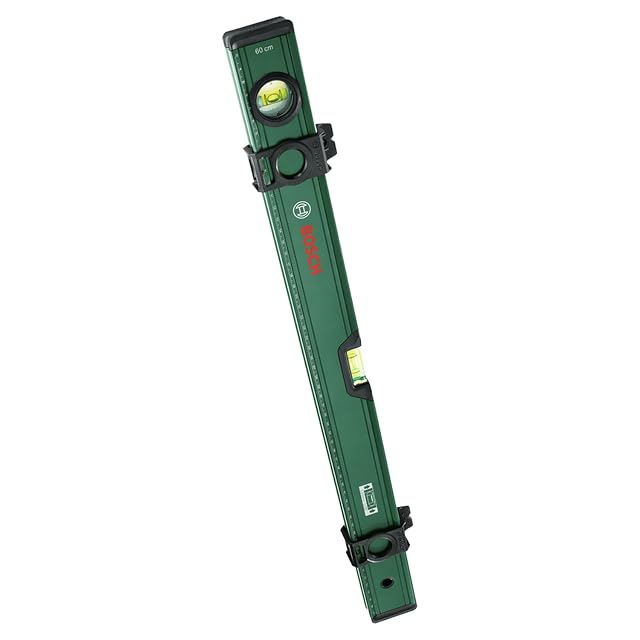
A shelf a millimeter out of level is invisible. A door frame a degree out of plumb is visible for the life of the building. Sixty centimeters is the useful general length, and the Bosch here doubles as a rule and has a V-groove so it sits on a pipe instead of rocking on one.
3. A distance meter, because measuring alone is the constraint
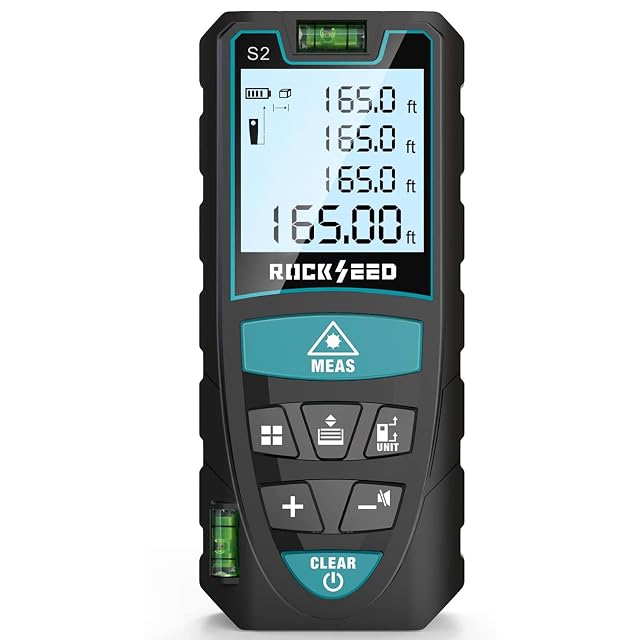
Twenty-two euros buys a stated ± 2 mm (0.08 in) over fifty meters, area and volume modes, and two bubble vials so the tool can be squared to a wall before pressing. That last part removes the beginner’s error that nobody notices: a beam a few degrees off square reads longer than the wall, always.
4. A voltage tester, before touching anything electrical
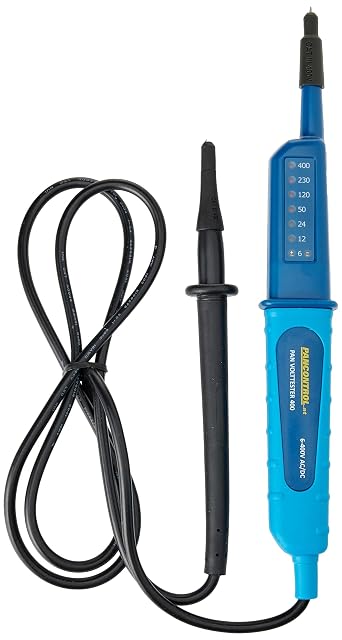
Not a contactless pen. A two-pole tester loads the circuit, so an induced phantom voltage collapses under it — which is the difference between “probably live” and a reading you can act on. The Kopp states a CAT III category at twelve euros. Follow the manufacturer instructions and the rules that apply where you live.
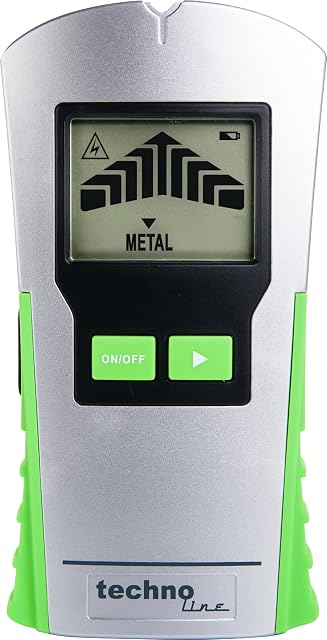
5. A detector, before the first hole
A four-mode detector publishing separate depths for wood, metal and live cable is twenty dollars. Treat every reading as an indication, calibrate it on the wall in front of you, and assume a cable may be present where the wall makes one likely.
What is deliberately not on this list
A multimeter, a thermal camera and a moisture meter are all excellent tools that answer questions most households do not have. Buy them when a question arrives, not in advance.
Which instrument does your work demand?
You are doing general work at home
A tape, a spirit level and a square cover almost everything, and none of them needs a battery.
You are measuring rooms
A laser distance meter saves a second person and is the first electronic tool worth owning.
You work with small parts
A caliper, and the honest question of whether you need its last digit or just its convenience.
You are working on electrics
That is a separate kit with separate safety requirements, and it starts with a voltage tester rather than a meter.
Picking by the measurement
Rooms and walls
A tape and a laser distance meter. Between them they cover almost every domestic measurement.
Leveling and squaring
A spirit level and a square, both of which are checked against themselves rather than trusted.
Small parts and thicknesses
A caliper, which is where numbers start looking more precise than they really are.
Marking out
A pencil, a chalk line and a straight edge. Unglamorous, and the reason a measurement ends up in the right place.
The figures that settle accuracy accuracy
What you will actually measure
Kit is bought for imagined work and used for real work. Buying for the jobs you have done in the last year is the honest approach.
Whether it needs a battery
A tape and a level are ready whenever you pick them up. Battery tools need charging and checking, and that has a real cost in frustration.
Whether you can verify it
A tool you cannot check is a tool you have to trust. Levels can be reversed, tapes can be compared, and a caliper can be zeroed.
Readability
A clear scale or display used in poor light beats a more accurate tool you have to squint at. Errors come from misreading far more often than from the instrument.
Robustness
Measuring tools live in bags and get dropped. A dropped level or caliper should be rechecked rather than assumed to be fine.
Which tolerance for which work
The job
The tool
What it will not do
Rooms
Tape and laser meter
Tell you if a wall is straight
Leveling
Spirit level
Stay accurate after a hard drop
Squaring
A square, or the 3-4-5 method
Work on a bowed wall
Small parts
Caliper
Be as accurate as its display suggests
The errors that cost you
Buying precision you cannot use
A tool that displays more digits than your work needs adds cost and no benefit. Most domestic work is limited by the pencil line, not the instrument.
Trusting a level without checking it
Reverse the level end for end on the same surface: the bubble should read the same. If it does not, the level is wrong and has been for a while.
Assuming all tapes agree
Tapes vary, and the hook is designed to move by the thickness of its own metal. Using one tape for a whole job avoids the discrepancy entirely.
Skipping the marking tools
A measurement transferred with a thick pencil onto a rough surface loses more than any instrument's error. A sharp line matters.
By the trade you are in
The occasional DIYer
Tape, level, square, pencil. Add a laser meter when you find yourself measuring rooms alone.
The serious hobbyist
The above plus a caliper and a longer level, and the habit of checking both.
The tradesperson
A different conversation entirely, where tools are chosen for the specific trade and its verification requirements.
Calibration and how long accuracy holds
Measuring tools fail quietly. A level knocked off true still gives a confident reading, a tape with a bent hook reads short, and a caliper with grit in its jaws reads wide. None of this announces itself, which is why periodic checking matters more than cleaning.
Check a spirit level by reversing it end for end on the same surface.
Keep caliper jaws and the beam clean; grit is the usual cause of a bad reading.
Inspect a tape's hook for bending, which changes every reading.
Store tools so they are not crushed in a bag or left in a damp shed.
Safety
Measuring itself is low risk; what you do after measuring often is not.
Never assume a wall is clear because you measured it: scan before drilling.
Keep tapes away from live electrical work; the blade is conductive.
Wear eye protection when a tape blade may snap back.
Treat electrical measurement as a separate discipline with its own equipment and precautions.
3 m (10 ft) · TOP READ window · ABS case with softgrip · metal belt clip
A compact 3 m (10 ft) tape whose distinguishing feature is a window in the top of the case, so internal measurements — a window reveal, a door opening — are read directly instead of by adding the case length.
Best for: Fitting work — windows, doors, openings — where most measurements are internal.
60 cm (23.6 in) · 0.5 mm (0.02 in)/m stated · V-groove · two marking sliders
A 60 cm (23.6 in) aluminum level stating 0.5 mm (0.02 in)/m, with fluorescent vials, a double metric scale that turns it into a rule, a V-groove for pipes, and two sliders for marking leveled points.
Best for: The general-purpose level for someone who would otherwise carry a level and a rule.
50 m (164 ft) range · ± 2 mm (0.08 in) stated · IP54 · two bubble vials
The cheapest meter in this hub, and the only one under twenty-five euros that publishes an accuracy figure at all: the maker states ± 2 mm (0.08 in) over a 0.2 to 50 m (0.7 to 164 ft) range, with an IP54 rating and two bubble vials built into the body.
Best for: A first laser measure for indoor work, where the job is room dimensions rather than a wet site.
Wood 19 mm (0.75 in) · metal 30 mm (1.18 in) · deep 38 mm (1.50 in) · live cable 50 mm (1.97 in) at 230 V
The only detector here that publishes a depth for every material it claims: wood to 19 mm (0.75 in), metal to 30 mm (1.18 in), deep scan to 38 mm (1.50 in) and live cable to 50 mm (1.97 in) at 230 V.
Best for: Anyone who wants to know what the depth figure means before trusting it.
Because most measurements in a house are under three meters, and a shorter tape is smaller, lighter and stands out better for its length. The Stabila here also reads internal dimensions through a window in the case, which removes the addition that goes wrong on window and door openings.
Do I need a laser distance meter if I have a tape?
For measuring alone, yes. A tape across a room needs a second person or a hook to catch on, and a room measured badly is the origin of most furniture that does not fit. A meter under twenty-five euros publishes ± 2 mm (0.08 in) and works from one end.
Where does a detector belong in the order?
Immediately before the first hole. A stud detector that publishes its depth per material — wood 19 mm (0.75 in), live cable 50 mm (1.97 in) at 230 V — is the cheapest insurance on this list, and it is an indication rather than a guarantee.
What should I buy first?
A tape, a spirit level and a square. They cover most domestic work, need no batteries and are ready the moment you pick them up.
How do I know my level is accurate?
Reverse it end for end on the same surface. The bubble should read identically; if it does not, the level is out and has probably been out for some time.
Why do two tapes give different readings?
Tapes vary, and the sliding hook is designed to move by its own thickness. Using one tape throughout a job removes the problem.
Do I need a caliper?
Only if you work with small parts and thicknesses. For general building work a tape and a rule cover what you actually need.
Is more precision always better?
No. Precision beyond what your work can hold costs money and adds nothing, because the pencil line and the material are usually the limit.
Targets, tripods and spares from the same aisle, at the price we noted. Check the thread matches the instrument you pick before ordering: it depends on the mount and the part number, which the listing states.
Hultafors 650100U Dry Marker HDM · Marking pencils — ROLL STOP ON BOTH the pencil AND the holster, the only one here that treats both · a DRAIN HOLE in the holster base to lead dirt and moisture away from the pen, published by nobody else · sharpener in the holster, accessible without releasing the pencil · the dispenser doubles as a blade snapper and fits SRP knife handles · easy to change lead · $16
Klein Tools 80189 Skribes · Marking pencils — 2.8 mm (0.11 in) lead · TEN replacement leads in a carry case, the largest lead count on this shelf · a TRIANGULAR barrel so it cannot roll off a beam — the flat pencil's one virtue, kept in a mechanical body · built-in sharpener · stated for OSB, wood, concrete and metal · "assorted color" leads, with no color named · $15
CREAWEA CREA9 · Chalk lines — 100 ft · 5.3 × 3.94 in — the ONLY reel on this shelf that publishes its own dimensions · high-impact ABS · large refill port · NO gear ratio, no sealing organ, no line diameter · ten dollars · $10
Gakago Schlagschnur Set 30m · Chalk lines — 30 m (98 ft) line · 150 g (5.3 oz) permanent red chalk · aluminum body
Generic US TAPE DuraMark 76700 · Marking chalk — TWO ONE-OUNCE bottles for twenty dollars — 10 dollars 19 an ounce, against 37 cents on the other bottle here · intended for deep-hole MARKERS and chalk marker systems rather than a reel · NO Color STATED and NO GRADE STATED, on a shelf whose intro says choosing wrongly is not recoverable · $20
The one-line read
If the figure that matters is our rating → look at Stabila 19839
The instruments above come from the catalog of this site. Specifications are the ones the manufacturer states and the ones on the Amazon listing; prices are the Keepa reading for the date below, and both change. Ranking uses declared specifications, stated strengths weighed against stated limits, and price. Nothing here has had its accuracy checked by us, and the page says as much.
Last checked on
Prices quoted in these summaries are dated readings. The live price is shown next to each product.
The tool we use ourselves
Chosen your tool? Now buy it at the right price.
Thermal cameras, line lasers and clamp meters swing by thirty dollars or more
across the
year, and the biggest "discounts" often land at prices the same model sold for six weeks
earlier.
UniverTrack tracks the real price history across retailers, spots fake
reductions, and alerts you when it is genuinely the moment to buy.
Real price historyBuy-now alertsAI buying assistant