Skip to content

Bosch Laser distance meter, 100 ft review

The only meter on this shelf whose range and accuracy are published in feet and inches rather than meters and millimeters.

What the figures leave us with A simple, honest two-button meter at sixty-three dollars, and the only one on this shelf that speaks imperial: a hundred feet, a sixteenth of an inch, fractions or decimals, with a rounding button nothing else here has. For interior work measured in feet it is the easiest of these to read. What it does not publish is an ingress rating or a reference edge, and the second of those is the number the hub above says actually moves a reading.

What the maker puts in writing

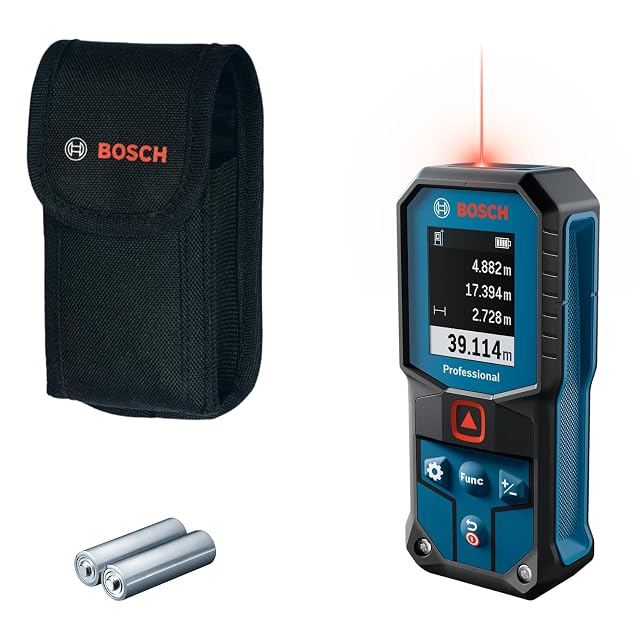
  • 100 ft range · “measures distances up to 100 feet to within 1/16 inch”
  • Units: meters, feet, inches, with fractions or decimals
  • Two-button operation: one for measuring, one for rounding
  • Rounding from 1/2 inch up to 1/32 inch
  • Backlit display with large icons, “brighter than its predecessor, the GLM20”
  • Class II laser: 635 nm, under 1 mW
  • Supplied with two AA batteries

NO ingress rating. NO reference edge. No tripod thread. No area or volume modes.

The only meter here that speaks imperial

Which is the whole character of it.

The four published meters on this shelf: 20 m (66 ft) at ± 3 mm (0.12 in)/m, 50 m (164 ft) at ± 2 mm (0.08 in), 100 m (328 ft) at ± 1.5 mm (0.06 in), 100 m (328 ft) with Bluetooth.

This one: a hundred FEET, to within a SIXTEENTH of an INCH.

A sixteenth is about 1.6 mm (0.06 in), so the accuracy sits at the fine end of the band the introduction above describes.

The range does not. A hundred feet is about thirty meters — the second shortest reach on this shelf, and the only figure a buyer has to convert before comparing it.

The rounding button

Which nothing else here publishes.

It steps the result to a chosen fraction, from a half inch down to a thirty-second.

It exists because of how imperial work is cut. A reading of 94.3 inches is not a mark anybody makes. Ninety-four and five sixteenths is.

The risk is the mirror of the benefit: rounding can swallow what you were measuring for. Set to 1/2 inch, an out-of-square door frame reads square.

What the page never settles

And it is the number the hub above cares most about.

“The one that actually moves a reading is the reference edge — measuring from the back of the housing, the front, or a fold-out stop changes every figure by the length of the body.”

No reference edge is named here. No fold-out stop. No tripod thread.

The body is some ninety-nine millimeters long. A reading taken with the front pressed to a wall, on a tool set to the back, is out by about four inches — sixty times the stated sixteenth.

And no ingress rating at all

This shelf’s introduction names three numbers a laser meter is bought on: accuracy, maximum range, and the ingress rating that decides whether it survives a site.

This page publishes the first two and not the third.

Two meters on this shelf state IP54. One states IP65 with a 1.5 m (5 ft) drop rating.

This one states nothing, and it is sold as a site tool.

Why it was relevéd on the battery shelf

Because of four words in its title: “with 2 AA Batteries”.

The American relevé for instrument batteries returned nine lines and NOT ONE battery — two battery testers, two battery compartment lids, an acid hydrometer, a pupillometer, a digital caliper, a five-hundred-dollar sound calibrator, and this.

It is the only one of the nine that had a shelf of its own to go to.

Availability

On sale at around 63 € on the American Amazon store at the time of checking.

Prices and availability are what Keepa reported on the date this page was updated; both move.

Prices quoted in this text were read on 8 October 2026. The live price is at the top of the page.
What it has, and what it lacks

Strengths

  • A sixteenth of an inch, stated, at sixty-three dollars
  • A rounding button nothing else on this shelf has
  • Fractions or decimals, which suits an imperial cut list
  • Two buttons, so there is nothing to learn
  • Backlit with a big-number mode
  • Laser class, wavelength and power all published

Compromises

  • No ingress rating, one of the three numbers the hub asks for
  • No reference edge named — the figure that moves a reading
  • A hundred feet is the second shortest reach on this shelf
  • Range and accuracy in imperial units, alone here
  • No area, volume or stacking modes
  • No tripod thread listed

Specifications

Stated dimension or range100 feet, stated — about 30 meters (98 ft). Every other meter on this shelf publishes meters: 20 m (66 ft), 50 m (164 ft), 100 m (328 ft) and 100 m (328 ft). This is the second shortest reach here, and the only range a buyer has to convert before comparing it with the rest
Stated accuracy± 1/16 inch, stated — roughly ± 1.6 mm (0.06 in). This shelf's introduction says accuracy is typically stated as ± 1.5 mm (0.06 in) to ± 3 mm (0.12 in), so this figure sits at the fine end of the band it describes. It is also the only accuracy on the shelf given as a FRACTION, which matters when you compare it: the published rivals read ± 3 mm (0.12 in)/m, ± 2 mm (0.08 in) and ± 1.5 mm (0.06 in)
Ingress protectionNOT PUBLISHED. This shelf's introduction names the ingress rating as one of the three numbers a laser meter is bought on, and this page gives no IP figure at all. Two meters on this shelf publish IP54 and one publishes IP65 with a 1.5 m (5 ft) drop rating; nothing here says what this one survives
Reference and mountingNOT PUBLISHED. No reference edge is named, no fold-out stop is mentioned, no tripod thread is listed. This shelf's introduction calls the reference edge "the one that actually moves a reading" — measuring from the back of the housing rather than the front changes every figure by the length of the body — and this is the one thing the page never settles
DisplayA backlit display with large icons, "brighter than its predecessor, the GLM20", stated to be readable in dark areas. Bosch's own longer description adds a big-number mode and upgraded contrast. The comparison is to its own older model rather than to anything else
FunctionsTwo buttons: one measures, one ROUNDS. The rounding button steps the result from 1/2 inch down to 1/32 inch, which is a function nothing else on this shelf publishes. Units are meters, feet and inches, with fractions or decimals. No area, volume, Pythagoras or stacking modes are listed — the meter on this shelf with seven measuring modes is the GLM 40-31
SuppliedTwo AA batteries. Those four words in the product title are the whole reason this line was relevéd on the instrument-batteries shelf, where none of the nine lines was a battery. Laser class is stated: Class II, 635 nm, under 1 mW
Amazon referenceB0C76CPGC7
EAN0000346809336

Where this one lands in its group

At $63, it is the 2 cheapest of the 3 models in this category published here.

  • Cheapest in the group$26
  • Median$63
  • Dearest in the group$220

What gets asked here

How does ± 1/16 inch compare with the millimeter figures on this shelf?

A sixteenth of an inch is about 1.6 mm (0.06 in), so it sits with the finest figures published here — the shelf's other meters state ± 1.5 mm (0.06 in), ± 2 mm (0.08 in) and ± 3 mm (0.12 in) per meter. The catch is in how the figures are built. A flat ± 1.5 mm (0.06 in) is the same at two meters and at ninety; a per-meter figure grows with the distance. Bosch publishes a flat fraction, which reads as a constant, but does not say whether it holds across the full hundred feet. That is the question to put to the seller.

Which edge does it measure from?

The page does not say, and on a laser meter that is the omission that costs you. This shelf's introduction explains why: measuring from the back of the housing, from the front, or from a fold-out stop changes every reading by the length of the tool. A pocket-format body is some ninety-nine millimeters long, so a figure taken with the front against a wall when the tool is set to the back is out by roughly four inches — sixty times the stated accuracy. Before trusting the first reading, measure a known length and see which end the number agrees with.

What does the rounding button actually do?

It steps the displayed result to a chosen fraction, from a half inch down to a thirty-second. Nothing else on this shelf publishes that function, and it exists because of how imperial work is cut: a reading of 94.3 inches is not a mark anybody makes, while 94 and five sixteenths is. The risk is that rounding hides the thing you were measuring for. Set it to 1/2 inch while checking whether a door frame is square and the out-of-square can vanish into the rounding.

Against the measuring instruments in the same bracket

Same category, nearby prices, between measuring instruments. What remains is the specifications every one publishes — half empty, a column is no use.

Model Price Stated dimension or range
Bosch Laser distance meter, 100 ft $63 100 feet, stated — about 30 meters (98 ft). Every other meter on this shelf publishes meters: 20 m (66 ft), 50 m (164 ft), 100 m (328 ft) and 100 m (328 ft). This is the second shortest reach here, and the only range a buyer has to convert before comparing it with the rest
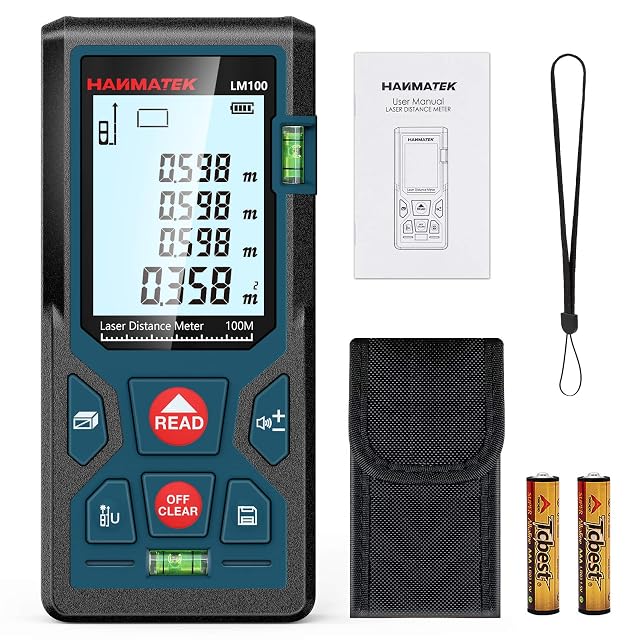
HANMATEK Laser distance meter, 100 m (328 ft) $26 100 m (328 ft) range
Leica Laser distance meter with Bluetooth $220 100 m (328 ft) range

What the models do not share, in measuring instruments

  • If price decides: HANMATEK Laser distance meter, 100 m (328 ft), at $26.

This one’s price among measuring instruments

Details checked on October 8, 2026.

Who should pick this one, among measuring instruments

Interior work measured in feet and fractional inches, where a rounded figure is what goes on the cut list

What buyers actually choose

Amazon reports what buyers took in the month before this page was last checked: at least 4,000.

The figure is a floor, rounded by Amazon, and read through Keepa — it says what buyers picked, not what a maker claims.

Sources

Specifications: the manufacturer sheet for measuring instruments and the matching Amazon product page. Prices and availability: Keepa. Every figure on this page names its source.

The method applied to these measuring instruments