Skip to content

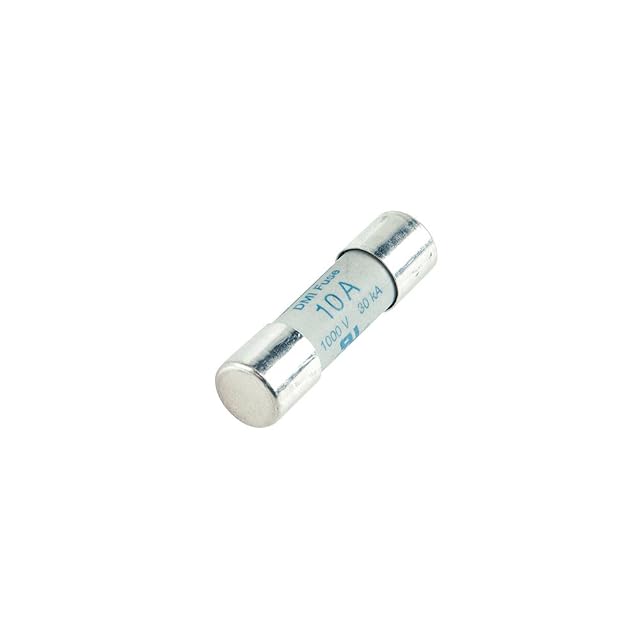
Klein Tools Fast-acting ceramic fuse, 10 A, 10 × 38 mm (0.39 × 1.50 in)

The only fuse here that states dimensions, current, voltage and body material — and the most expensive per piece by a wide margin.

Klein Tools 69034 ceramic replacement fuse, 10 by 38 millimeters

Klein Tools Fast-acting ceramic fuse, 10 A, 10 × 38 mm (0.39 × 1.50 in)

The only fuse here that states dimensions, current, voltage and body material — and the most expensive per piece by a wide margin.

Body type
FAST-ACTING CERAMIC, stated in so many words. This shelf's introduction says ceramic sand-filled bodies are specified where the meter must interrupt a high-energy fault and that a glass fuse of the same current rating does not do the same job. Of the three American fuses on this shelf, this is the ONLY one that puts its body material in writing
Stated dimension or range
10 × 38 mm (0.39 × 1.50 in), stated in the product title. That is the high-energy instrument format — markedly larger than the 5 × 20 mm (0.20 × 0.79 in) and 6.3 × 32 mm (0.25 × 1.26 in) bodies of the three fuses already published here
Current rating
10 A, stated. The two other American fuses on this shelf are both 11 A, so this is the only 10 A part of the three — and this shelf's introduction is explicit that you replace with the exact part the manual specifies, not with the fuse that fits
Voltage rating
1000 V, stated. No fuse previously published on this shelf is rated above 690 V. A 1000 V rating is what a CAT III or CAT IV current input needs, and it is the figure that most often differs between the right fuse and the one that fits the holder
Breaking characteristic
Fast-acting, stated. Klein adds that it "reduces the risk of internal arc flashes during operation" — which is the whole purpose this shelf's introduction describes: a fuse in a current input is a safety component before it is a consumable
Supplied
ONE fuse, at $15.99. That is the most expensive piece on this shelf by a long way: the YUNFOOK two-pack works out at $5.85 each and the Fluke five-pack at $8.48 each. Klein states compatibility with its MM600, MM700 and MM720 meters, and notes Cat. No. 69035 as a companion part
Also stated
Klein also claims "long-lasting performance" and "reliable and safe", which say nothing measurable. Two of the seven bullets on this listing are of that kind — and on a safety component, the four numbers matter and the adjectives do not
Amazon reference
B01JBMZ3B8
EAN
0092644690341
  • Says it is ceramic, which the other two never do
  • All four of the hub's numbers published
  • Fifteen ninety-nine for a single fuse

Best for: A Klein MM600, MM700 or MM720 whose current input has blown, where the manual names this part number

≈ $16
Check price on Amazon
Specifications

Body type
FAST-ACTING CERAMIC, stated in so many words. This shelf's introduction says ceramic sand-filled bodies are specified where the meter must interrupt a high-energy fault and that a glass fuse of the same current rating does not do the same job. Of the three American fuses on this shelf, this is the ONLY one that puts its body material in writing
Stated dimension or range
10 × 38 mm (0.39 × 1.50 in), stated in the product title. That is the high-energy instrument format — markedly larger than the 5 × 20 mm (0.20 × 0.79 in) and 6.3 × 32 mm (0.25 × 1.26 in) bodies of the three fuses already published here
Current rating
10 A, stated. The two other American fuses on this shelf are both 11 A, so this is the only 10 A part of the three — and this shelf's introduction is explicit that you replace with the exact part the manual specifies, not with the fuse that fits
Voltage rating
1000 V, stated. No fuse previously published on this shelf is rated above 690 V. A 1000 V rating is what a CAT III or CAT IV current input needs, and it is the figure that most often differs between the right fuse and the one that fits the holder
Breaking characteristic
Fast-acting, stated. Klein adds that it "reduces the risk of internal arc flashes during operation" — which is the whole purpose this shelf's introduction describes: a fuse in a current input is a safety component before it is a consumable
Supplied
ONE fuse, at $15.99. That is the most expensive piece on this shelf by a long way: the YUNFOOK two-pack works out at $5.85 each and the Fluke five-pack at $8.48 each. Klein states compatibility with its MM600, MM700 and MM720 meters, and notes Cat. No. 69035 as a companion part
Also stated
Klein also claims "long-lasting performance" and "reliable and safe", which say nothing measurable. Two of the seven bullets on this listing are of that kind — and on a safety component, the four numbers matter and the adjectives do not
Amazon reference
B01JBMZ3B8
EAN
0092644690341

What the maker puts in writing

  • “Replacement Fuse, 10x38, 10A, 1000V”
  • “FAST-ACTING CERAMIC: Swift response to protect the multimeter from damage”
  • “ENHANCED SAFETY: Reduces the risk of internal arc flashes during operation”
  • “For use with Klein Tools’ MM600, MM700 and MM720 Multimeters”
  • “Compatible with Cat. No. 69035 for added convenience”
  • Sold as ONE fuse · $15.99

Four numbers, all four published

Which is more than either of the other American fuses on this shelf manages.

This shelf’s introduction names them: dimensions, current rating, voltage rating, breaking characteristic.

Ten by thirty-eight millimeters. Ten amps. A thousand volts. Fast-acting.

And then the fifth thing, which the hub’s own tag line makes the most important of them all.

It says CERAMIC

The YUNFOOK does not. The Fluke does not.

“A glass fuse in a meter that specifies ceramic is not a substitute.”

A ceramic body is packed with sand that quenches the arc as the element melts. A glass body has air in it.

At the energies a 1000 V current input can see, that is the difference between a fuse opening and a fuse rupturing.

Three American fuses on this shelf, all three rated 1000 V. ONE of them names its body material.

A thousand volts, where this shelf topped out at 690

The three fuses already published here are European and small: 5 × 20 mm (0.20 × 0.79 in) glass at 250 V, 5 × 20 mm (0.20 × 0.79 in) ceramic at 250 V, 6.3 × 32 mm (0.25 × 1.26 in) at 690 V.

None of them above 690.

All three American parts are 1000 V, and this one and the YUNFOOK are in the 10 × 38 mm (0.39 × 1.50 in) format — the body size specified where a current input has to interrupt a real fault.

And it is the most expensive piece here

Fifteen ninety-nine for one.

The YUNFOOK: two for $11.69, so $5.85 each. The Fluke: five for $42.42, so $8.48 each.

Nearly three times the YUNFOOK, fuse for fuse.

What the premium buys is a part number your meter’s own maker names — if your meter is an MM600, MM700 or MM720.

Availability

On sale at around 16 € on the American Amazon store at the time of checking.

Prices and availability are what Keepa reported on the date this page was updated; both move.

Prices quoted in this text were read on 8 October 2026. The live price is at the top of the page.

What gets asked here

Why does ceramic matter when a glass fuse of the same rating is cheaper?

Because the two fail differently. A ceramic body is packed with sand that quenches the arc as the element melts; a glass body has air in it and shows you the broken wire, which is handy for diagnosis and bad for interruption. At the energies a 1000 V current input can see, a glass fuse can rupture rather than open. That is why this shelf's tag line says a glass fuse in a meter that specifies ceramic is not a substitute, and it is why this listing putting the word CERAMIC in a bullet is worth more than the other two listings' silence.

Ten amps or eleven?

Whichever your manual says, and they are not interchangeable in either direction. This fuse is 10 A; the other two American parts on this shelf are both 11 A. Fitting an 11 A fuse where the meter specifies 10 A raises the current the meter will pass before the fuse opens; fitting a 10 A where 11 A is specified means nuisance blowing on a legitimate reading. This shelf's buying tip exists for exactly this: replace with the exact part the manual specifies, not with the fuse that fits the holder.

Is fifteen ninety-nine reasonable for one fuse?

It is the most expensive piece on this shelf, and it is also the only one that tells you what it is made of. Per fuse the YUNFOOK is $5.85 and the Fluke $8.48, against $15.99 here. If your manual names the Klein part number, the premium is for a part the maker of your meter stands behind; if it does not, you are paying a brand premium for a 10 × 38 mm (0.39 × 1.50 in) 10 A 1000 V ceramic fuse, which is a specification several makers meet.

All multimeter fuses