Skip to content

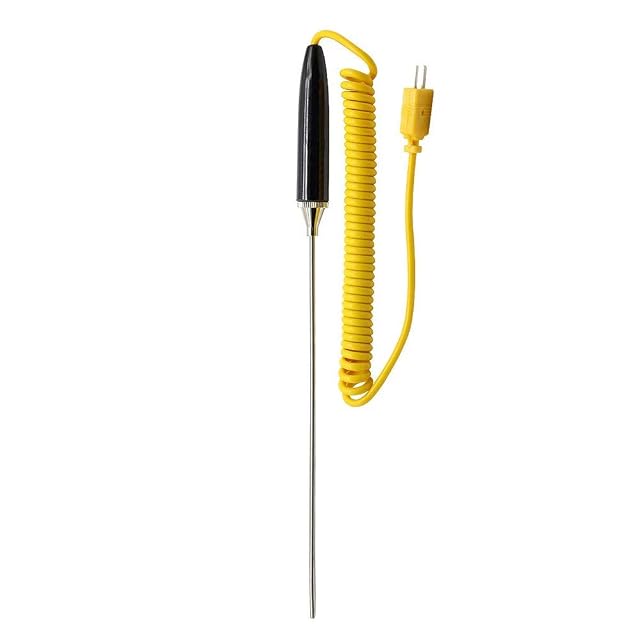
Nxtop Sheathed type K probe, 1100 °C (2012 °F), 3 × 200 mm (0.12 × 7.87 in)

The cheapest probe on this shelf, the hottest, and the only one that publishes a dimension for its plug.

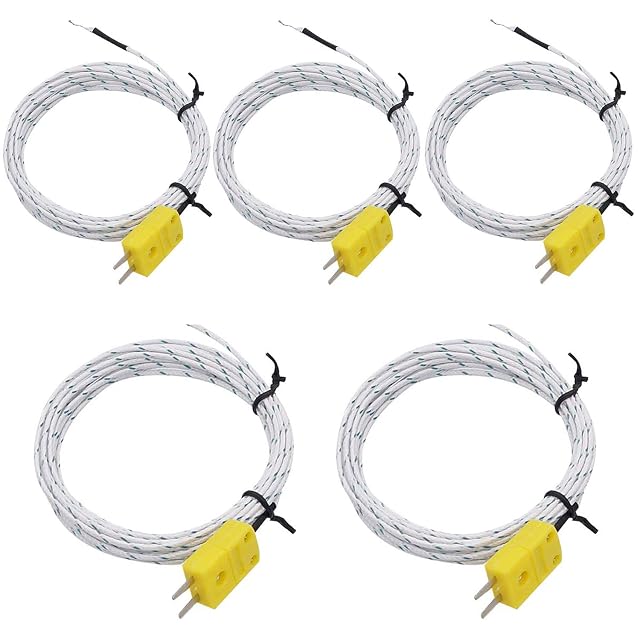
Nxtop WRNK-187 type K thermocouple probe with yellow miniature connector

Nxtop Sheathed type K probe, 1100 °C (2012 °F), 3 × 200 mm (0.12 × 7.87 in)

The cheapest probe on this shelf, the hottest, and the only one that publishes a dimension for its plug.

Type and plug fit
Type K with a MINIATURE K-TYPE CONNECTOR, and the fork terminal spacing is published: 5 mm (0.20 in), 0.197 inch. It is the ONLY probe on this shelf that gives a dimension for its plug, and this shelf's introduction says in so many words that "the miniature flat plug that connects it is where fit fails". A nine-dollar probe answers the shelf's stated failure point, and the twenty-seven and thirty-dollar Kleins do not
Probe style
A SHEATHED ROD, 3 mm (0.12 in) diameter by 200 mm (7.87 in) long — the immersion style this shelf's introduction names. Total length 29.5 cm (11.6 in) with the cable gland, so roughly 9 cm (3.5 in) of that is body rather than probe. It is the only product on this shelf whose probe geometry is fully dimensioned
Stated temperature range
0 to 1100 °C (32 to 2012 °F), stated. That is the HIGHEST range published by any probe on this shelf: the Klein 69142 reaches 480 °C (896 °F), the published Taiss 350 °C (662 °F), the ZIBOO clamp 200 °C (392 °F) and the Klein 69140 clamp 100 °C (212 °F). Only the Fieldpiece ST4 meter claims more, at 1300 °C (2372 °F), and that is the instrument's range rather than a probe's. Like the Klein 69142 it does not go below zero
Cable length
30 cm (11.8 in), 12 inches, stated "not stretched" — the SHORTEST on this shelf by a wide margin. The two pipe clamps give 102 cm (40.2 in), the Klein 69142 three feet, the published Taiss 3 m (10 ft). Thirty centimeters puts your hand about a foot from whatever is at 1100 degrees, which is the real limit of this probe and has nothing to do with its sensor
Stated accuracy
NOT PUBLISHED, and no tolerance class is named either. Only the two pipe clamps on this shelf publish a percentage at all; this one publishes nothing. At $8.99 that is the trade being offered, and the sentence both Klein clamps print applies here too whether or not it is written: what turns the junction voltage into a number is your meter
Heat resistance
Implied by the 1100 °C (2012 °F) range for the sheath, and unstated for the cable. The listing describes the materials only as "Electronic Parts, Plastic" and the color as yellow, which is the standard color coding for type K in American practice. A plastic-insulated 30 cm (11.8 in) lead is what sets the working distance, not the stainless rod
Also stated
78 grams, against 11 g (0.4 oz) for the Klein 69142. The listing is written as a parts-catalog entry rather than marketing — product name, model, type, color, material, range, weight, fork spacing, probe dimensions, total length, cable length, package contents — and that is why it publishes more dimensions than anything else on this shelf
Amazon reference
B07DNGWLFS
EAN
0703064924915
  • Eleven hundred degrees for nine dollars
  • The only plug dimension published on this shelf — 5 mm (0.20 in)
  • Thirty centimeters of cable, at 1100 degrees

Best for: Kiln, furnace, forge and flue work, where 1100 °C (2012 °F) is the specification and a 30 cm (11.8 in) cable is enough

≈ $9
Check price on Amazon
Specifications

Type and plug fit
Type K with a MINIATURE K-TYPE CONNECTOR, and the fork terminal spacing is published: 5 mm (0.20 in), 0.197 inch. It is the ONLY probe on this shelf that gives a dimension for its plug, and this shelf's introduction says in so many words that "the miniature flat plug that connects it is where fit fails". A nine-dollar probe answers the shelf's stated failure point, and the twenty-seven and thirty-dollar Kleins do not
Probe style
A SHEATHED ROD, 3 mm (0.12 in) diameter by 200 mm (7.87 in) long — the immersion style this shelf's introduction names. Total length 29.5 cm (11.6 in) with the cable gland, so roughly 9 cm (3.5 in) of that is body rather than probe. It is the only product on this shelf whose probe geometry is fully dimensioned
Stated temperature range
0 to 1100 °C (32 to 2012 °F), stated. That is the HIGHEST range published by any probe on this shelf: the Klein 69142 reaches 480 °C (896 °F), the published Taiss 350 °C (662 °F), the ZIBOO clamp 200 °C (392 °F) and the Klein 69140 clamp 100 °C (212 °F). Only the Fieldpiece ST4 meter claims more, at 1300 °C (2372 °F), and that is the instrument's range rather than a probe's. Like the Klein 69142 it does not go below zero
Cable length
30 cm (11.8 in), 12 inches, stated "not stretched" — the SHORTEST on this shelf by a wide margin. The two pipe clamps give 102 cm (40.2 in), the Klein 69142 three feet, the published Taiss 3 m (10 ft). Thirty centimeters puts your hand about a foot from whatever is at 1100 degrees, which is the real limit of this probe and has nothing to do with its sensor
Stated accuracy
NOT PUBLISHED, and no tolerance class is named either. Only the two pipe clamps on this shelf publish a percentage at all; this one publishes nothing. At $8.99 that is the trade being offered, and the sentence both Klein clamps print applies here too whether or not it is written: what turns the junction voltage into a number is your meter
Heat resistance
Implied by the 1100 °C (2012 °F) range for the sheath, and unstated for the cable. The listing describes the materials only as "Electronic Parts, Plastic" and the color as yellow, which is the standard color coding for type K in American practice. A plastic-insulated 30 cm (11.8 in) lead is what sets the working distance, not the stainless rod
Also stated
78 grams, against 11 g (0.4 oz) for the Klein 69142. The listing is written as a parts-catalog entry rather than marketing — product name, model, type, color, material, range, weight, fork spacing, probe dimensions, total length, cable length, package contents — and that is why it publishes more dimensions than anything else on this shelf
Amazon reference
B07DNGWLFS
EAN
0703064924915

What the maker puts in writing

  • “Type 0-1100C Thermocouple Probe Temperature Sensor 3x200mm (0.12 × 7.87 in) WRNK-187”
  • “Model : WRNK-187; Type : K Type”
  • “Temperature Range : 0-1100C”
  • “Fork Terminal Spacing : 5mm (0.20 in)/ 0.197”; Probe Head Size : 3 x 200mm (0.12 × 7.87 in)/ 0.12” x 8 “(Dia*L); Probe Total Length : 29.5cm (11.6 in)/11.6”; Cable Length : 30cm (11.8 in)/ 12”(Not Stretched)”
  • “Miniature K-Type connector”
  • “Main Color : Yellow” · 78 g (2.8 oz) · $8.99

NO accuracy figure. NO tolerance class.

The only probe here that dimensions its plug

Five millimeters. Nought point one nine seven of an inch. Fork terminal spacing.

“The miniature flat plug that connects it is where fit fails, and polarity is set by the plug rather than by color convention alone.”

That sentence sits at the head of this shelf, and a nine-dollar parts-catalog listing is the only one of five that answers it.

The $26.98 Klein clamp does not. The $29.99 Klein thermocouple does not. The ZIBOO does not.

Eleven hundred degrees

The highest range published by any PROBE on this shelf.

Klein 69142: 480 °C (896 °F). Published Taiss: 350. ZIBOO clamp: 200. Klein 69140 clamp: 100.

The Fieldpiece ST4 meter claims 1300 °C (2372 °F), but that is an instrument’s range, not a sensor’s.

A type K junction is specified well above 1100 and the metals do not care what the probe cost. What money buys is the tolerance class, the sheath, and how many thermal cycles it survives — none of which this page states.

And thirty centimeters of cable

Which is the real limit of this probe, and it has nothing to do with the sensor.

Twelve inches, “not stretched”.

That puts your hand about a foot from something at 1100 degrees.

For a kiln with a port, or a forge where the probe goes in and the meter stays on the bench, it is right — this is the consumable end of a longer circuit.

Extend it with type K extension wire. Never with copper: a dissimilar-metal join is a second junction with a voltage of its own.

A sheathed rod, fully dimensioned

Three millimeters by two hundred. The immersion style the introduction names.

Total length 29.5 cm (11.6 in), so about 9 cm (3.5 in) of that is gland and body rather than probe.

It is the only product on this shelf whose probe geometry is given at all — the Klein 69142 publishes no shape, no tip diameter and no sheath length.

Written as a parts entry, which is why it says more

Product name. Model. Type. Color. Material. Range. Weight. Fork spacing. Probe head size. Total length. Cable length. Package contents.

No adjectives. No “dependable” anything.

Eleven specifications and no claims — and the only two numbers missing are the accuracy and the tolerance class.

Availability

On sale at around 9 € on the American Amazon store at the time of checking.

Prices and availability are what Keepa reported on the date this page was updated; both move.

Prices quoted in this text were read on 8 October 2026. The live price is at the top of the page.

What gets asked here

Is thirty centimeters of cable enough at 1100 degrees?

That is the question to settle before the sensor specification, and often the answer is no. Thirty centimeters puts your hand and your meter about a foot from the work. For a kiln with a thermocouple port, a forge where the probe goes in and the meter sits on the bench, or any application where the lead is extended with type K compensating cable, it is fine — the probe is the consumable end of a longer circuit. For taking a reading by hand off something glowing, it is not. Extend it with type K extension wire, never with copper: a dissimilar-metal join makes a second junction and a reading of its own.

Why does the plug dimension matter so much?

Because this shelf's introduction says that is where fit fails, and this is the only listing on this shelf that answers it. A miniature type K plug has two flat blades at a standard spacing — 5 mm (0.20 in) here, stated — and the polarity is set by the blade widths rather than by color alone. Meters with a dedicated miniature thermocouple socket take it directly. Meters that read temperature through 4 mm (0.16 in) banana sockets need an adapter, which this probe does not include and the Klein 69142 does. Check which socket your meter has.

Can a nine-dollar probe really read to 1100 °C (2012 °F)?

The junction can: type K is specified well above that and the metals do not care what the probe cost. What varies with price is the tolerance class, the quality of the sheath, how long it survives repeated cycling, and whether the stated figure is a continuous rating or a one-off maximum — none of which this listing states. So treat 1100 °C (2012 °F) as the sensor's capability rather than a service life. For intermittent kiln and forge readings that is usually the right purchase. For a probe left in a furnace, buy one with a published tolerance class.

All temperature probes