Skip to content

Klein Tools Right-angle lead set, CAT III 1000 V

A plain rated pair — and the rating is the whole point, because the three European sets on this shelf publish none.

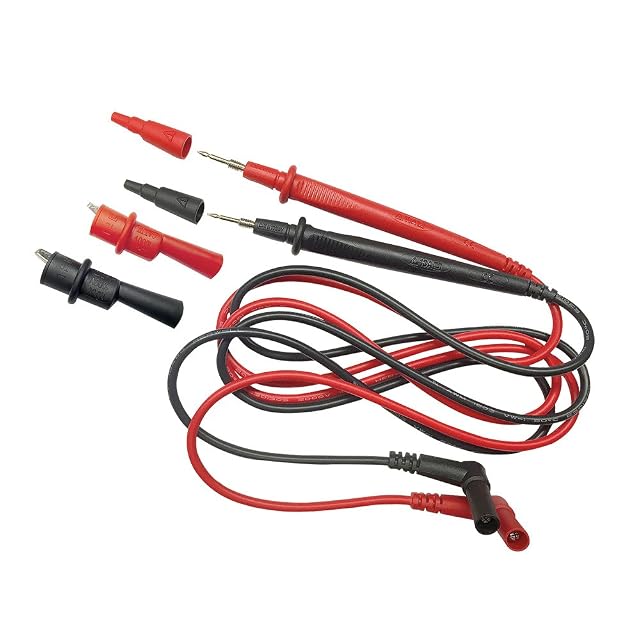
Klein Tools 69410 right-angle test leads with removable alligator clips

Klein Tools Right-angle lead set, CAT III 1000 V

A plain rated pair — and the rating is the whole point, because the three European sets on this shelf publish none.

Stated rating
CATEGORY III 1000 V AND CATEGORY IV 600 V, stated in a bullet. This shelf's introduction is explicit about why that matters: "fitting unrated leads to a CAT III meter gives you a CAT III meter with unrated leads, and the manufacturer's rating for the pair is the lower of the two". The three European sets previously on this shelf publish no category at all; this is one of three sets here that reach CAT IV
Insulation
NOT NAMED. The listing says the leads are durable and says nothing about silicone or PVC — and this shelf's introduction makes that comparison one of its five: silicone stays flexible in the cold where PVC goes stiff and cracks. All three Klein sets share the omission, which is odd on a product whose own description stresses that it is designed by electricians for electricians
Plugs and tips
Right-angle, "standard banana-type inputs compatible with most multimeters and clamp meters". No tip length is published and the plugs are not described as shrouded. A right-angle plug is the detail that keeps a meter from being levered off a ledge by its own leads, and it is why these fit Klein's own lead storage compartments
Length
41 inches, 104 cm, stated. That sits below the published PeakTech's 120 cm (47.2 in) and well below the PUKAIBUL's 125 cm (49.2 in) on this shelf, and above the 3 ft (91 cm) of the two other Klein sets
Supplied
One pair of universal test leads and one set of REMOVABLE alligator clips. Removable is the useful word: the clips come off, so one purchase covers a probe measurement and a hands-free one. 91 grams
Also stated
The leads "are compatible with and fit the lead storage compartment on most Klein test and measurement products" — which is a specification about the METER rather than the lead, and the only one of its kind on this shelf. Klein also offers insulation resistance testing as an application of its heavy-duty sibling, the 69381
Amazon reference
B003U2GONM
EAN
0092644694103
  • CAT III 1000 V and CAT IV 600 V, both published
  • Removable alligator clips in the same purchase
  • The insulation material is never named

Best for: Replacing the leads on any meter with banana sockets, where the meter is rated and the leads must not drag it down

≈ $20
Check price on Amazon
Specifications

Stated rating
CATEGORY III 1000 V AND CATEGORY IV 600 V, stated in a bullet. This shelf's introduction is explicit about why that matters: "fitting unrated leads to a CAT III meter gives you a CAT III meter with unrated leads, and the manufacturer's rating for the pair is the lower of the two". The three European sets previously on this shelf publish no category at all; this is one of three sets here that reach CAT IV
Insulation
NOT NAMED. The listing says the leads are durable and says nothing about silicone or PVC — and this shelf's introduction makes that comparison one of its five: silicone stays flexible in the cold where PVC goes stiff and cracks. All three Klein sets share the omission, which is odd on a product whose own description stresses that it is designed by electricians for electricians
Plugs and tips
Right-angle, "standard banana-type inputs compatible with most multimeters and clamp meters". No tip length is published and the plugs are not described as shrouded. A right-angle plug is the detail that keeps a meter from being levered off a ledge by its own leads, and it is why these fit Klein's own lead storage compartments
Length
41 inches, 104 cm, stated. That sits below the published PeakTech's 120 cm (47.2 in) and well below the PUKAIBUL's 125 cm (49.2 in) on this shelf, and above the 3 ft (91 cm) of the two other Klein sets
Supplied
One pair of universal test leads and one set of REMOVABLE alligator clips. Removable is the useful word: the clips come off, so one purchase covers a probe measurement and a hands-free one. 91 grams
Also stated
The leads "are compatible with and fit the lead storage compartment on most Klein test and measurement products" — which is a specification about the METER rather than the lead, and the only one of its kind on this shelf. Klein also offers insulation resistance testing as an application of its heavy-duty sibling, the 69381
Amazon reference
B003U2GONM
EAN
0092644694103

What the maker puts in writing

  • “SAFETY RATING: Category III 1000V and Category IV 600V safety rating”
  • “Standard banana-type inputs compatible with most multimeters and clamp meters”
  • “Includes one pair of universal test leads and one set of alligator clips with 41-Inch (104 cm (40.9 in)) length”
  • “REMOVABLE ALLIGATOR CLIPS”
  • “Leads are compatible with and fit the lead storage compartment on most Klein test and measurement products”
  • 91 g (3.2 oz) · $19.97

NO insulation material. No tip length. No shrouding. No gauge.

The rating is the product

Which is not usually something you can say about a pair of wires.

“Fitting unrated leads to a CAT III meter gives you a CAT III meter with unrated leads, and the manufacturer’s rating for the pair is the lower of the two.”

The three European sets on this shelf publish no category at all — the published PeakTech fiche says so and says it should be in the listing.

This one has it in a bullet: Category III 1000 V, Category IV 600 V.

It and its two Klein siblings are the only CAT IV items on this shelf.

And the insulation is never named

Which on a product “designed by electricians for electricians” is a strange thing to leave out.

“Silicone insulation stays flexible in the cold where PVC goes stiff and cracks.”

Five sets on this shelf name silicone. One names soft PVC. The three Klein sets say “double insulated” and stop.

A van kit spends January in a cold vehicle. That is where the difference shows, at the flex point nearest the plug.

Right-angle, which is a load-bearing detail

A straight plug stands proud of the meter and turns the lead into a lever: the meter walks off the ledge it is balanced on.

A right-angle plug lies against the case.

It is also why these drop back into the lead compartment on Klein’s own meters — a specification about the METER, on the page of the lead, and the only one of its kind on this shelf.

The clips come off

One purchase, two tools.

A probe tip for a reading you take and release. A crocodile clip for a reading you leave in place while both hands do something else.

Sets with fixed clips make you buy a second pair.

Availability

On sale at around 20 € on the American Amazon store at the time of checking.

Prices and availability are what Keepa reported on the date this page was updated; both move.

Prices quoted in this text were read on 8 October 2026. The live price is at the top of the page.

What gets asked here

Why does a lead need its own category rating?

Because the rating of the pair is the lower of the two. A CAT IV 600 V meter with unrated leads is a meter you cannot claim is CAT IV, and the leads are the part that gets stood on, trapped in a door and dragged across a swarf-covered bench. This shelf's introduction puts it plainly, and the published PeakTech fiche on this shelf says the rating should be in the listing and is not. This listing has it in a bullet: Category III 1000 V and Category IV 600 V. That is the single reason to prefer it over an unrated pair at half the price.

Silicone or PVC?

The page does not say, which is the one real gap. This shelf's introduction compares insulation because the difference is felt rather than specified: silicone stays supple at low temperature, PVC stiffens and in time cracks at the flex points nearest the plug. Five sets on this shelf name silicone, one names soft PVC, and the three Klein sets say only "double insulated". The leads of a van kit spend January in a cold vehicle, so for outdoor work the Fluke or the PUKAIBUL state what you are buying and this does not.

What do the removable clips change?

They turn one purchase into two tools. A probe tip is for a reading you take and release; a crocodile clip is for a reading you leave in place while you do something else with both hands — watching a voltage while cranking an engine, or holding a reference while you work along a circuit. Sets that bundle fixed clips force you to buy a second pair of leads for probing. These unscrew.

Instruments this fits

All test leads and probes