The test voltage must match the circuit, not the other way round · review
PeakTech Insulation tester and installation tester review
Four selectable test voltages from 125 to 1000 V, insulation measurement to 4000 MΩ, continuity, AC and DC voltage — and a stated CAT III 1000 V rating.
What the figures leave us with The properly specified mid-range choice. Four test voltages, a full category rating, and a display built for watching a value settle.
The instrument in this hub that publishes what an insulation tester is defined by.
What the manufacturer publishes
Test voltages of 125 V, 250 V, 500 V and 1000 V. Measurement of insulation, DC and AC voltage, and continuity. A large 3½-digit dual LCD display with bar graph and backlight. Resistance measurements from 0 Ω to 4000 MΩ, and voltage measurement from 0 V to 1000 V AC/DC. CAT III 1000 V.
Choosing the test voltage is the whole skill
Applying 1000 V to a circuit containing electronics destroys it. Applying 125 V to mains wiring produces a number that says nothing about how that insulation behaves at 230 V. The instrument cannot make this decision, and neither can this page — it belongs to the manufacturer instructions of the equipment being tested and to the rules that apply where you work.
What an instrument can do is offer the right voltages, and publish them. This one does both.
The category, in context
CAT III 1000 V is stated in full — category and voltage together. Across every electrical instrument on this site, that complete form appears on a handful of listings. This is one of them.
Availability
No such listing: the American Amazon shop answers the reference with a search box rather than a page.
Read from Keepa on the day this page was last revised; stock and price both move without notice.
What it has, and what it lacks
Strengths
Four test voltages published: 125, 250, 500 and 1000 V
States CAT III 1000 V, the complete rating
Insulation measurement from 0 Ω to 4000 MΩ and voltage measurement to 1000 V AC/DC
A 3½-digit dual display with bar graph and backlight
Compromises
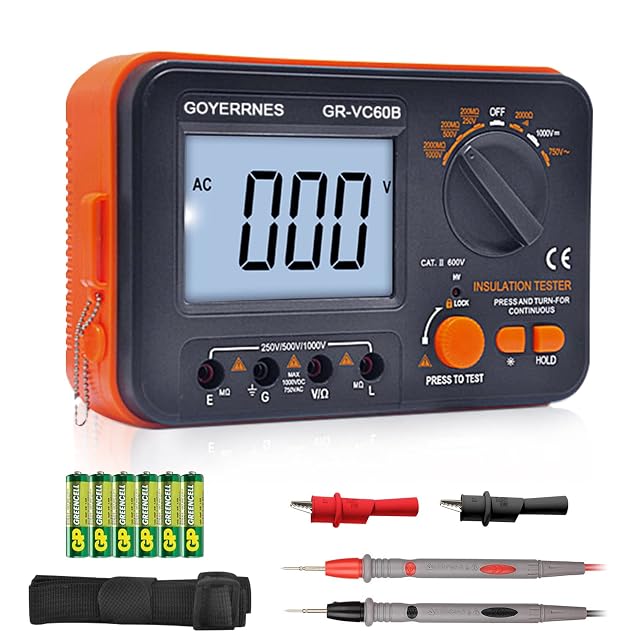
Four times the price of the GOYERRNES
Not found on the American market
A 3½-digit display is coarse next to the 4-digit instruments in other families here
Specifications
Amazon reference
B0069RZ8L4 (identical on 5 markets)
EAN
4250569400544
Insulation test
125 / 250 / 500 / 1000 V test
Stated dimension or range
0–4000 MΩ
Measurement category
CAT III 1000 V
Display
dual display
What gets asked here
Why four test voltages rather than one?
Because equipment is rated differently. Electronics and control circuits are damaged by 1000 V; mains wiring needs at least 500 V to say anything meaningful. PeakTech publishes 125, 250, 500 and 1000 V, which covers the normal span.
What does 4000 MΩ mean in practice?
It is the top of the measuring range — four gigohms. Good insulation reads high, and a ceiling that low will show "over range" on healthy cable, which is the correct and expected result.
What is a bar graph for?
Insulation resistance is often watched as it settles rather than read once. A bar graph shows the trend faster than a digit display, which is why installation testers carry both.
Our score
8.1/ 10
The properly specified mid-range choice. Four test voltages, a full category rating, and a display built for watching a value settle.
This one’s price among measuring instruments
A reference exists on these Amazon stores: France, Germany, Italy, Spain, United Kingdom. Listed is not the same as in stock — availability changes daily.
Details checked on August 31, 2026.
Who should pick this one, among measuring instruments
Installation work where the test voltage has to match the circuit and the category has to be known.
Sources
Specifications: the manufacturer sheet for measuring instruments and the matching Amazon product page. Prices and availability: Keepa. Every figure on this page names its source.
500 and 1000 V test · 600 MΩ · combined insulation tester and multimeter
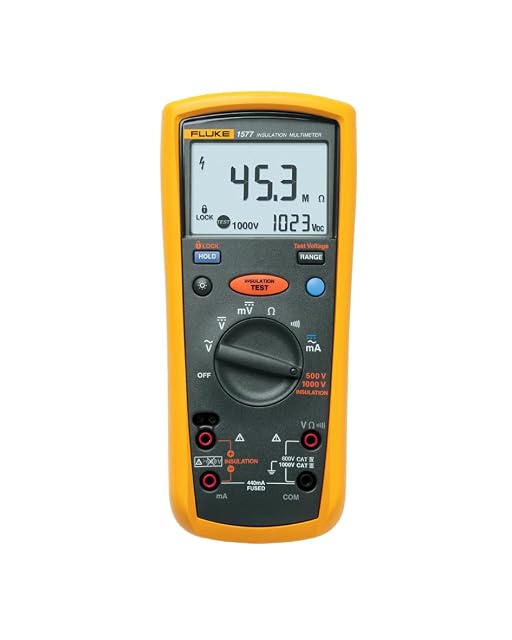
A combined insulation tester and digital multimeter with 500 V and 1000 V test voltages and a 600 MΩ range, at the top of this hub by a factor of four.
Best for: Carrying one instrument instead of two, in a trade where that trade-off is worth the price.
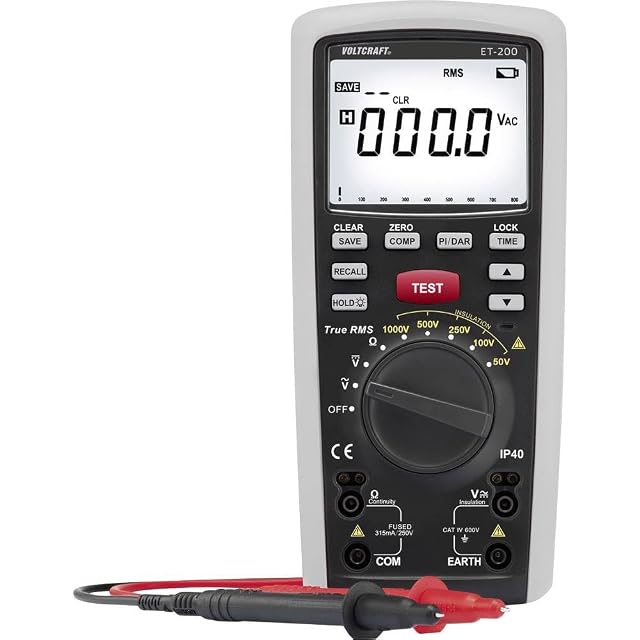
50 / 100 / 250 / 500 / 1000 V · insulation to 20 GΩ · resistance 0.01 Ω–20 kΩ
Five test voltages from 50 to 1000 V and an insulation range reaching 20 GΩ — five times the ceiling of the PeakTech — with low-resistance measurement from 0.01 Ω.
Best for: Testing across a wide span of equipment, from electronics at 50 V to fixed wiring at 1000 V.