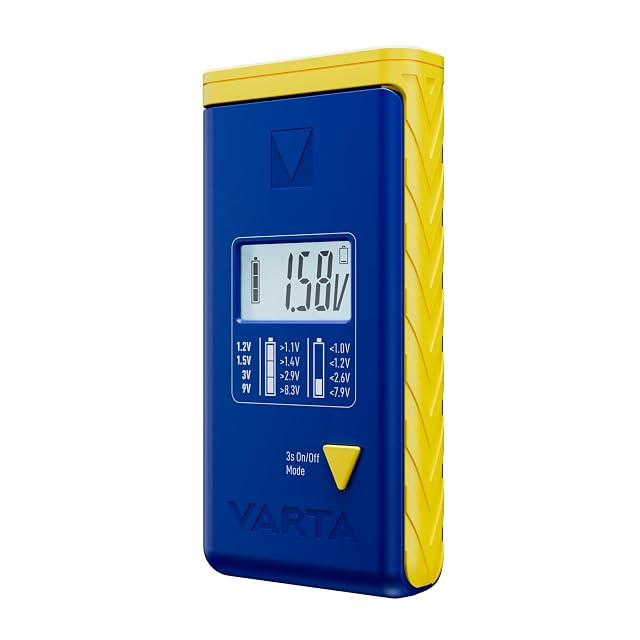
The one thing that matters
Take the cell out. Any instrument going into storage for more than a season: multimeter, moisture meter, detector, sound meter, laser, thermal camera.
It costs nothing, takes ten seconds, and prevents the failure that ends more instruments on this site than every electrical fault combined. Potassium hydroxide from a leaked alkaline cell corrodes the compartment, travels along the contacts and reaches the board.
The rest of the routine
Leads and probes. Coil them loosely, not tightly around the instrument. A lead stored under tension takes a set and eventually cracks at the strain relief — which is exactly where a crack is an exposed conductor.
Calipers and micrometers. Store with the jaws slightly open. A caliper clamped shut puts constant load on the measuring faces, and a micrometer wound tight does the same to its screw.
Levels. On their edge or hanging, not flat under other tools. The relationship between the vial and the bearing face is what a level is; a heavy toolbox lid on it is how that relationship ends.
Lasers. In the case, and away from vibration. A pendulum-leveled laser has a transport lock on some models — use it, because it is there to stop the pendulum swinging against its stops in a van.
Tapes and chalk lines. Wound in. A long tape left extended is a long tape that gets trodden on, and a chalk line left out empties itself into the bag.
Before it goes away
Wipe the measuring faces. Swarf, plaster dust and mortar are all mildly abrasive and mildly hygroscopic, and both of those matter over a winter.
Before it comes out
Check the cell, zero the caliper, turn-over the level. Ten seconds each, and the alternative is discovering a problem in the middle of a job.
What gets asked here
How long is too long to leave a cell in?
A season, for anything you are putting away. Instruments in weekly use are fine; it is the once-a-year tool that comes out corroded.
What about rechargeable instruments?
Lithium packs prefer to be stored part-charged rather than full or empty, and they should not be left flat for months. Follow what the maker states for your instrument.
Does it matter which brand of cell?
For capacity, barely. For leak resistance over years inside a warm instrument, it is the main variable — and nobody publishes a figure for it.
Last reviewed 31 August 2026