The first rule: one conductor
A clamp measures the magnetic field around what is inside its jaw. Live and neutral in the same cable carry equal and opposite currents, and their fields cancel almost exactly.
Clamp a whole flex and you will read a small number, close to zero. It looks like a dead circuit. It is not — it is a correct measurement of a difference that should be near zero.
You must isolate one conductor. On a distribution board that is usually straightforward; on a molded flex it needs a splitter designed for the purpose.
The second rule: know whether you need DC
An AC-only clamp works by transformer action, which requires a changing field. On a photovoltaic string, a battery bank or any DC circuit it reads zero — silently, with no error and no warning.
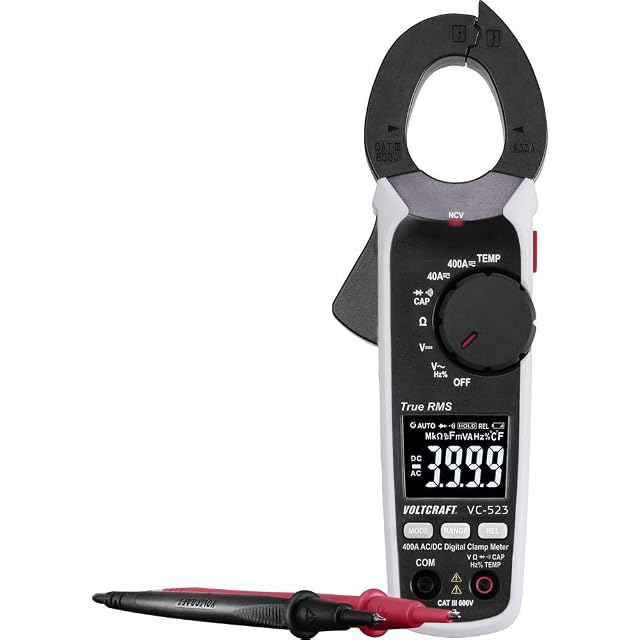
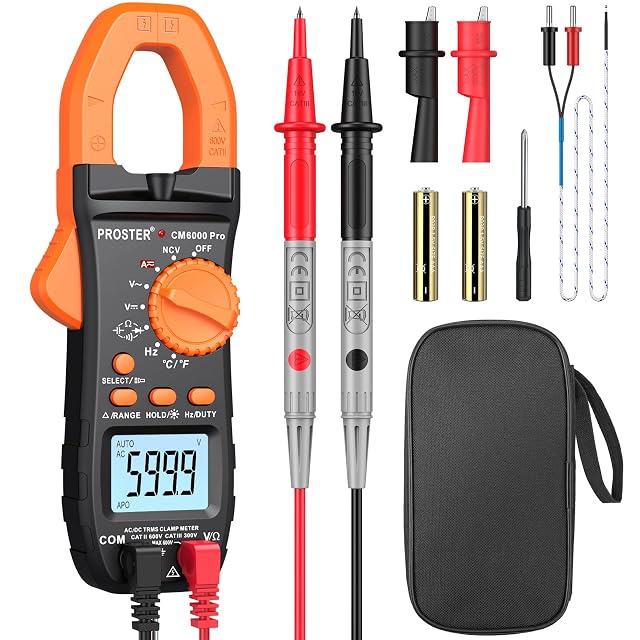
If the work involves solar or batteries, the clamp has to state AC and DC.
Where to place the jaw
Center the conductor in the jaw and close it fully. A partly closed jaw or a conductor jammed against one side reads low. Keep the jaw away from other current-carrying cables, which add their own fields.
The modes that make a reading meaningful
- True RMS on anything switched — drives, dimmers, LED supplies. An averaging clamp reads those low.
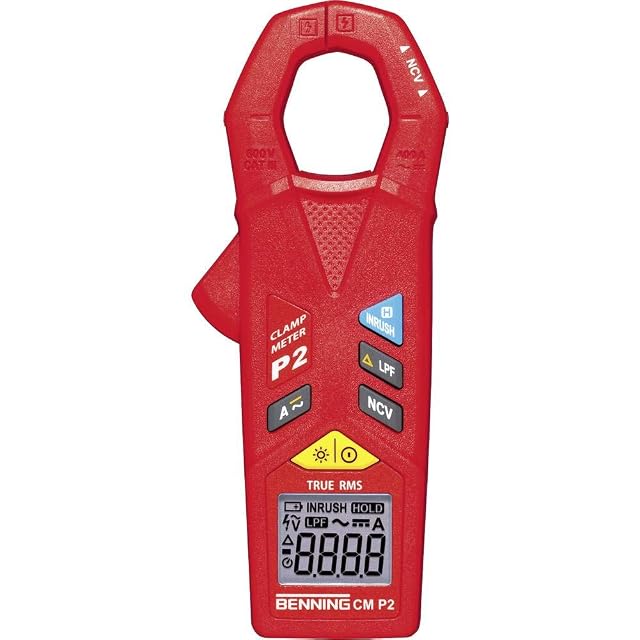
- A low-pass filter on a variable-speed drive output, which strips the switching frequency and leaves the fundamental.
- Inrush for motor starting current, which a normal reading averages away entirely.
And the specification that decides where you may use it
The measurement category. It is a manufacturer statement about the transient energy the instrument is built to survive at a point in an installation, and it belongs in the manual as well as on the case. Read it before the first measurement, and follow the rules that apply where you work.
What gets asked here
Why does clamping the whole cable read zero?
Because live and neutral carry equal and opposite currents. Their magnetic fields cancel, and the clamp reads the difference — which is close to nothing in a healthy circuit. Clamp one conductor only.
Will an AC clamp read DC?
No, and it does not tell you so. A transformer clamp needs a changing field; direct current has none, so it reads zero. Reading DC requires a Hall-effect AC/DC clamp.
What is inrush mode for?
Capturing the brief starting current of a motor, which a normal reading averages away. It is how a starting fault is located rather than guessed at.
Last reviewed 31 August 2026