A and C weighting change the number, not the noise · review
AXVRAV Data-logging sound level meter, 43,000 records review
A logging meter storing up to 43,000 readings for export to a PC, with A and C weighting, a three-color LED warning and a DC output for external recording.
What the figures leave us with The one that answers "when", not just "how loud". For an intermittent noise, that is the only useful question.
A meter for noise that does not happen while you are watching.
What the manufacturer publishes
Measurement from 30 to 130 dB with an accuracy of ± 1.5 dB. A three-color LED warning system — green, yellow and red — for low, medium and high levels. Storage of up to 43,000 readings, viewable on the instrument and on a PC. A and C frequency weighting, fast and slow response modes, and a DC output.
The measurement that a handheld cannot make
Nearly every real noise complaint is about something intermittent: a heat pump cycling at night, a workshop starting at six, traffic at the school run. Standing there with a meter samples a moment, and the moment is rarely the one that matters. Forty-three thousand records is days of continuous data, which turns an argument about impression into a chart.
What it still is not
An indicative instrument with a large memory. The requirement for a formal measurement — a classified meter, a calibrator used before and after, and someone competent to interpret the result — is unchanged by how much data an instrument can store.
Availability
No such listing: the American Amazon shop answers the reference with a search box rather than a page.
Read from Keepa on the day this page was last revised; stock and price both move without notice.
What it has, and what it lacks
Strengths
Logs up to 43,000 readings, on the instrument and exportable to a PC — the only logging meter here
A and C weighting with fast and slow response
A three-color LED warning for low, medium and high levels, readable across a room
States ± 1.5 dB accuracy over 30–130 dB
A DC output for feeding an external recorder
Compromises
On sale on the German market only
The most expensive meter here
No accuracy class named, as with every meter in this hub
Specifications
Amazon reference
B0GY8YZQYB (identical on 2 markets)
EAN
0737900241560
Stated measuring range
30–130 dB
Stated accuracy
± 1.5 dB
Functions
A and C weighting · 43,000-record logger · DC output
What gets asked here
Why log?
Because most noise problems are intermittent. A handheld reading captures the moment you happened to be standing there; a log captures the night, the working week, the machine cycle. That is the difference between "it was 62 dB when I checked" and a record of when it peaks.
What is the DC output for?
Feeding the instantaneous level to an external recorder or data acquisition system, for setups where the internal logger is not enough.
Does logging make it usable for a complaint?
No. Data volume is not the same as legal standing. A measurement used formally needs a classified meter and a calibrator, whatever it records.
Our score
8.2/ 10
The one that answers "when", not just "how loud". For an intermittent noise, that is the only useful question.
This one’s price among measuring instruments
A reference exists on these Amazon stores: Germany, United Kingdom. Listed is not the same as in stock — availability changes daily.
Details checked on August 31, 2026.
Who should pick this one, among measuring instruments
Establishing what a noise does over hours or days, which a handheld reading cannot show.
Sources
Specifications: the manufacturer sheet for measuring instruments and the matching Amazon product page. Prices and availability: Keepa. Every figure on this page names its source.
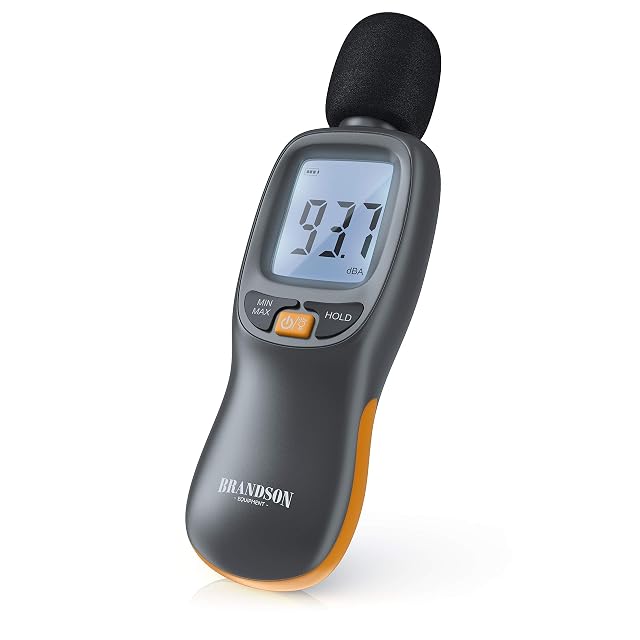
A 35 to 130 dB handheld meter with a MAX function and a large backlit display. Its title carries the word "geeicht" — a manufacturer claim, reported here as one.
Best for: Household comparisons — before and after a change, one room against another.
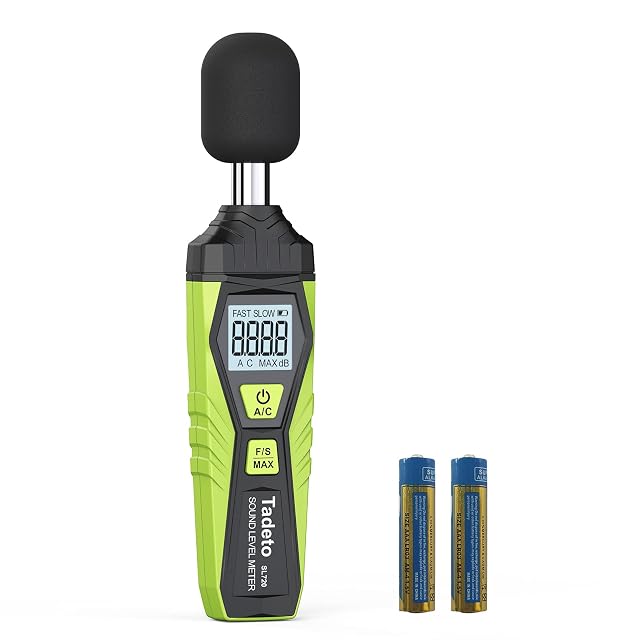
30–130 dB · ± 2.0 dB · A and C weighting · fast and slow · 4-digit 0.1 dB
The only meter here offering both A and C weighting, which is what separates a reading that follows human hearing from one that includes low-frequency energy.
Best for: Low-frequency noise — plant, traffic, bass through a wall — that A-weighting under-reports.
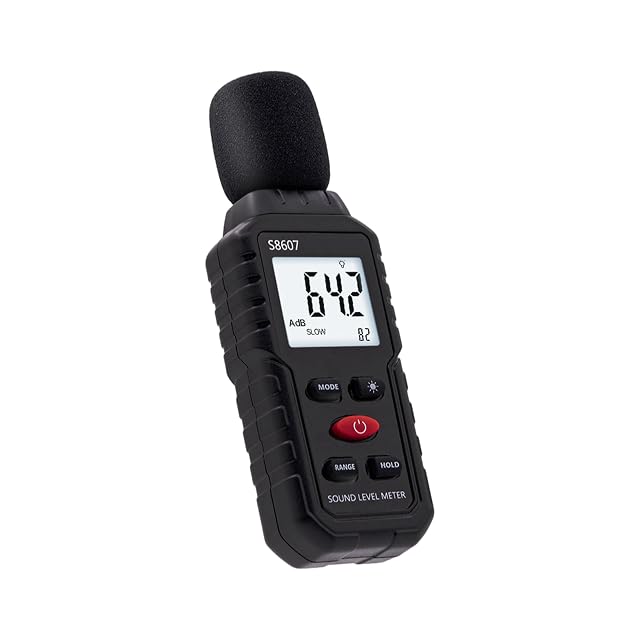
30–130 dB · ± 1.5 dB at 94 dB / 1 kHz · A-weighted · fast and slow response
A 30 to 130 dB meter publishing its accuracy with the conditions it applies at — ± 1.5 dB at 94 dB and 1 kHz — with A-weighting and fast and slow response modes.
Best for: Getting a sense of a noise problem, with a figure whose conditions are stated.