A and C weighting change the number, not the noise · review
Tolesum Sound level meter, 30–130 dB review
A 30 to 130 dB meter publishing its accuracy with the conditions it applies at — ± 1.5 dB at 94 dB and 1 kHz — with A-weighting and fast and slow response modes.
What the figures leave us with A properly stated figure at thirteen euros. Indicative, and honest about being so.
The cheapest meter here states its accuracy the right way round.
What the manufacturer publishes
A measuring range of 30 to 130 dB with an accuracy of ± 1.5 dB at 94 dB and 1 kHz, and automatic range adjustment. A weighted filter adjusting the display range automatically. Fast and slow response modes selectable with the MODE button. Capture of maximum and minimum sound levels with a three-second display hold.
Accuracy with its conditions
Sound meters are referenced at 94 dB and 1 kHz because that is where acoustic calibrators operate. A figure quoted at that point can be compared between instruments; a bare ”± 1.5 dB” cannot, because it says nothing about where in the range or at what frequency.
The line this instrument does not cross
Nothing here is a classified sound level meter. Measurements that have to stand up — an employer’s noise assessment, a complaint to a local authority, a lease dispute — require a meter of a stated class and a calibrator used before and after. This site compares indicative instruments, and says so on every review in this family.
Availability
Catalogued and unsold: the American Amazon shop lists the reference with nobody behind it.
Read from Keepa on the day this page was last revised; stock and price both move without notice.
What it has, and what it lacks
Strengths
States its accuracy with the reference conditions: ± 1.5 dB at 94 dB and 1 kHz
Fast and slow response modes, switchable from one button
A-weighted filter with automatic range adjustment
Captures maximum and minimum levels
The cheapest meter here
Compromises
A-weighting only — no C-weighting for low-frequency noise
No accuracy class named
Not found on the British or American markets
Specifications
Amazon reference
B0D9835CLV (identical on 6 markets)
EAN
4895232024193
Stated measuring range
30–130 dB
Stated accuracy
± 1.5 dB at 94 dB / 1 kHz
Weighting and response
A-weighted · fast and slow response
What gets asked here
Why quote accuracy at 94 dB and 1 kHz?
Because that is the standard reference point sound meters are calibrated at, and an accuracy figure without a reference is meaningless. Stating both is the correct form.
What is the difference between fast and slow?
The averaging time. Fast follows brief peaks; slow smooths them into a steadier reading. A reading quoted without saying which is not comparable to anything.
Is this good enough for a noise complaint?
No. Measurements used for a complaint, a workplace assessment or any legal purpose require a classified meter and a calibrator, which is a different category of equipment. This is an indicative instrument.
Our score
7.0/ 10
A properly stated figure at thirteen euros. Indicative, and honest about being so.
This one’s price among measuring instruments
A reference exists on these Amazon stores: France, Germany, Italy, Spain, United Kingdom, United States. Listed is not the same as in stock — availability changes daily.
Details checked on August 31, 2026.
Who should pick this one, among measuring instruments
Getting a sense of a noise problem, with a figure whose conditions are stated.
Amazon reports what buyers took in the month before this page was last checked: at least 100.
The figure is a floor, rounded by Amazon, and read through Keepa — it says what buyers picked, not what a maker claims.
Sources
Specifications: the manufacturer sheet for measuring instruments and the matching Amazon product page. Prices and availability: Keepa. Every figure on this page names its source.
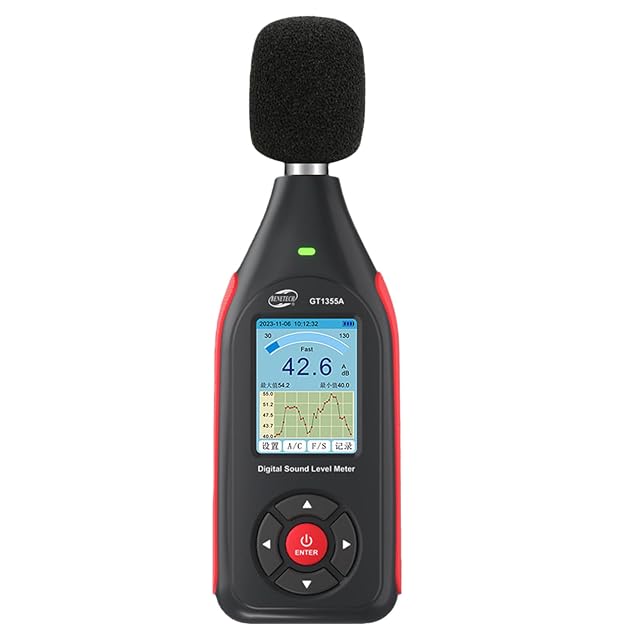
30–130 dB · ± 1.5 dB · A and C weighting · 43,000-record logger · DC output
A logging meter storing up to 43,000 readings for export to a PC, with A and C weighting, a three-color LED warning and a DC output for external recording.
Best for: Establishing what a noise does over hours or days, which a handheld reading cannot show.
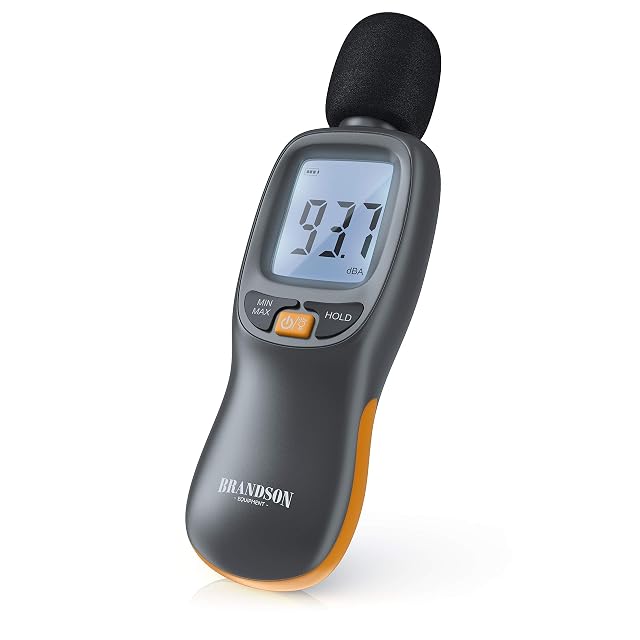
A 35 to 130 dB handheld meter with a MAX function and a large backlit display. Its title carries the word "geeicht" — a manufacturer claim, reported here as one.
Best for: Household comparisons — before and after a change, one room against another.
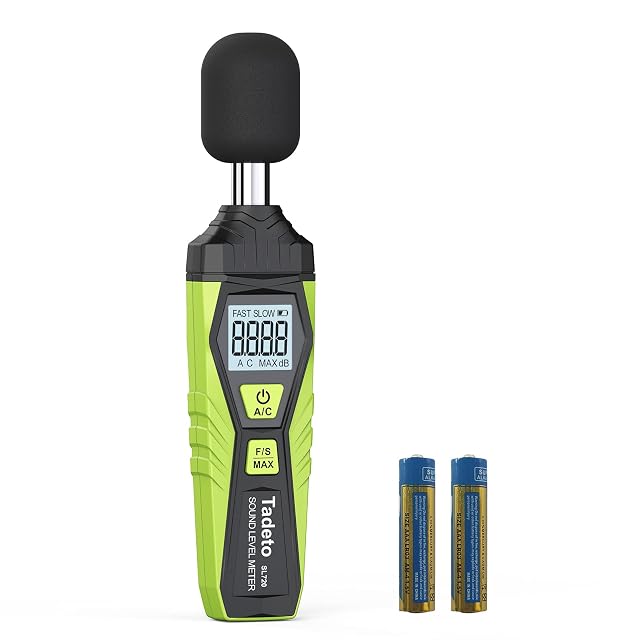
30–130 dB · ± 2.0 dB · A and C weighting · fast and slow · 4-digit 0.1 dB
The only meter here offering both A and C weighting, which is what separates a reading that follows human hearing from one that includes low-frequency energy.
Best for: Low-frequency noise — plant, traffic, bass through a wall — that A-weighting under-reports.