Grade rods
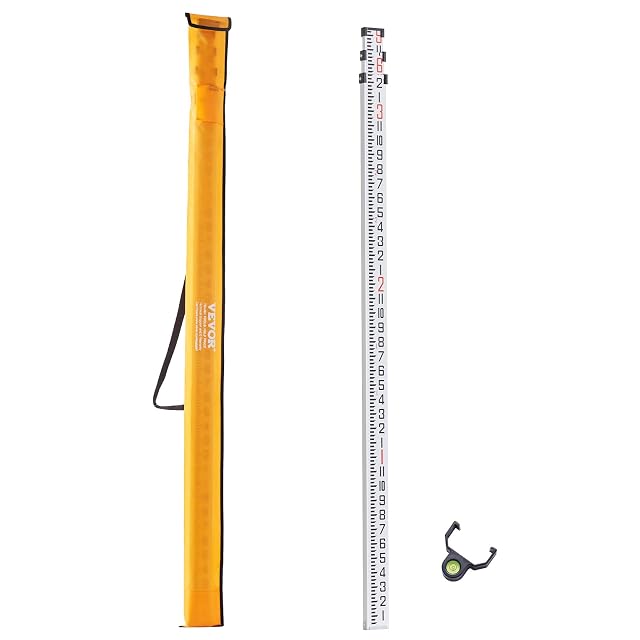
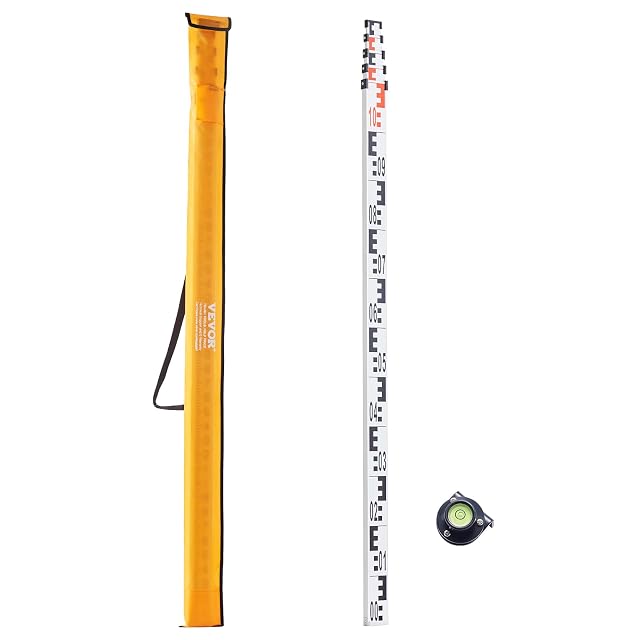
VEVOR Grade rod, 9 ft, 3 sections, 0.8 mm (0.03 in) 6063-T5
Nine feet on three sections instead of five, in a named alloy — and the only rod here that tells you what its second scale actually does.
Specifications
- Body and fittings
- THREE adjustable telescopic sections extending to 9 ft (2.74 m). Three is the fewest on this shelf for that length — another nine-foot rod here uses five — and every joint is a place where a section can creep, flex or admit grit. Injection-molded section joints and high-strength locking buttons are stated
- Material
- 0.8 mm (0.03 in) thick anodized aluminum, 6063-T5. It is the only NAMED ALLOY on this shelf: 6063-T5 is the common extrusion temper, stiff enough for a staff and soft enough to anodize cleanly. One other rod publishes a thickness, at 1 mm (0.04 in) ± 0.05, and the rest say only aluminum alloy
- Scale
- Front markings in feet and 8ths, back markings in feet and inches — AND the only explanation on this shelf of what the back face is for: "The back measures height from top to bottom. Flip the ruler before use." This shelf's introduction says some rods carry an inverted scale so downward measurements read directly instead of by subtraction; this is the only listing that says plainly that its back scale is one
- Stated dimension or range
- 9 ft / 2.74 m extended. No folded length is published, which on three sections is about 3 ft 4 in
- Measuring mode
- A bubble level for vertical accuracy, stated, in a rectangular section stated to align parallel to surfaces
- Supplied
- A durable soft carry bag. No spare parts, where one rod on this shelf ships a replacement lock button
- Amazon reference
- B0D7ZZNB4W
- EAN
- 0197988217695
What the maker puts in writing
- 3 adjustable telescopic sections, extending up to 9 ft / 2.74 m · rectangular shape, aligns parallel to surfaces
- 0.8 mm (0.03 in) thick anodized aluminum (6063-T5), weather- and corrosion-resistant ink markings
- Front marked in Feet/8ths, back in feet/inches. “The back measures height from top to bottom. Flip the ruler before use.”
- Injection-molded section joints and high-strength locking buttons · bubble level
- Durable soft carry bag
No folded length. No spare parts. No tripod thread.
It explains the back face
Which no other listing on this shelf does.
The back counts from the TOP DOWN, and you flip the rod to use it.
That solves a real arithmetic problem. Measuring down from a datum — a finished
floor level, a string line, a sill — with an ordinary rod means reading a number
and subtracting it from the rod length. Every time. In a notebook. In the rain.
An inverted face gives the drop directly.
This shelf’s introduction describes exactly this. Four other rods here mention a back
scale for overall height reading and never say whether it is inverted or just in
other units.
Two joints, not four
Which is the stiffness argument.
Three sections for nine feet. Another nine-foot rod on this shelf uses five.
Each telescopic joint is a sliding fit held by a sprung button, and each one can
settle a fraction under the rod’s own weight — the error this shelf’s buying tip says
you will not notice in the numbers.
Two joints give it half the opportunities.
The cost is bundle length: about three feet four folded, against roughly two feet
for a five-section rod of the same reach.
A named alloy
Which lets you compare, and nothing else here allows it.
6063-T5 is the standard architectural extrusion temper: moderately stiff, very
extrudable, and it anodizes cleanly — which is why the graduations go onto the
anodizing rather than onto paint.
With 0.8 mm (0.03 in) of wall, that describes a LIGHT rod rather than a stiff one. The 1 mm (0.04 in)
rod on this shelf is stiffer and heavier.
Four of the six rods here publish neither figure, so the choice cannot be made at
all.
Availability
On sale at around 35 € on the American Amazon store at the time of checking.
Prices and availability are what Keepa reported on the date this page was updated; both move.
Prices quoted in this text were read on 8 October 2026. The live price is at the top of the page.
What gets asked here
What does the back scale actually do?
It counts downward, and VEVOR is the only maker on this shelf to say so: the back measures height from top to bottom, and you flip the rod before use. That solves a real arithmetic problem. Measuring down from a datum — a finished floor level, a string line, a sill — with an ordinary rod means reading a number and subtracting it from the rod length, every time, in a notebook, in the rain. An inverted face gives the drop directly. Four other rods on this shelf mention a back scale for overall height reading and none explains whether it is inverted or simply in different units.
Is three sections better than five?
For stiffness and for creep, yes. Each telescopic joint is a sliding fit held by a sprung button, and each one can settle a fraction under the rod's own weight — which this shelf's buying tip calls an error you will not notice in the numbers. Two joints give it half the opportunities of four. The cost is fold length: three sections of nine feet fold to about three feet four, against roughly two feet on a five-section rod of the same length. Fewer joints, longer bundle.
Does naming the alloy mean anything?
It lets you compare, which nothing else on this shelf allows. 6063-T5 is the standard architectural extrusion temper: moderately stiff, very extrudable, and it anodizes cleanly — which is why the graduations can be printed onto the anodizing rather than onto paint. Combined with 0.8 mm (0.03 in) of wall it tells you this is a light rod rather than a stiff one; the 1 mm (0.04 in) rod on this shelf is stiffer and heavier. Four of the six rods here publish neither figure, so the choice between light and stiff cannot be made at all.