Target plates
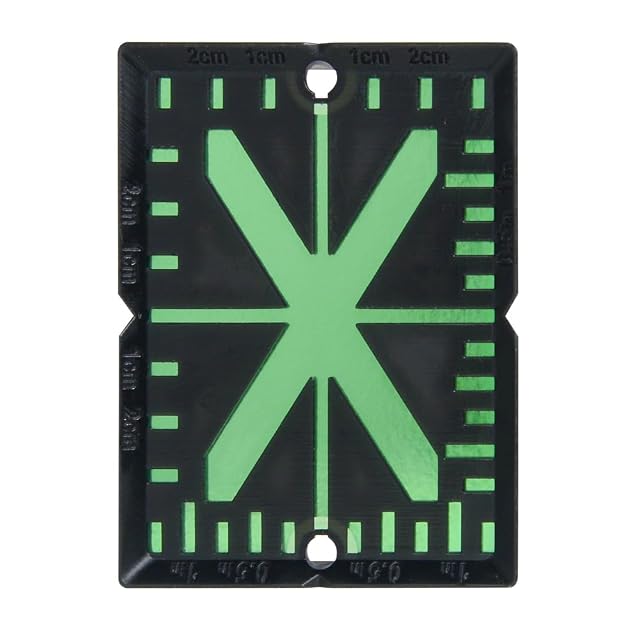
Johnson Green laser target, X pattern, rare-earth magnets
The only plate here that says what its magnets are made of, and the only one that gives you two places to put them.
Specifications
- Reference and mounting
- DUAL-POSITION rare-earth magnets, stated. Two things here that nothing else on this shelf publishes: the magnet MATERIAL — rare earth, meaning neodymium, which holds several times harder than the ferrite magnet in a cheap plate — and TWO positions, so the plate can be hung in either orientation on the same steel without rotating the scale
- Scale
- Dual inch and centimeter measuring scales, stated. Johnson does not say whether zero is at the center or an edge, which four plates on this shelf do state
- Functions
- A high-contrast X design stated to allow fast, efficient positioning, for use with GREEN lasers. An X is read by laying the line along one arm, which is quick when you are square to the plate; a bullseye on another plate here reads the same from any angle. No brightness gain figure is published
- Body and fittings
- A geometric design stated to provide maximum stability. On a plate that hangs from magnets, stability means it does not rotate or slide under its own weight — which is exactly what two magnet positions and a shaped body address together
- Also stated
- For use with GREEN lasers, stated plainly and without hedging. Johnson Level & Tool is a US level manufacturer rather than a trading brand, which is the reason the magnet specification is there at all
- Supplied
- The target. No dimensions, no weight and no count appear, and no floor stand or hook hole is published — the magnets are the only fixing
- Amazon reference
- B0D21HFNCC
- EAN
- 0049448067657
What the maker puts in writing
- High-contrast X design, allows fast, efficient positioning
- Dual-position rare-earth magnets
- Dual inch and centimeter measuring scales
- Geometric design provides maximum stability
- For use with green lasers
No brightness gain. No dimensions. No weight. No hook hole. No floor stand.
Rare earth, which nobody else here names
And on a plate that hangs from magnets it is the specification that matters.
A ferrite magnet holds a light plate on clean flat steel. It lets go of a dusty
stud, a painted joist, a galvanized track.
Rare earth — neodymium — holds several times harder for the same size. That is
what keeps the plate in place when somebody walks past or a door shuts.
Every other plate on this shelf says “strong magnets” and stops.
Two positions, so the scale stays upright
Which is a small piece of design that shows somebody used one.
A plate with one magnet hangs one way round. On a floor track or a soffit rail
the scale then ends up sideways, to be read at an angle.
Two positions let it sit with the scale vertical on a vertical stud OR a
horizontal rail.
It is also why the body is described as geometric rather than rectangular.
An X, not a bullseye
Faster from in front, worse from the side.
A high-contrast X is read by laying the line along one arm — which the eye does
instantly when you are square to the plate. Johnson says fast, efficient
positioning, and that is accurate.
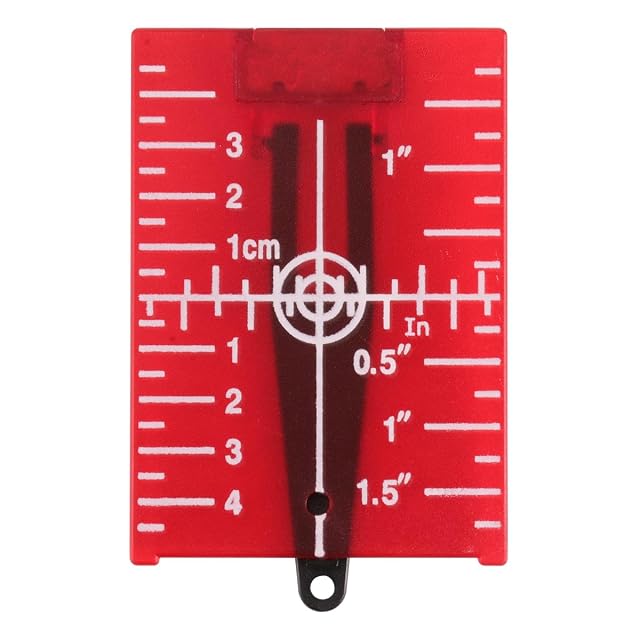
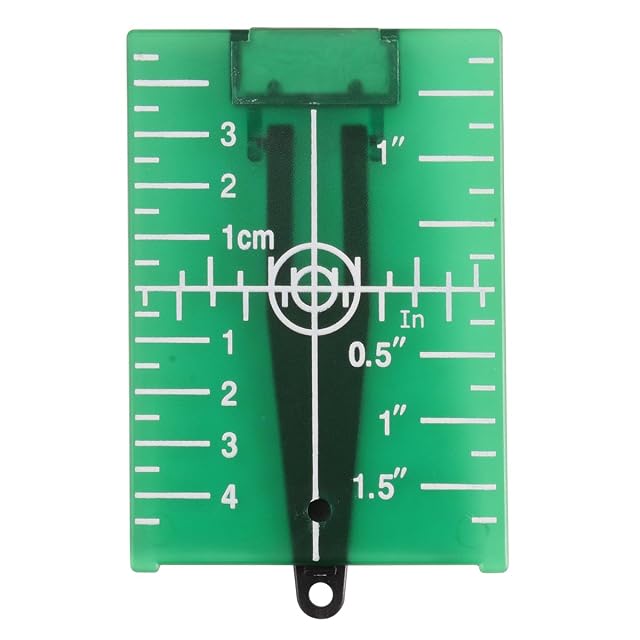
Concentric rings on another plate here stay concentric from any viewpoint, which
suits reading across a room or centering a point.
A magnetic target usually gets set standing right at it. The X is the right choice
for that.
And magnets are the only fixing
No hook hole. No fold-out stand.
Which means no steel, no plate. Two plates on this shelf publish three fixing
routes, including a stand for a bare floor in an empty room.
This one is for steel-framed interiors, and it is very good at that.
Availability
On sale at around 11 € on the American Amazon store at the time of checking.
Prices and availability are what Keepa reported on the date this page was updated; both move.
Prices quoted in this text were read on 8 October 2026. The live price is at the top of the page.