VOLMER VERMESSUNGSGERÄTE- & AKKU-SERVICE Crank tripod for datum lines
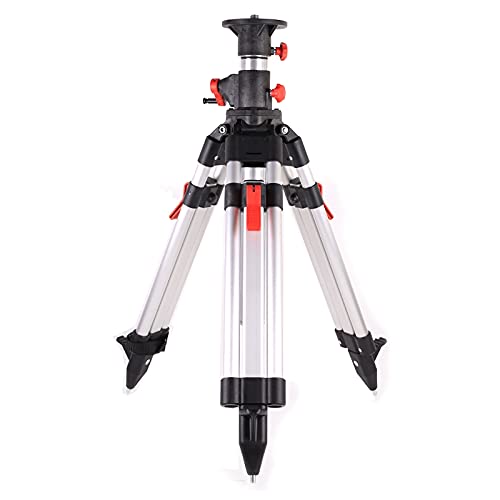
A low crank tripod built for datum lines, with a 35 cm (13.8 in) crank column for fine height setting and an open center so a laser can plumb down to a floor mark.
VOLMER VERMESSUNGSGERÄTE- & AKKU-SERVICE Crank tripod for datum lines
A low crank tripod built for datum lines, with a 35 cm (13.8 in) crank column for fine height setting and an open center so a laser can plumb down to a floor mark.
Amazon reference
B0080XSZRO
EAN
4250678802918
Stated dimension or range
0.58–35 cm (0.2 to 13.8 in) · 1.30 m crank column
Reference and mounting
open center for a plumb point
A working range from 0.58 m (1.9 ft) — low enough for floor datums, which the tall tripods cannot reach
A 35 cm (13.8 in) crank column, so height is set by turning rather than by clamping and hoping
On sale on the German market only
Best for: Setting a meter datum line around a room — the job this tripod is named after.
A working range from 0.58 m (1.9 ft) to 1.30 m (4 ft). A crank column with 35 cm (13.8 in) of adjustment. A continuous opening downwards, for rotary and line lasers with a plumb point to the floor.
Why low is the hard part
Every general-purpose tripod is designed to go up. Datum work happens at around a meter, and the fine control matters more than the reach: the head has to be brought to a specific height and held there while the line is transferred round a room.
A crank does that. A clamped telescopic leg does not — it sets a height and you accept it.
The opening in the middle
It sounds like a detail and it is the reason a surveying tripod is built this way. Setting an instrument exactly over a floor mark requires seeing the mark through the instrument, and a solid center column makes that impossible.
Availability
No such listing: the American Amazon shop answers the reference with a search box rather than a page.
Read from Keepa on the day this page was last revised; stock and price both move without notice.
What gets asked here
What is the open center for?
Lasers with a plumb point project a beam straight down as well as around. An open column lets that beam reach the floor, so the instrument can be set exactly over a mark rather than beside it.
Why a crank instead of a clamp?
A clamp sets a height approximately and then you check it. A crank moves the head by millimeters under control, which is what setting a datum to a mark actually requires.
What is a meter mark?
A reference line struck at a fixed height — typically one meter — around every room on a floor, from which everything else is measured. It is the datum that interior fit-out works from, and the reason this tripod exists.
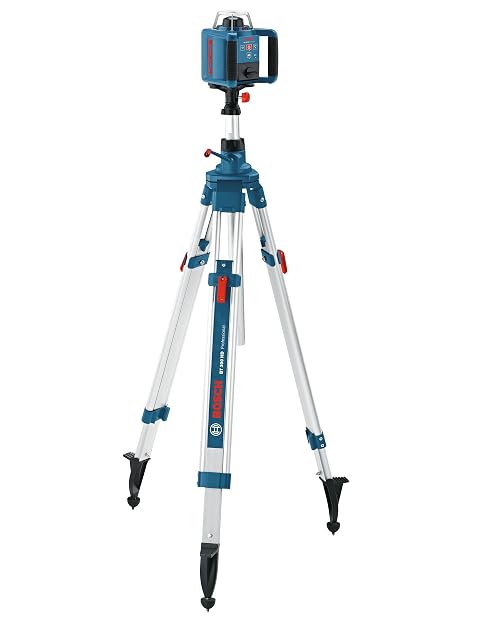
A heavy tripod reaching 295 cm (116.1 in), with a quick-clamp lock instead of screw collars — the difference between setting a height in seconds and in a minute.
Amazon reference
B098TCFNZJ (identical on 5 markets)
EAN
4059952595429
Stated dimension or range
122–295 cm (48 to 116.1 in)
Material
aluminum
Supplied
Quick Clamp height lock
A working height from 122 cm (48 in) to 295 cm (116.1 in), double the reach of the compact tripods here
A Quick Clamp system for fast height locking rather than screw collars
A minimum height of 122 cm (48 in) — it cannot go low for floor work
Best for: Ceilings, high datums and external work, where 175 cm (68.9 in) is not enough.
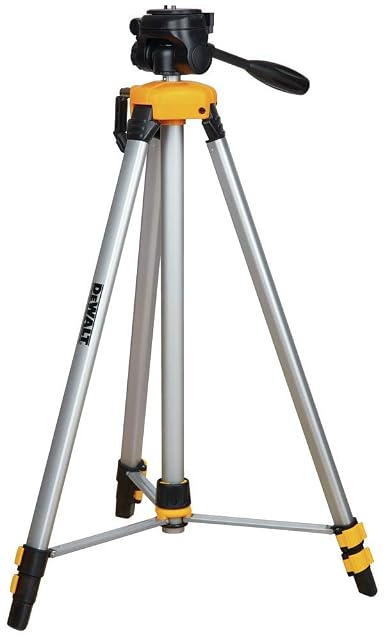
Six feet of height and a level built into the head — and no figure anywhere for how low it goes.
Stated dimension or range
Extends open to 72 in and collapses to 38 in for storage, stated. Seventy-two inches is the tallest on this shelf — six feet puts a laser above head height for a suspended ceiling or a soffit. NO MINIMUM WORKING HEIGHT is published: 38 inches is the folded length for transport, not a usable setting, and this shelf's introduction says the minimum matters as much as the maximum
Reference and mounting
A 1/4-inch × 20 thread mount, stated, and stated compatible with ALL DEWALT line and spot lasers. Naming the whole of its own laser range is a stronger compatibility statement than most on this site — and 1/4 inch rather than 5/8 means it is not a construction tripod
Body and fittings
A tilting head with an INTEGRATED LEVEL, stated to allow level ground to be established. Lightweight aluminum construction with collapsible legs. A level in the head rather than on the leg collar is the better place for it: it reads the plate the instrument actually sits on
Material
Aluminum construction, stated. No wall thickness, no alloy and no load capacity appears — and the other tripod on this shelf publishes a 6.6 lb load
Measuring mode
An integrated level on the tilting head. On a self-leveling laser the tripod need only land within the pendulum range; on a manual laser the head level is the reference the whole job depends on
Supplied
A carrying pouch, stated, plus non-skid feet. At 1361 g (48 oz) the parcel is roughly four times the weight of the other tripod on this shelf, which is what six feet of aluminum leg costs
Also stated
Class II laser, stated — which belongs to the lasers it carries rather than to the tripod, and is the kind of line that drifts across a listing from the product beside it. No elevating column is published
Amazon reference
B07RX1Z2S1
EAN
0885911558273
Seventy-two inches, the tallest on this shelf
A level integrated into the tilting head, not the collar
No minimum working height published anywhere
Best for: Ceiling grids, soffits and high layout, where six feet of reach is the requirement
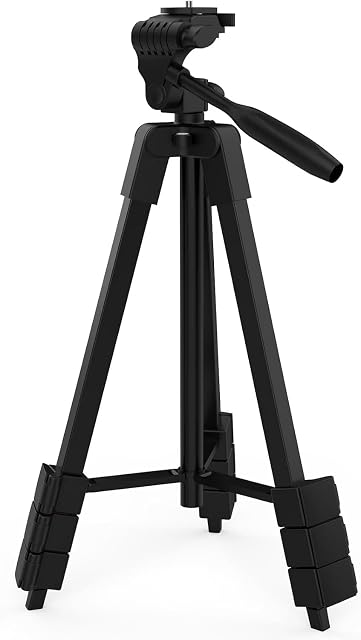
The only tripod here that says how low it goes and how much it will carry — seventeen inches and six and a half pounds.
Stated dimension or range
17 in to 53 in over four different reach lengths, stated. Seventeen inches is the only MINIMUM WORKING HEIGHT published on this shelf — this shelf's buying tip says most laser work happens between 60 cm (23.6 in) and 150 cm (59.1 in), about 23.6 to 59 inches, and this shelf's introduction says the minimum matters as much as the maximum because a tripod that will not go low enough is useless for floor work. This covers the whole band and goes below it
Reference and mounting
A universal 1/4"-20 threaded screw, stated compatible with self-leveling laser levels, cross-line lasers, rangefinders, cameras and projectors. This shelf's introduction says the thread decides compatibility: 1/4 inch suits compact line lasers and camera heads, and 5/8 inch is the construction standard this tripod is not
Body and fittings
A 3-way pan head giving 360° horizontal rotation and vertical movement, with an adjustable 90° sideways tilt — stated. Four discrete extension lengths rather than a continuous column: this shelf's introduction asks whether an elevating column allows fine adjustment without resetting the legs, and four fixed steps is not that
Also stated
A load capacity of 6.6 pounds. It is the ONLY load figure on this shelf, and on a tripod whose entire job is to hold an instrument still it is the figure that says which instruments it holds — a compact cross-line laser is well under a pound, a rotary laser can be four
Measuring mode
A built-in bubble level, stated to let the tripod itself be checked and adjusted. On a self-leveling laser the tripod need only be within the pendulum range; on a manual laser the tripod's own level is the whole reference
Material
Aluminum alloy and PP, stated, with a triangular design stated to reduce vibration, and non-skid feet
Supplied
A carrying pouch, stated, with a minimum length of 17 inches folded — so the folded length and the minimum working height are the same figure, which is what four telescoping sections on a short tripod gives you
Amazon reference
B0H3NZ4M2X
EAN
0798439688035
Seventeen inches minimum, the only one published here
A stated 6.6 lb load capacity, the only load figure here
Four discrete lengths, not a continuous elevating column
Best for: Floor and skirting work, where a tripod that will not go low is no tripod at all
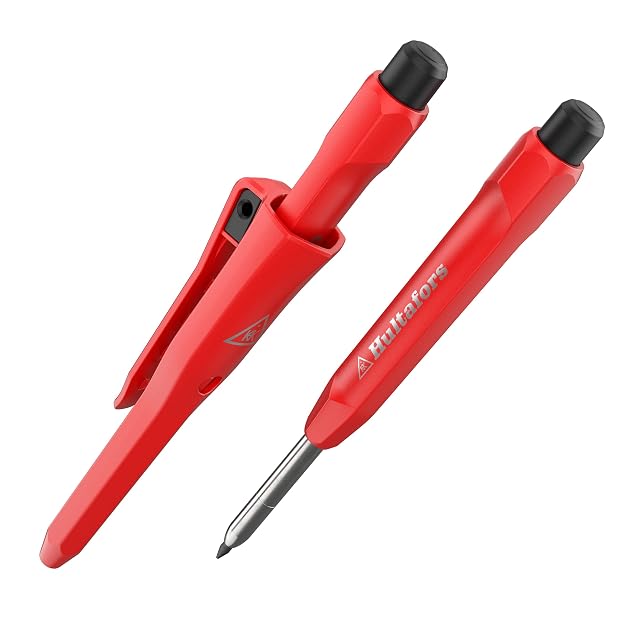
The only marker here whose holster has a drain hole — and the only one that stops both halves rolling away.
Body and fittings
A ROLL STOP on BOTH the pencil and the holster, stated. Every other marker on this shelf that addresses rolling addresses only the pencil — and a holster left on a sloping surface rolls away with the sharpener inside it, which is the half nobody else thinks about
Also stated
A HOLE IN THE BOTTOM OF THE HOLSTER, stated to lead dirt and moisture away from the pen for longer durability. Nobody else on this shelf publishes drainage, and a closed holster on a wet day is a tube of water around a lead: it is the mechanism by which a holstered marker rots rather than wears
Functions
A sharp and accessible sharpener placed in the HOLSTER, stated, and Hultafors adds the reason: the marker is easy to remove from its holster so you do not have to let go of what you are working with. The sharpener staying behind is the point — one hand keeps hold of the work
Supplied
The dispenser is stated to double as a BLADE SNAPPER and to fit the handle of Hultafors SRP knives. A second function nobody else on this shelf has, and a real one: snapping a blunt snap-off blade without pliers is a daily job
Material
A grip-friendly ergonomic design, stated, and easy lead changes. No barrel material, no lead diameter, no lead color and no HARDNESS is published — fewer figures than any other marker here
Stated dimension or range
Not published. No tip diameter, no tip length and no lead count appears, and the shape of the holster is stated to keep the pen in place when you move
Amazon reference
B07L22N2WD
EAN
7317846501015
A roll stop on the holster as well as the pencil
A drain hole in the holster base, unique here
No lead diameter, so a refill is a guess
Best for: Wet and dusty work, where a holster normally turns into a reservoir
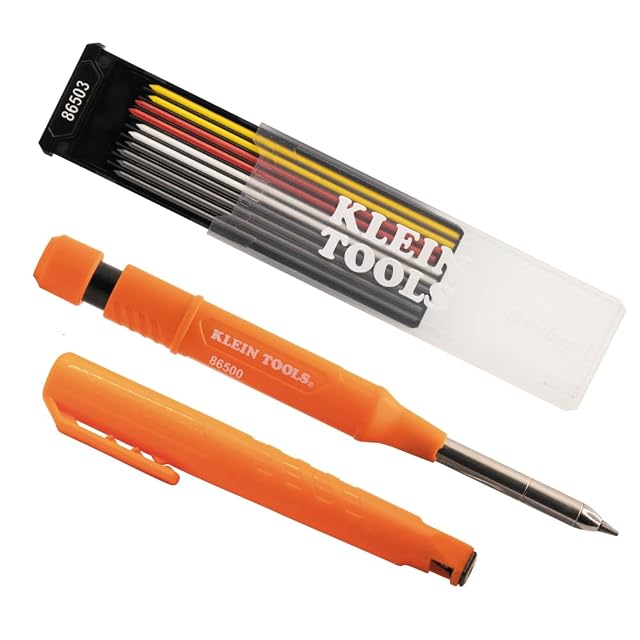
A triangular body does what a flat pencil does — it stays on the beam — and the ten leads come in a case.
Body and fittings
A TRIANGULAR-shaped barrel, stated to prevent the tool rolling away. This shelf's introduction says a flat carpenter pencil does not roll off a beam and that this is one of its two virtues; a triangle keeps that property in a mechanical body, which a round barrel does not. It is one of two anti-roll designs on this shelf
Supplied
A TEN-PACK of assorted color replacement leads in a carrying case — Klein cat. no. 86503 — alongside the marking tool itself, cat. no. 86501. Ten is the largest lead count on this shelf, where the others ship four, six or seven, and a case rather than a loose sleeve is what stops 2.8 mm (0.11 in) leads snapping in a bag
Functions
A 2.8 mm (0.11 in) lead, stated to create long-lasting marks, with a built-in sharpener to keep it sharp for precision marking. Two point eight millimeters is the common mechanical carpenter lead and one of two diameters published on this shelf
Also stated
Tough enough for OSB, wood, concrete and metal, stated. OSB is the useful one on that list: a chipped, resinous, uneven face is where a soft lead skates and a hard one gouges, and it is the surface a framing pencil actually meets
Material
Not published. No barrel material, no tip dimensions and no lead HARDNESS appears — and the leads are described only as assorted color, with not one color named. This shelf's introduction says graphite disappears on dark stone where white or red shows; this listing gives you ten leads and no way to know which is which before opening the case
Reference and mounting
Two Klein catalog numbers inside one product reference: the 80189 kit is the 86501 marking tool plus the 86503 lead pack. No belt clip is stated, where two markers on this shelf publish one
Amazon reference
B0F9HBC845
EAN
0092644801891
A triangular barrel: it stays where you put it
Ten replacement leads, the most on this shelf
"Assorted color" leads, with no color named
Best for: A pencil that will be put down on a joist forty times a day and still be there
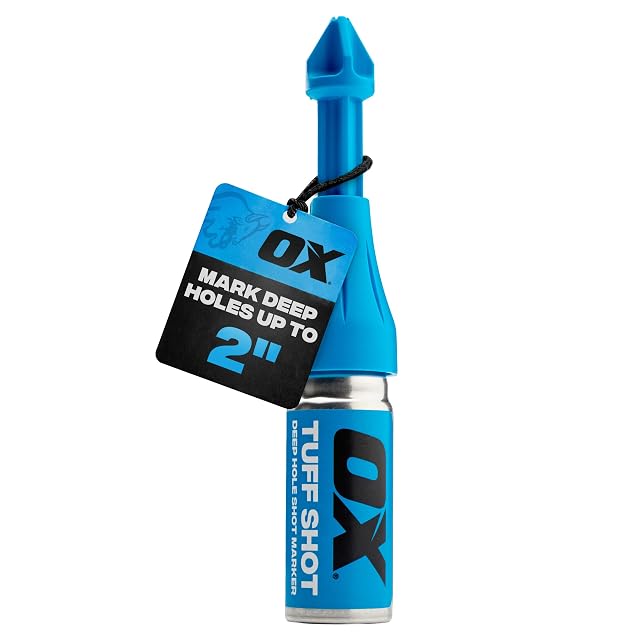
The only marker here that is not a lead — it sprays chalk two inches down a hole, and it works on grease.
Functions
It SHOOTS chalk up to 2 INCHES DEEP, stated, for marking where to drill through a hole that standard marking pens and deep-hole markers cannot reach. This shelf's introduction describes two geometries — a flat carpenter pencil and a thin lead in a long sleeve — and this is a third: nothing touches the surface at all, so there is no tip length to run out and no lead to snap
Supplied
250 BURSTS per cartridge, stated. It is the only count of MARKS on this shelf: every other marker publishes a lead count, which tells you how many leads and not how many marks. Two hundred and fifty is a day of bracket positions or a week of occasional ones
Also stated
Works on CLEAN, DIRTY, RUSTY OR GREASY surfaces, stated, and will mark at any angle. No lead does that: graphite skates off grease and will not take on loose rust, which is exactly the surface a steel fixing position sits on
Material
Bright GREEN chalk, stated high-visibility on any surface and easily removable, leaving no permanent marks. Green is unusual — the chalk shelf on this site deals in blue, white, red and black — and removability is the claim that lets it be used on a finished face
Stated dimension or range
Two inches of reach. No cartridge dimensions, no nozzle diameter and no hole size minimum appears — so which hole it will enter is not published, where one marker on this shelf publishes a 6 mm (0.24 in) tip
Reference and mounting
Named for drywall, concrete, brick, metal and wood, and for carpenters, masons and electricians. Refills: the chalk shelf on this site carries one-ounce bottles sold specifically for this kind of cartridge marker
Amazon reference
B0D1H6NH4N
EAN
9341231060649
Two inches of reach with nothing touching the surface
250 bursts published — a count of marks, not of leads
A burst is a blob, not a line: no scribing with this
Best for: Transferring a fixing position from a bracket onto the wall behind it, through the hole