Pencils
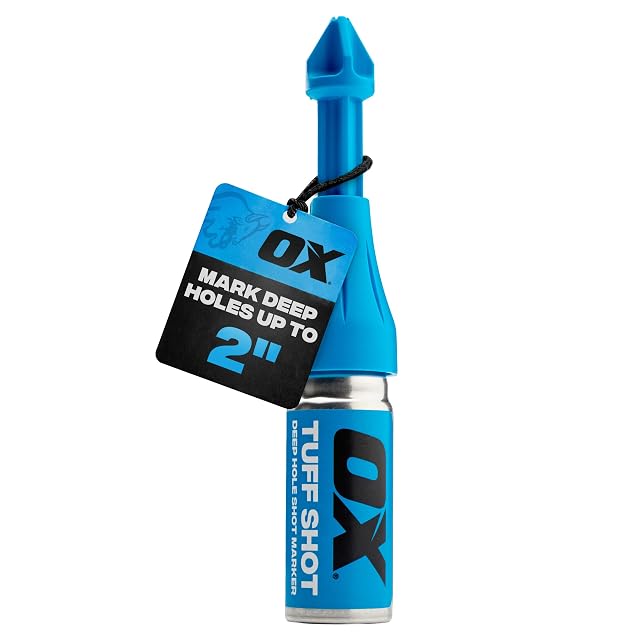
OX Deep-hole chalk marker, 2 in reach, 250 bursts
The only marker here that is not a lead — it sprays chalk two inches down a hole, and it works on grease.
Specifications
- Functions
- It SHOOTS chalk up to 2 INCHES DEEP, stated, for marking where to drill through a hole that standard marking pens and deep-hole markers cannot reach. This shelf's introduction describes two geometries — a flat carpenter pencil and a thin lead in a long sleeve — and this is a third: nothing touches the surface at all, so there is no tip length to run out and no lead to snap
- Supplied
- 250 BURSTS per cartridge, stated. It is the only count of MARKS on this shelf: every other marker publishes a lead count, which tells you how many leads and not how many marks. Two hundred and fifty is a day of bracket positions or a week of occasional ones
- Also stated
- Works on CLEAN, DIRTY, RUSTY OR GREASY surfaces, stated, and will mark at any angle. No lead does that: graphite skates off grease and will not take on loose rust, which is exactly the surface a steel fixing position sits on
- Material
- Bright GREEN chalk, stated high-visibility on any surface and easily removable, leaving no permanent marks. Green is unusual — the chalk shelf on this site deals in blue, white, red and black — and removability is the claim that lets it be used on a finished face
- Stated dimension or range
- Two inches of reach. No cartridge dimensions, no nozzle diameter and no hole size minimum appears — so which hole it will enter is not published, where one marker on this shelf publishes a 6 mm (0.24 in) tip
- Reference and mounting
- Named for drywall, concrete, brick, metal and wood, and for carpenters, masons and electricians. Refills: the chalk shelf on this site carries one-ounce bottles sold specifically for this kind of cartridge marker
- Amazon reference
- B0D1H6NH4N
- EAN
- 9341231060649
What the maker puts in writing
- “Shoots chalk up to 2 inches deep; ideal hole marker for drilling where standard marking pens and deep hole markers cannot reach”
- “Each OX tuff shot cartridge delivers 250 chalk bursts”
- Bright green construction chalk, marks clearly on any surface · “easily removable spray marker leaves no permanent marks”
- “Works on clean, dirty, rusty, or greasy surfaces… will mark at any angle”
- For drywall, concrete, brick, metal and wood · carpenters, masons and electricians
No nozzle diameter. No cartridge dimensions. No minimum hole size.
A third geometry
This shelf’s introduction names two: a flat carpenter pencil, and a thin lead in a
long sleeve.
This is neither. Nothing touches the surface at all.
So there is no tip length to run out, no lead to snap, and no angle at which the
lead drags instead of marking.
The reach is a trajectory rather than a length.
Two inches, which a pencil cannot reach
Fifty millimeters.
The longest tip on this shelf is 45 mm (1.77 in), and that is the only one that publishes a
figure at all.
What two inches buys is the job: hold a bracket, a hanger or a fitting where it
goes, push the nozzle through its hole, fire. A green dot lands on the wall
exactly under the hole.
Nothing else on this shelf does that.
Two hundred and fifty bursts
The only count of MARKS on this shelf.
Every other marker here publishes a lead count — four, six, seven, ten — which
tells you how many leads and not how many marks.
Two hundred and fifty is a day of bracket positions, or a month of occasional
ones.
Grease and rust, which no lead will take
Chalk is a dry pigment. It settles on a surface rather than being rubbed into it.
So it sits on an oil film and on loose rust, where graphite skates off or will
not deposit at all.
Which matters because the surfaces a steel fixing sits on are exactly those: a
rolled beam, a galvanized purlin, a rusted lintel.
And the chalk is stated removable. The mark does not survive the job.
What it cannot do is draw a line
A burst is a blob of a few millimeters.
A sharpened 2.8 mm (0.11 in) lead is a point, and a flat pencil is a line.
This shelf’s buying tip is about matching the mark to the tolerance. This is a
position marker, not a scribe.
Availability
On sale at around 13 € on the American Amazon store at the time of checking.
Prices and availability are what Keepa reported on the date this page was updated; both move.
Prices quoted in this text were read on 8 October 2026. The live price is at the top of the page.
What gets asked here
What is this actually for?
Transferring a fixing position from the thing being fixed onto the wall behind it. You hold a bracket, a hanger or a fitting where it goes, push the nozzle through its hole, and fire — a green dot lands on the wall two inches back, exactly under the hole. A pencil cannot do that because a pencil needs the surface within the length of its tip; the longest tip on this shelf is 45 mm (1.77 in), and two inches is 50. It is a different job from drawing a line, and nothing else on this shelf does it.
How is it different from a deep-hole pencil?
Nothing touches the surface. This shelf's introduction defines a deep-hole marker as a thin lead in a long sleeve, which means the reach is limited by the sleeve and the mark is limited by the lead getting to the surface at an angle. This fires chalk, so the reach is a trajectory rather than a length, and it marks at any angle — stated — which a lead cannot, because a lead at forty-five degrees drags rather than marks. The cost is precision: a burst is a blob of a few millimeters, where a sharpened 2.8 mm (0.11 in) lead is a point.
Does it really work on grease?
That is the claim and it is mechanically plausible, which no lead's would be. Chalk is a dry pigment that settles on a surface rather than being rubbed into it, so it sits on oil film and loose rust where graphite skates off or simply will not deposit. OX states clean, dirty, rusty or greasy. That matters because the surfaces a steel fixing position sits on are exactly those — a rolled beam, a galvanized purlin, a rusted lintel. And the chalk is stated removable, so the mark does not survive the job.