Skip to content

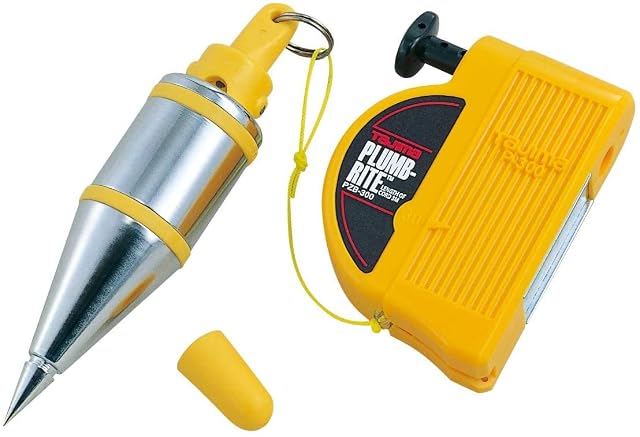
Tajima Plumb bob setter, 10 oz, self-retracting line

The only bob here that says how long it takes to stop — and the only one you can hammer into a ceiling.

Tajima PZB300D plumb bob setter with self-retracting line and magnetic head

Tajima Plumb bob setter, 10 oz, self-retracting line

The only bob here that says how long it takes to stop — and the only one you can hammer into a ceiling.

Measuring mode
Quick-stabilizing: the 10-ounce bob steadies WITHIN 6 SECONDS, stated. It is the only settling time published on this shelf. This shelf's introduction says weight sets how quickly a bob settles and the buying tip says to let it stop on its own rather than steadying it by hand — a published six seconds is what makes that instruction bearable, because the alternative is standing there not knowing whether to wait longer
Reference and mounting
THREE fixings in one head, stated: a setting pin for wood and drywall, a strong magnet for steel surfaces, and a hook for nails or studs. No other bob on this shelf offers more than two, and most offer none at all — a bare bob is tied to a nail somebody else put in
Functions
An AUTO-RETRACTING PIN STRIKER, stated for use with a hammer for overhead setting. That is the unusual one: you hold the setter against a ceiling and strike it, the pin drives in, and the striker retracts out of the way — so a plumb line can be dropped from a ceiling without first fitting a nail with a free hand you do not have
Stated dimension or range
10 oz / 300 g, published in both units, with a 14.5 ft self-retracting line. Ten ounces is the middle of this shelf, which runs from 5 oz to 21 oz
Body and fittings
A self-retracting line, stated for quick easy storage. Two bobs on this shelf retract; the rest use a hand reel, a card or nothing. The line construction is not stated — four listings on this shelf state braided, and this is not one of them
Also stated
Commercial grade for long-lasting durability, and described in the maker's own text as a compact and light-duty version. No tip material, no tip guard and no replaceable tip is published
Amazon reference
B001S2QNNW
EAN
0049296055066
  • Six seconds to steady, the only settling time here
  • A setting pin, a magnet AND a hook in one head
  • The line construction is not stated

Best for: Overhead setting from a ceiling or a steel beam, where the fixing is the hard part

≈ $33
Check price on Amazon
Specifications

Measuring mode
Quick-stabilizing: the 10-ounce bob steadies WITHIN 6 SECONDS, stated. It is the only settling time published on this shelf. This shelf's introduction says weight sets how quickly a bob settles and the buying tip says to let it stop on its own rather than steadying it by hand — a published six seconds is what makes that instruction bearable, because the alternative is standing there not knowing whether to wait longer
Reference and mounting
THREE fixings in one head, stated: a setting pin for wood and drywall, a strong magnet for steel surfaces, and a hook for nails or studs. No other bob on this shelf offers more than two, and most offer none at all — a bare bob is tied to a nail somebody else put in
Functions
An AUTO-RETRACTING PIN STRIKER, stated for use with a hammer for overhead setting. That is the unusual one: you hold the setter against a ceiling and strike it, the pin drives in, and the striker retracts out of the way — so a plumb line can be dropped from a ceiling without first fitting a nail with a free hand you do not have
Stated dimension or range
10 oz / 300 g, published in both units, with a 14.5 ft self-retracting line. Ten ounces is the middle of this shelf, which runs from 5 oz to 21 oz
Body and fittings
A self-retracting line, stated for quick easy storage. Two bobs on this shelf retract; the rest use a hand reel, a card or nothing. The line construction is not stated — four listings on this shelf state braided, and this is not one of them
Also stated
Commercial grade for long-lasting durability, and described in the maker's own text as a compact and light-duty version. No tip material, no tip guard and no replaceable tip is published
Amazon reference
B001S2QNNW
EAN
0049296055066

What the maker puts in writing

  • “Quick-stabilizing 10-Ounce bob steadies within 6 seconds”
  • Setting pin for wood/drywall, strong magnet for steel surfaces, and hook for nails or studs
  • 14.5 ft self-retracting line
  • “Auto-retracting pin striker for use with a hammer for overhead setting”
  • 10 oz / 300 g · commercial grade

Line construction not stated. No tip material. No replaceable tip.

Six seconds, which nobody else publishes

And this shelf’s buying tip is why it matters.

“Let the bob stop on its own rather than steadying it by hand. A bob touched to stop it is a bob you have just pushed off vertical.”

So the only correct procedure is to wait. And waiting without knowing how long is where people reach out and grab it.

Six seconds is short enough to stand still for, and long enough to be worth saying.

Every other bob on this shelf publishes a WEIGHT — which is the cause — and leaves you to discover the effect.

A pin you hammer into the ceiling

Which is the clever part.

Dropping a line from a ceiling normally means holding a nail against plasterboard overhead, hitting it, then hanging a bob from it. Three operations, one hand short.

This setter carries its own pin. Hold the tool up, strike the striker, and the pin drives in with the line already attached — then the striker retracts so nothing stands proud.

Marking a floor point under a duct, a light position or a ceiling feature is exactly that job.

Three fixings, because ceilings are mixed

A magnet holds on steel: a purlin, a stud track, an RSJ. It does nothing on plasterboard or timber.

The setting pin covers wood and drywall. The hook covers a nail somebody already put in.

One other bob here has magnets and a fold-out bracket — two routes. Most have none at all and are tied to a nail.

Under a mixed ceiling, three is the number that means not changing tools.

And its own maker calls it light duty

Which is worth repeating rather than hiding.

Tajima’s text describes it as a compact and light-duty version, and the same maker sells a 21-ounce bob on this shelf.

Ten ounces settles in six seconds and swings in a draft more than twenty-one would. For overhead interior work that is the right trade; on an open site in wind it is not.

Availability

On sale at around 33 € on the American Amazon store at the time of checking.

Prices and availability are what Keepa reported on the date this page was updated; both move.

Prices quoted in this text were read on 8 October 2026. The live price is at the top of the page.

What gets asked here

Why is a settling time worth publishing?

Because this shelf's buying tip forbids the shortcut. A bob touched to stop it is a bob you have just pushed off vertical, so the only correct procedure is to wait — and waiting without knowing how long is where people give up and grab it. Six seconds is short enough to stand still for and long enough that it is worth saying. Tajima publishes it on both of its bobs on this shelf and nobody else publishes it at all: the others state a weight, which is the cause, and leave you to discover the effect.

What is the pin striker actually for?

Dropping a line from a ceiling with one pair of hands. Normally that means holding a nail against plasterboard overhead, hitting it, then hanging a bob from it — three operations and one hand short. This setter has its own pin, so you hold the whole tool against the ceiling, strike the striker with a hammer, and the pin drives in with the line already attached; the striker then retracts so nothing stands proud. Marking a floor point under a ceiling feature, a duct or a light position is exactly that job.

Three fixings or one magnet?

Three, and the difference is which ceiling you are under. A magnet holds on steel — a purlin, a stud track, an RSJ — and does nothing on plasterboard or timber. The setting pin covers wood and drywall; the hook covers a nail or a stud somebody has already put in. One other bob on this shelf has rare-earth magnets and a fold-out bracket, which is two routes; most have none and are simply tied to a nail. Under a mixed ceiling, three is the number that means you do not change tools.

All mason lines and plumb bobs