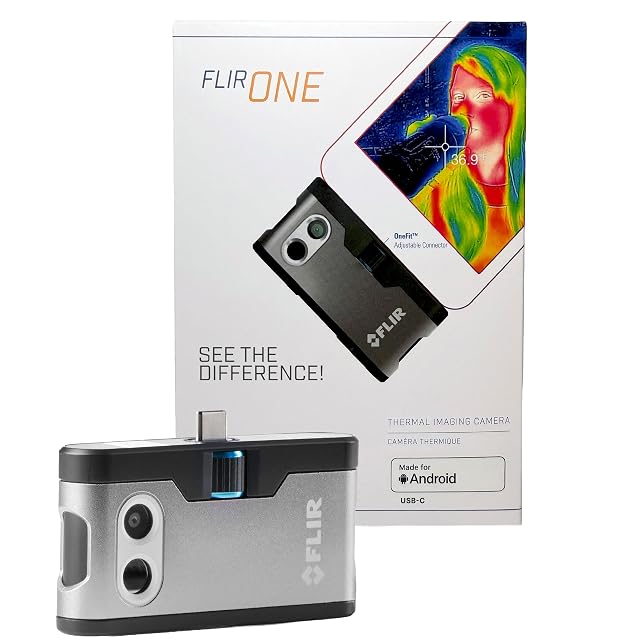
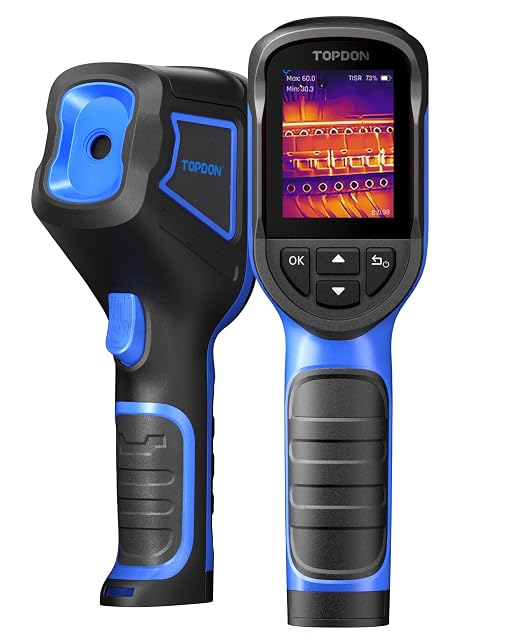
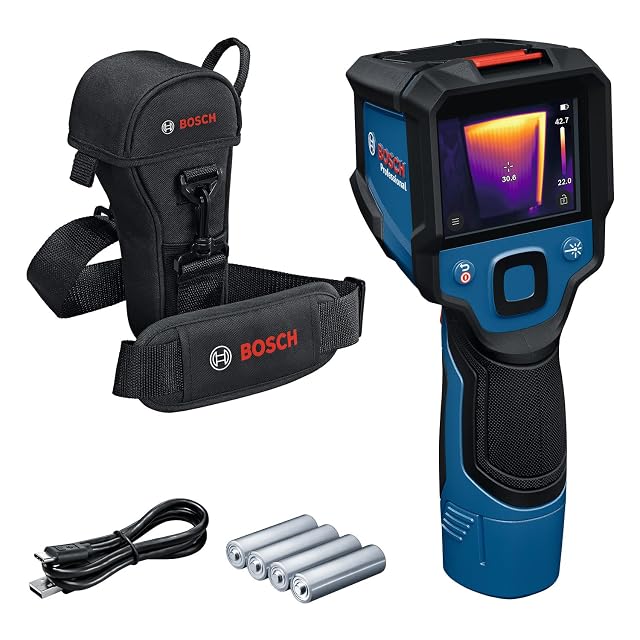
The two resolutions
Almost every thermal camera listing carries both:
- Image resolution — 1440 × 1080, 320 × 240. Produced by combining thermal data with a visual camera and scaling it. It makes the picture legible and adds no measurement.
- Detector resolution — 80 × 60, 160 × 120, 256 × 192. The number of points where temperature is actually measured.
The detector figure is the instrument. Read the smaller number.
What each detector size finds
80 × 60 (4,800 points). Large, high-contrast features: a missing insulation batt, a cold bridge, a blocked radiator, an overheating connection in an open enclosure. This covers most building-fabric work.
160 × 120 (19,200 points). Individual components in a distribution board, individual pipes in a run, a defect small enough to be ambiguous at the lower resolution.
256 × 192 (49,152 points). Detail at distance, and images that survive being cropped for a report.
The other specifications, in order
- Thermal sensitivity in millikelvin, which decides whether a faint difference appears at all.
- Emissivity adjustment, for the same reason it matters on an infrared thermometer — a shiny surface reports a temperature that is not its own.
- Temperature range, which decides whether the camera covers what you are looking at.
- Ruggedness, if the camera goes on a site. One camera in our comparison publishes an ingress and drop rating; the others publish neither.
What no thermal camera does
See through anything. Give a temperature for a surface it cannot see. Diagnose a building. It shows where the surface is warmer or cooler, and that is where you point another instrument.
What gets asked here
How do I spot the detector figure?
It is the smaller number, usually qualified with "thermal", "IR" or "from". If only one large figure is given, look for the detector resolution in the technical data before assuming it is native.
Does a thermal camera see through walls?
No. It sees surface temperature. What appears to be a stud behind plasterboard is a temperature difference at the surface caused by what is behind it — useful, and not the same thing.
Can it diagnose damp?
It can show where a surface is cooler, which evaporating moisture often is. That is a place to look with a moisture meter, not a diagnosis.
Last reviewed 31 August 2026