Skip to content

PeakTech Two-pole voltage tester, CAT III 400 V vs PeakTech Non-contact voltage pen with vibration, 50–1000 V

Which one can tell you a circuit is safe to work on?

Both are PeakTech, both state a CAT rating, and they answer different questions. A two-pole tester loads the circuit, so an induced phantom voltage collapses under it. A contactless pen senses a field through insulation and can never confirm absence of voltage.

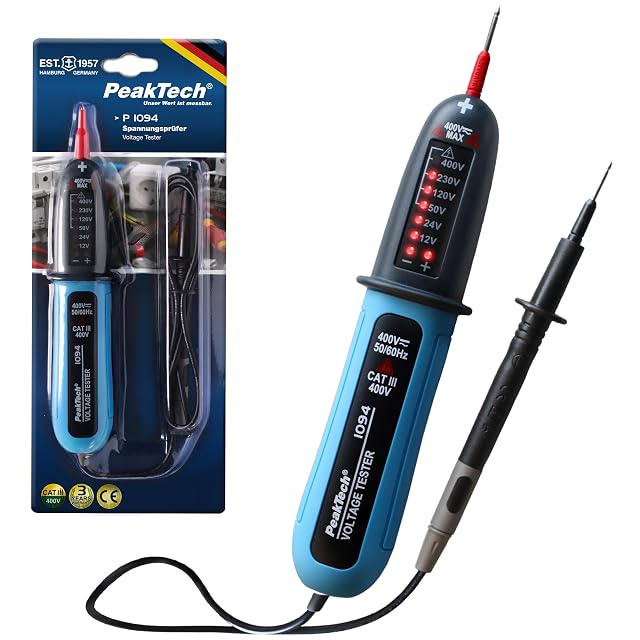
PeakTech P 1094 two-pole voltage tester with its two probes and LED scale

PeakTech Two-pole voltage tester, CAT III 400 V

8.0/10

Wins 4 of 8

Search Amazon

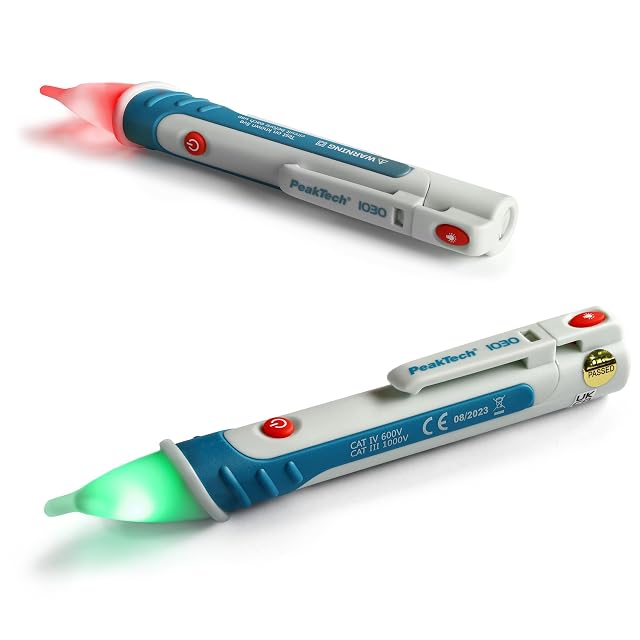
PeakTech P 1030 voltage detector pen with its red LED tip illuminated

PeakTech Non-contact voltage pen with vibration, 50–1000 V

7.8/10

Wins 4 of 8

Check price

Tolerance against tolerance

Compared on Two-pole voltage tester, CAT III 400 V Non-contact voltage pen with vibration, 50–1000 V
Measurement category CAT III 400 V AC/DC CAT III 1000 V
Loads the circuit Yes — two-pole method No — field sensing
Detects phantom voltage correctly Yes, it collapses under load No
Contact required Yes, two points No
Voltage range Stated to 400 V 50 – 1000 V AC
Alerts LED display, audible from 50 V LED, buzzer and vibration
Battery None required Required
Ingress rating IP54 Not published
Listed on amazon.com No Yes

A tick marks the better answer on that line only. Counting ticks does not decide the page — the two verdicts below do, because these products answer different questions.

Which of the two, for which tolerance

PeakTech Two-pole voltage tester, CAT III 400 V

No amazon.com listing was found for this one. We hold references for other markets but none for the United States, so it may not be buyable here — which is the first thing to weigh against anything below.

The two-pole tester is the instrument that answers whether a circuit is dead. It loads what it measures, it needs no battery, and it is the one to confirm with before any work. Follow the manufacturer instructions and the rules that apply where you live.

Buy the PeakTech Non-contact voltage pen with vibration, 50–1000 V

The pen is the fastest first check and the fastest way to trace a cable. It says "there is probably voltage here" and never the opposite, and it belongs at the start of a procedure rather than at the end.

What gets asked here

Do I need both?

Most people who work on electrics carry both, and they are not alternatives. The pen finds which cable is live among six; the two-pole tester confirms that the one you are about to touch is not.

Why does a battery-free tester matter?

Because a battery-powered instrument has a state where it looks dead and the circuit is not. A two-pole tester draws its indication from the circuit itself, so it has no such state.

Each one at length