Skip to content

GERUI Pin moisture meter, seven scales vs VORKIN Ball-sensor moisture meter, 40 mm (1.57 in) depth

Holes and precision, or no marks and depth?

A pin meter measures resistance between two probes at a known depth; a pinless one reads a capacitive field over a volume. The first is more specific and leaves marks; the second surveys a finished wall and averages everything under it, including any metal.

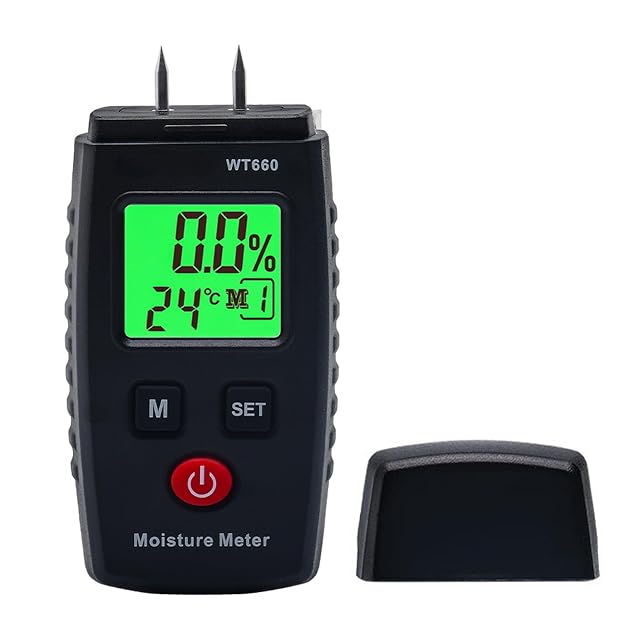
GERUI pin moisture meter with its two probe pins pressed into a timber board

GERUI Pin moisture meter, seven scales

7.5/10

Wins 3 of 7

Search Amazon

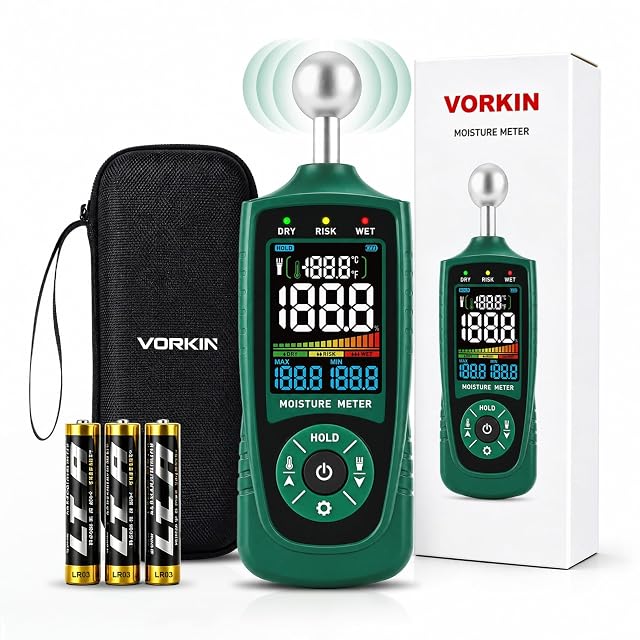
VORKIN moisture meter with its rounded ball sensor against a plastered wall

VORKIN Ball-sensor moisture meter, 40 mm (1.57 in) depth

7.5/10

Wins 4 of 7

Search Amazon

Tolerance against tolerance

Compared on Pin moisture meter, seven scales Ball-sensor moisture meter, 40 mm (1.57 in) depth
Stated accuracy ± 2.0% Not published
Stated resolution 0.10% Not published
Material scales Seven — four wood, three building Not published
Measuring depth Pin depth To 40 mm (1.57 in)
Leaves marks Yes, two pin holes No
Reading bands Numeric only DRY / MID / WET plus a value
Extra functions Temperature measurement Adjustable alarm, hold, max/min, temperature
Listed on amazon.com No No

A tick marks the better answer on that line only. Counting ticks does not decide the page — the two verdicts below do, because these products answer different questions.

Which of the two, for which tolerance

GERUI Pin moisture meter, seven scales

No amazon.com listing was found for this one. We hold references for other markets but none for the United States, so it may not be buyable here — which is the first thing to weigh against anything below.

Buy the pin meter for timber, firewood and anything that will be cut or covered. Seven calibrated scales and two published figures make it the better instrument where holes do not matter.

VORKIN Ball-sensor moisture meter, 40 mm (1.57 in) depth

No amazon.com listing was found for this one. We hold references for other markets but none for the United States, so it may not be buyable here — which is the first thing to weigh against anything below.

Buy the pinless meter for finished walls and floors. A survey means dozens of readings, and dozens of pin holes in a decorated room is not an option — accept that it averages whatever is in the 40 mm (1.57 in) under the sensor.

What gets asked here

Which is more accurate?

The pin meter, on the material it is calibrated for, at the depth its pins reach. The pinless meter is more useful, because it can be used where the pin meter cannot.

Does either diagnose a damp problem?

No. Both find a difference. Rising damp, a leaking pipe, condensation and splash-back all read the same, and separating them belongs to someone qualified to assess the building.

Each one at length