What the figures leave us with Broad coverage from the company that makes the cells. The one open question is whether it loads them.
The tester that empties the drawer of unknown batteries.
What the manufacturer publishes
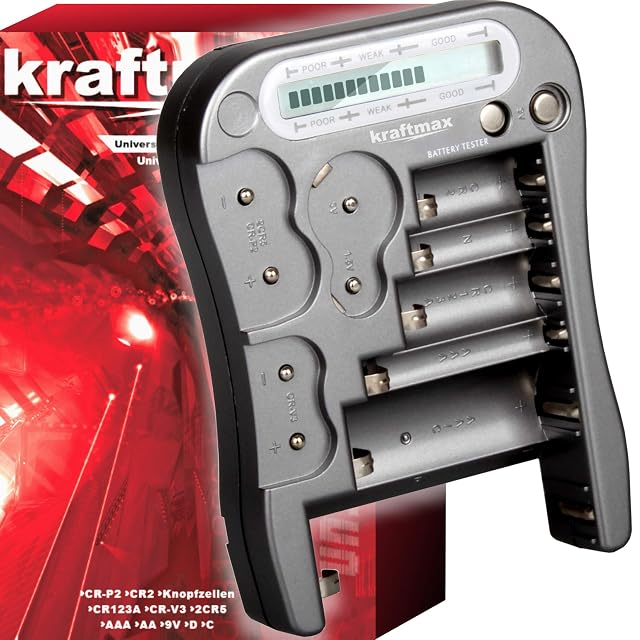
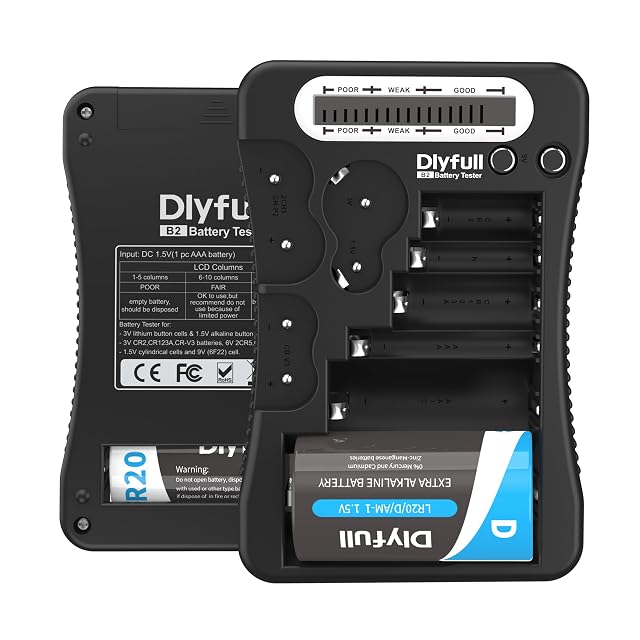
Reliable measurement of battery voltage with the current state of charge shown clearly on an LCD display. Suitability for AA, AAA, C and D cells, 9 V blocks, round cells and button cells. Support for alkaline, NiMH, lithium and zinc-carbon chemistries. Supplied with two LR44 cells.
Chemistry is not a detail
A nickel-metal-hydride cell is fully charged at about 1.2 V; an alkaline cell at that voltage is nearly finished. A tester that treats both the same will consistently condemn good rechargeables. Stating the supported chemistries is therefore a real specification, and this one states four.
The question the listing does not answer
Whether the tester applies a load while it reads. That is the difference between a battery tester and a voltmeter with a cradle, and it is the whole reason this category exists. The listing describes voltage measurement and state of charge without saying how the second is derived.
Availability
No such listing: the American Amazon shop answers the reference with a search box rather than a page.
Read from Keepa on the day this page was last revised; stock and price both move without notice.
What it has, and what it lacks
Strengths
Covers AA, AAA, C, D, 9 V blocks, round cells and button cells
States four chemistries: alkaline, NiMH, lithium and zinc-carbon
Shows the measured voltage as well as a state-of-charge indication
Supplied with the two LR44 cells it needs
Compromises
The listing does not say whether it applies a load while measuring
Needs its own cells, unlike the battery-free testers in other families here
Not found on the American market
Specifications
Amazon reference
B0CY2X32YP (identical on 5 markets)
EAN
4008496073849
Power
AA / AAA / C / D / 9 V / button cells · alkaline, NiMH, lithium, zinc-carbon
What gets asked here
Why not just use a multimeter?
A multimeter reads the open-circuit voltage, which a nearly flat alkaline cell still passes. A battery tester is meant to load the cell while reading it, which is what reveals a cell that collapses under demand. Whether this one does so is not stated in the listing.
Does chemistry matter?
Yes. A healthy NiMH cell sits at 1.2 V and a healthy alkaline at 1.5 V, so a tester that does not know which it is holding will mark good rechargeables as flat. VARTA states support for four chemistries.
What about button cells?
They are included, and they are the cells most often replaced unnecessarily because nobody can tell whether the old one was dead.
Our score
7.2/ 10
Broad coverage from the company that makes the cells. The one open question is whether it loads them.
This one’s price among measuring instruments
A reference exists on these Amazon stores: France, Germany, Italy, Spain, United Kingdom. Listed is not the same as in stock — availability changes daily.
Details checked on August 31, 2026.
Who should pick this one, among measuring instruments
The drawer full of cells nobody can identify as good or flat.
What buyers actually choose
Amazon reports what buyers took in the month before this page was last checked: at least 100.
The figure is a floor, rounded by Amazon, and read through Keepa — it says what buyers picked, not what a maker claims.
Sources
Specifications: the manufacturer sheet for measuring instruments and the matching Amazon product page. Prices and availability: Keepa. Every figure on this page names its source.
6 V and 12 V lead-acid · 100–2000 CCA · battery, starter and charging tests
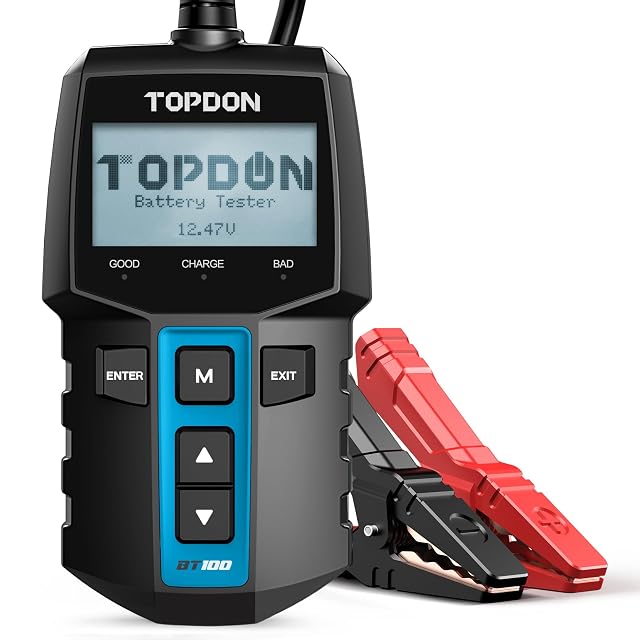
A different instrument from the rest of this hub: a vehicle battery tester using conductance measurement to check a 6 V or 12 V lead-acid battery, its starter draw and its charging system.
Best for: Diagnosing a car that will not start, where the question is the battery, the starter or the alternator.