Skip to content

Keson Pocket rod, 6 ft 6 in, nylon-coated blade

The only rod here that is not telescopic and the only one with a target printed on it — a grade rod that lives in a pocket.

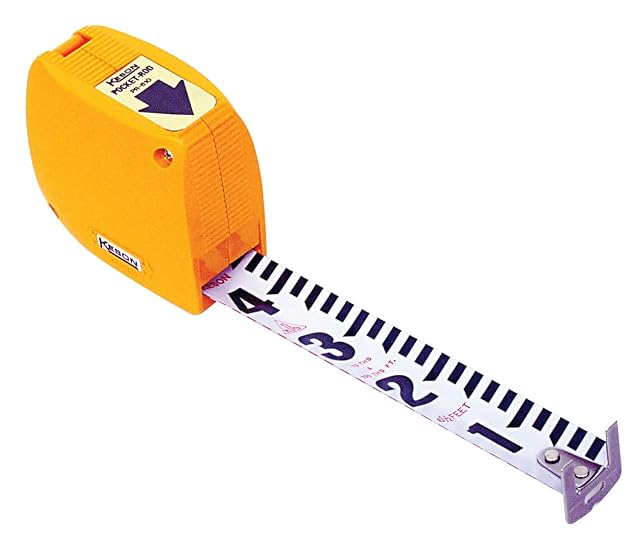
Keson PR610 pocket rod with nylon-coated blade and built-in target

Keson Pocket rod, 6 ft 6 in, nylon-coated blade

The only rod here that is not telescopic and the only one with a target printed on it — a grade rod that lives in a pocket.

Body and fittings
NOT TELESCOPIC. A nylon-coated blade packed in a case like a tape measure, with a heavy-duty end hook. There are no sections and therefore no locking buttons and no creep — which removes the entire failure this shelf's buying tip warns about, at the price of reaching only 6 ft 6 in
Reference and mounting
A BUILT-IN TARGET on two sides, stated. It is the only target on this shelf, and it is the nearest any rod here comes to the receiver question this shelf's introduction asks: a target is the high-contrast pattern an optical level or a receiver is sighted on, and printing one on the blade means nothing has to be clamped to the rod
Scale
Feet and tenths, printed on both sides, stated vertical-reading. Tenths is the engineer's scale, read directly against a level without conversion
Material
A nylon-coated facing, stated not affected by moisture, with a non-glare surface. Non-glare is the detail that matters on a sunlit site: a glossy blade read through a level at twenty meters becomes a white stripe
Stated dimension or range
6 ft 6 in — the shortest on this shelf, where the telescopic rods run 9 to 16 ft. It is also packed, in Keson's words, compact like a tape measure
Supplied
The rod. Stated ideal for foundation work, grading, swimming pools and construction photo records
Amazon reference
B000KL6LNO
EAN
0052837005208
  • No sections, so no creep and nothing to lock
  • A built-in target on two sides, unique on this shelf
  • Six feet six inches, far the shortest reach on this shelf

Best for: Checking a grade without fetching a full-size rod — foundations, pools, drainage and photo records

≈ $26
Check price on Amazon
Specifications

Body and fittings
NOT TELESCOPIC. A nylon-coated blade packed in a case like a tape measure, with a heavy-duty end hook. There are no sections and therefore no locking buttons and no creep — which removes the entire failure this shelf's buying tip warns about, at the price of reaching only 6 ft 6 in
Reference and mounting
A BUILT-IN TARGET on two sides, stated. It is the only target on this shelf, and it is the nearest any rod here comes to the receiver question this shelf's introduction asks: a target is the high-contrast pattern an optical level or a receiver is sighted on, and printing one on the blade means nothing has to be clamped to the rod
Scale
Feet and tenths, printed on both sides, stated vertical-reading. Tenths is the engineer's scale, read directly against a level without conversion
Material
A nylon-coated facing, stated not affected by moisture, with a non-glare surface. Non-glare is the detail that matters on a sunlit site: a glossy blade read through a level at twenty meters becomes a white stripe
Stated dimension or range
6 ft 6 in — the shortest on this shelf, where the telescopic rods run 9 to 16 ft. It is also packed, in Keson's words, compact like a tape measure
Supplied
The rod. Stated ideal for foundation work, grading, swimming pools and construction photo records
Amazon reference
B000KL6LNO
EAN
0052837005208

What the maker puts in writing

  • 6-1/2 foot vertical-reading leveling rod, “packed in a compact like a tape measure”
  • Built-in target on 2 sides
  • Nylon-coated facing not affected by moisture · non-glare surface
  • Easy-to-read numbers printed on both sides, feet and tenths
  • Heavy-duty end hook
  • Ideal for foundation work, grading, swimming pools and construction photo records

Not telescopic. No bubble level. No second inverted face.

No sections, so no creep

Which removes the failure this whole shelf is warned about.

This shelf’s buying tip: a staff whose middle section creeps down under its own weight adds an error you will not notice in the numbers.

A retracting blade has no joints. There is nothing to lock, nothing to settle and nothing to admit grit.

The error does not exist.

The price is reach: six feet six inches, where the telescopic rods here run nine to sixteen.

A target, which is what the instrument looks at

And no other rod on this shelf has one.

An optical level or a laser receiver is aimed at a high-contrast pattern. On a plain numeric rod the person at the instrument reads the numbers directly — which works at ten meters and stops at thirty.

A printed target gives something to sight on and center, with nothing clamped to the rod.

This shelf’s introduction asks whether a receiver clamps to the rod. No rod here answers that. This is the only one that solves the other half.

Non-glare, which matters at twenty meters

A glossy blade read through a level in sun becomes a white stripe.

Keson states a non-glare surface and a nylon coating unaffected by moisture.

Both describe the same thing: a face that is still readable in the conditions a grade is actually checked in.

A blade is not a tube

And at this length it does not need to be.

Held out from a hand, a coated steel blade curves where an extended aluminum tube stands. A blade that kinks is creased for good.

At six feet six, that curve is small. At nine feet it would not be — which is why nobody makes a nine-foot pocket rod.

Availability

On sale at around 26 € on the American Amazon store at the time of checking.

Prices and availability are what Keepa reported on the date this page was updated; both move.

Prices quoted in this text were read on 8 October 2026. The live price is at the top of the page.

What gets asked here

What is a pocket rod for?

Checking a grade without fetching a full-size rod, which Keson says in as many words. A sixteen-foot telescopic staff lives in a van; a pocket rod lives in a bag, so a quick check on a foundation, a pool shell, a drainage fall or a photo record happens instead of being put off. Six feet six inches reaches above head height, which covers almost all of that work. What it cannot do is read to a ceiling, a soffit or a story of scaffolding — which is what the nine- to sixteen-foot rods on this shelf are for.

Why does a built-in target matter?

Because it is what the instrument looks at. An optical level or a laser receiver is aimed at a high-contrast pattern, and on a plain numeric rod the person at the instrument reads the numbers directly — which works at ten meters and stops working at thirty. A printed target gives something to sight on and center, with nothing clamped to the rod. This shelf's introduction asks whether a laser receiver clamps to the rod; no rod on this shelf answers that, and this is the only one that offers the other half of the same problem.

Is a blade as good as a tube?

For the length it covers, yes, and better in one respect. A retracting blade has no joints at all, so none of the creep this shelf's buying tip describes can happen — the error simply does not exist. A coated steel blade also folds flat into a case. What it gives up is stiffness: held out from a hand it curves, where an extended aluminum tube stands, and a blade that kinks is creased for good. At six feet six that curve is small; at nine feet it would not be, which is why nobody makes a nine-foot pocket rod.

All grade rods and measuring staffs