Grade rods
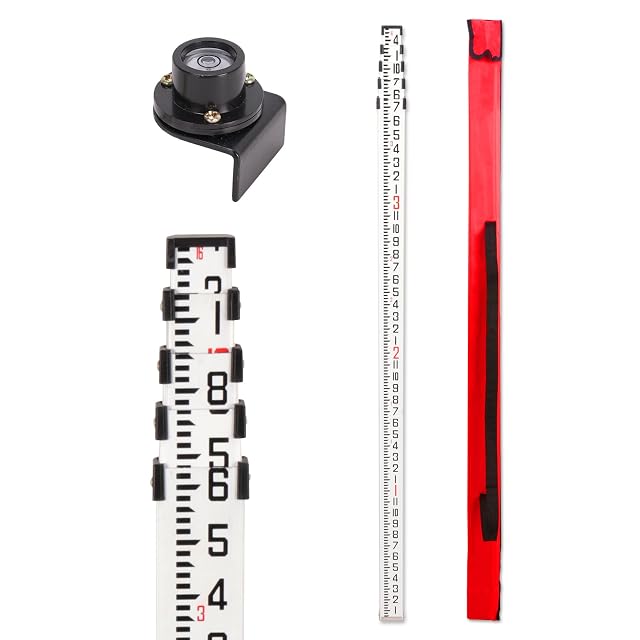
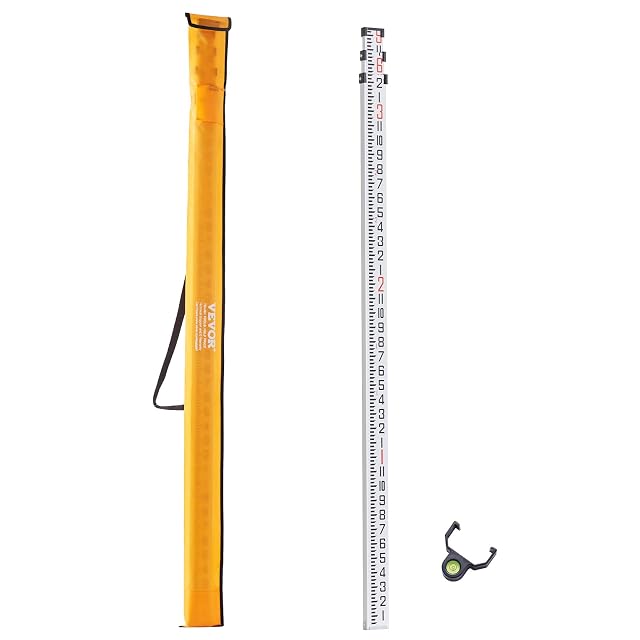
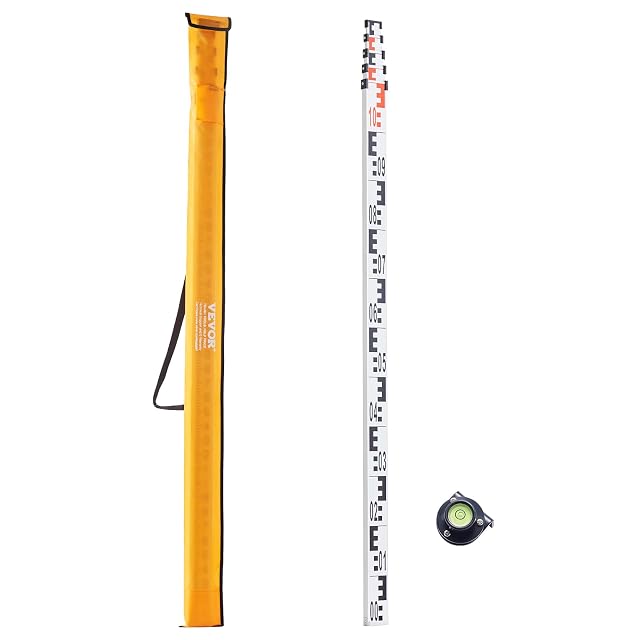
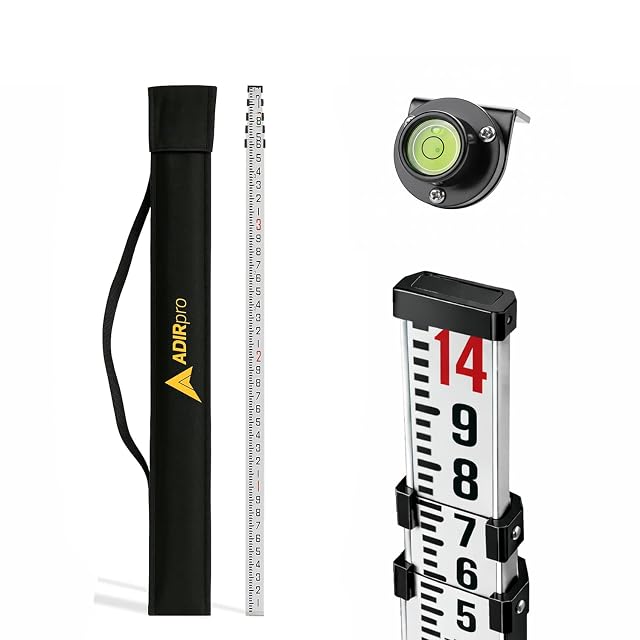
MUTOOP Grade rod, 16 ft, 5 sections, laser-etched scale
The only rod here whose scale is cut into the metal rather than printed on it — and the only one that screws to a tripod.
Specifications
- Scale
- Laser-etched graduations with bold red foot markers, stated weatherproof and corrosion-resistant and stated to resist fading under UV. It is the ONLY etched scale on this shelf — every other rod here has ink printed or imprinted on the anodizing — and on a tool whose scale IS the product that is the difference between a ten-year rod and a five-year one
- Stated dimension or range
- 16 ft extended, collapsing to a compact 42 in. Forty-two inches is the shortest fold of the three 16 ft rods on this shelf, where another folds to 4 ft — half a foot of difference decides whether it goes behind a van seat
- Body and fittings
- Five telescopic sections in aerospace-grade aluminum alloy, stated lightweight and sturdy. No thickness figure is published, where two rods on this shelf give one
- Reference and mounting
- A REINFORCED BASE THREAD, stated to connect to most survey tripod mounts. It is unique on this shelf: every other rod here is held by hand or stood on its foot, and a rod on a tripod is a rod that does not lean while you walk round to read it
- Measuring mode
- An integrated vial bubble level, stated to guarantee vertical accuracy, and a front engineer scale in feet/10ths for laser level compatibility, with a special measuring scale on the back for overall height reading. Whether that back face is inverted or simply in other units is not stated
- Supplied
- The rod, a padded carrying case with a moisture-resistant lining, an adjustable shoulder strap and protective end caps. The end caps are the detail: an open telescopic section fills with grit, and grit is what makes a section stick
- Amazon reference
- B0CHVWT4CF
- EAN
- 0741421829268
What the maker puts in writing
- 16 ft extended, collapses to a compact 42”
- Laser-etched graduations, weatherproof and corrosion-resistant, bold red foot markers, stated to resist fading under UV
- 5 telescopic sections, aerospace-grade aluminum alloy
- Reinforced base thread, connects to most survey tripod mounts
- Integrated vial bubble level · front engineer scale (feet/10ths) · special measuring scale on the back for overall height reading
- Padded carrying case with moisture-resistant lining, adjustable shoulder strap, protective end caps
No thickness figure. Nothing about the locking buttons.
Etched, not printed
Which on this tool is the whole question.
The scale IS the product. A printed scale wears where the rod is gripped and
slides, fades under UV, and lifts where one section rubs the next.
A grade rod with an illegible foot marker is scrap, however straight it is.
Laser etching cuts the graduation into the surface. Wear takes the color fill and
leaves the mark.
MUTOOP is the only maker on this shelf to state etching. The other five publish
ink, some of it called weather-resistant.
A thread in the base
Which nothing else here has, and which lets one person work.
A grade rod is read by somebody twenty meters away, looking through a level or
holding a receiver. A rod held by hand leans — which is the error the bubble vial
on every rod here exists to catch.
On a thread it stands plumb and stays there while you walk to the instrument.
Forty-two inches
Which decides where the rod lives.
Behind a van seat. Diagonally into a boot. Into a site store.
Four feet — the fold of another 16 ft rod on this shelf — does none of those
reliably, and a rod that has to lie across the seats gets left behind.
And end caps
Which sounds like packaging and is not.
An open telescopic section fills with grit. Grit is what makes a section stick,
and a section that sticks is a section that gets forced.
Two things this page does not publish: the aluminum thickness, and anything at
all about the locking buttons — which this shelf’s buying tip says to check first.
Availability
On sale at around 45 € on the American Amazon store at the time of checking.
Prices and availability are what Keepa reported on the date this page was updated; both move.
Prices quoted in this text were read on 8 October 2026. The live price is at the top of the page.
What gets asked here
Why does etched rather than printed matter?
Because the scale is the entire product. A printed scale on anodized aluminum wears at the points the rod is gripped and slides, fades under UV, and lifts where a section rubs its neighbor — and a grade rod with an illegible foot marker is scrap, however straight it still is. Laser etching cuts the graduation into the surface, so wear removes the color fill and leaves the mark. MUTOOP is the only maker on this shelf to state etching; the other five publish printed or imprinted ink, some of it described as weather-resistant.
What is the tripod thread for?
Standing the rod up without a second person. A grade rod is read while somebody looks through a level or holds a receiver twenty meters away, and a rod held by hand leans — which is exactly the error the bubble vial exists to catch and the reason every rod here has one. On a thread, the rod stands plumb and stays there while you walk round to the instrument. It is also what lets one person work alone. No other rod on this shelf publishes a thread.
How much does the fold length matter?
It decides where the rod lives. Forty-two inches goes behind a van seat, into a car boot diagonally, and into most site stores; four feet — the fold of another 16 ft rod on this shelf — does none of those reliably. A rod that has to be laid across the seats gets left behind. Against that, more sections for the same length means more joints, and five sections is the common count here: one rod on this shelf reaches 14 ft on only four.