Error one: the reference edge
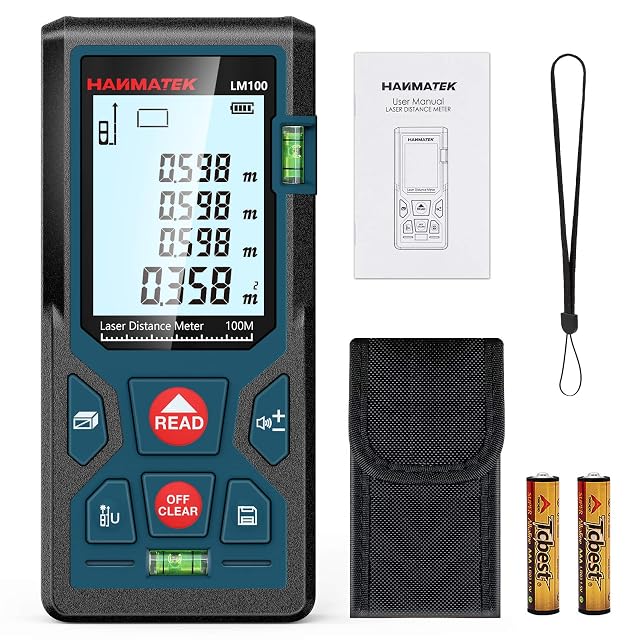
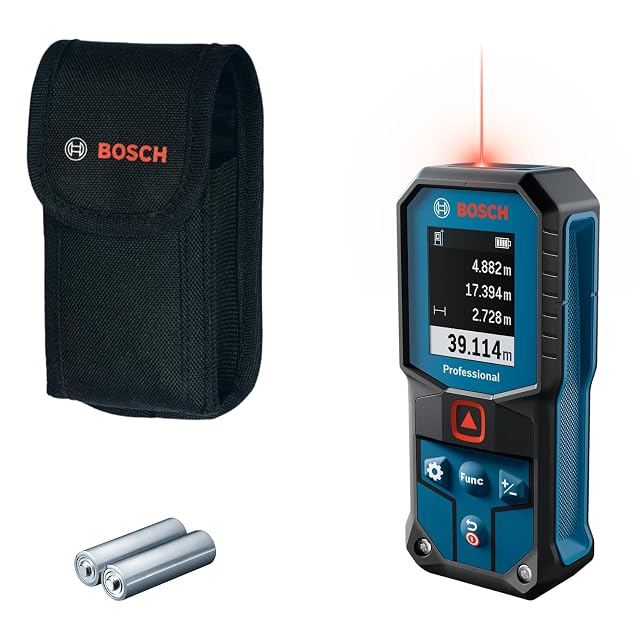
The meter measures from a defined point on its own body — the back of the housing, the front, or a fold-out stop. Most default to the back when switched on.
Press the front of the tool against a wall with the reference set to the back, and every reading is wrong by the length of the tool. Around 10 cm (3.9 in), consistently, in the same direction.
Check the reference indicator before the first measurement of every session.
Error two: the angle
A laser meter measures along its beam. Point it a few degrees off perpendicular and the beam travels further than the wall is away — so the reading is too long, always.
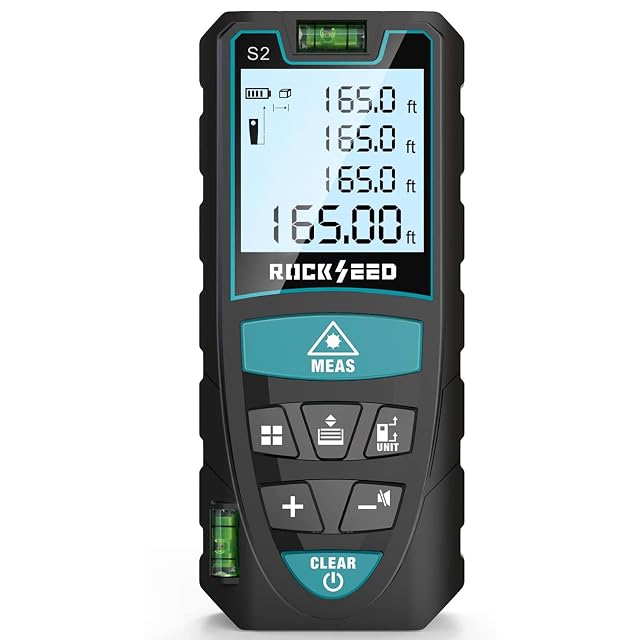
The fix is the two bubble vials some meters build into the body, or the practical version: take three readings, moving slightly between them, and keep the shortest. The shortest is the closest to perpendicular.
Error three: the mode
A meter left in area mode returns a number that is not a distance, and it looks like a distance. This is the commonest reason a shared meter produces a nonsense figure, and it is why single-button meters exist.
Glance at the mode indicator. Every meter has one.
Measuring alone, properly
Set the reference to the back, press the back edge flat against the wall, and press. That is the whole advantage of these instruments over a tape — one person, one end, no hook to catch.
When it will not read
Dark, matt, absorbent, wet or glossy surfaces all return too little useful light. A target plate gives the beam something bright and defined to land on, and at long range outdoors it is often the only way to get a reading at all.
What gets asked here
Which reference edge should I use?
Whichever one you can physically register against the surface — and then check that the tool is actually set to it. Most default to the back on power-up.
Why does my reading get longer when I move?
Because you are off square. The meter measures along its beam, and any angle makes the path longer than the perpendicular distance. It never reads short from this cause, only long.
Can I measure to a dark or shiny surface?
Sometimes not — a dark or absorbent surface returns too little energy, and a shiny one deflects the beam. A target plate solves both, and is often the only way to measure long distances outdoors.
Last reviewed 31 August 2026