Skip to content

Fluke TwistGuard leads with wear indication

The only leads here that show you their own wear — and, at $33.83, one of two sets that never name a category.

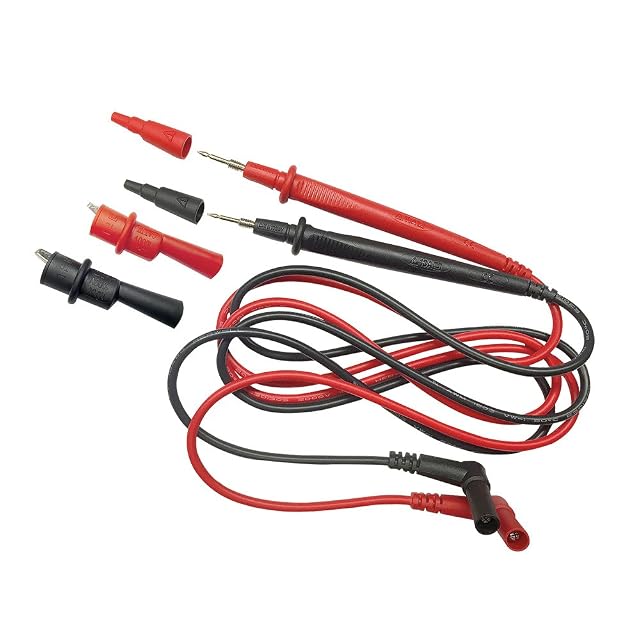
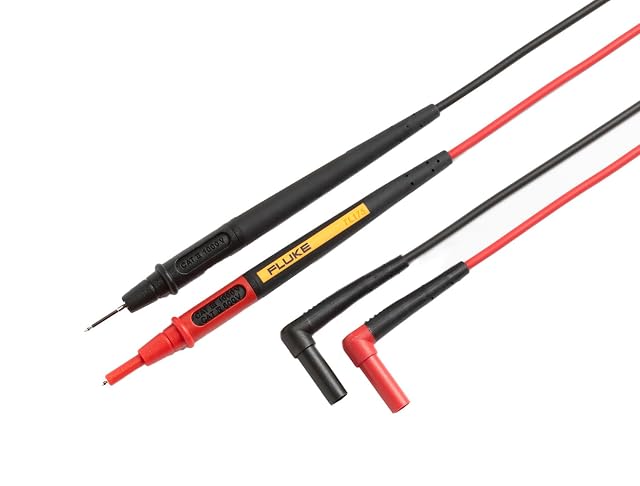
Fluke TL175 TwistGuard test leads with extendable tip shrouds

Fluke TwistGuard leads with wear indication

The only leads here that show you their own wear — and, at $33.83, one of two sets that never name a category.

Stated rating
NO CATEGORY NAMED. The listing says the TwistGuard shroud "meets the highest electrical safety requirements" and never writes CAT II, III or IV, nor a voltage. This shelf's tag line is "the leads carry the same CAT rating as the meter, or they do not", and at $33.83 it is among the most expensive sets here — the Bionso at $29.99 also names no category. Three Klein sets here publish CAT III 1000 V and CAT IV 600 V in a bullet
Insulation
DOUBLE INSULATED SILICONE, and the second layer does a job: "WearGuard lead wire wear indication. Each test lead is covered by two layers of silicone insulation; inner contrasting color is exposed when the leads are nicked, scuffed, or otherwise damaged and in need of replacement." Stated to withstand high temperatures and remain flexible in cold, with no figures. Extra-heavy-duty strain relief at both the probe end and the plug end
Plugs and tips
2 mm (0.08 in) probe tips with a PATENTED TWISTGUARD EXTENDABLE TIP SHROUD: twist the shroud and the amount of exposed metal changes, so the same probe suits a shrouded terminal and an open test point. Removable 4 mm (0.16 in) LANTERN TIPS thread on. The input plugs are "standard 4 mm (0.16 in) SHROUDED banana plugs" — the only listing on this shelf that calls its plugs shrouded, which this shelf's introduction names among its five comparisons
Durability
TESTED BEYOND 30,000 BENDS WITHOUT FAILURE, stated. It is the only durability figure published on this shelf, and it is the right figure for the part this shelf's introduction calls "the part of a meter that gets stood on". The strain relief is called out separately at both ends, which is where a lead actually dies
Length
NOT PUBLISHED. Every other set here that states a length gives one — 91 cm (35.8 in), 103 cm (40.6 in), 104 cm (40.9 in), 109 cm (42.9 in), 125 cm (49.2 in), 1 m (3 ft) — and this one does not, on a page that otherwise publishes more than any of them
Also stated
120 grams. Fluke writes that the TL175 "are the only test leads as tough as your meter", which is a claim about the pairing rather than a specification. The whole listing is built on two named technologies, a bend count and a shroud, and omits the category and the length
Amazon reference
B005CTI592
EAN
0021111461641
  • Two silicone layers, the inner one a wear warning
  • An adjustable tip shroud — no other lead here has one
  • No measurement category anywhere on the page

Best for: Anyone who follows this shelf's buying tip literally, because these leads do the inspection for you

≈ $34
Check price on Amazon
Specifications

Stated rating
NO CATEGORY NAMED. The listing says the TwistGuard shroud "meets the highest electrical safety requirements" and never writes CAT II, III or IV, nor a voltage. This shelf's tag line is "the leads carry the same CAT rating as the meter, or they do not", and at $33.83 it is among the most expensive sets here — the Bionso at $29.99 also names no category. Three Klein sets here publish CAT III 1000 V and CAT IV 600 V in a bullet
Insulation
DOUBLE INSULATED SILICONE, and the second layer does a job: "WearGuard lead wire wear indication. Each test lead is covered by two layers of silicone insulation; inner contrasting color is exposed when the leads are nicked, scuffed, or otherwise damaged and in need of replacement." Stated to withstand high temperatures and remain flexible in cold, with no figures. Extra-heavy-duty strain relief at both the probe end and the plug end
Plugs and tips
2 mm (0.08 in) probe tips with a PATENTED TWISTGUARD EXTENDABLE TIP SHROUD: twist the shroud and the amount of exposed metal changes, so the same probe suits a shrouded terminal and an open test point. Removable 4 mm (0.16 in) LANTERN TIPS thread on. The input plugs are "standard 4 mm (0.16 in) SHROUDED banana plugs" — the only listing on this shelf that calls its plugs shrouded, which this shelf's introduction names among its five comparisons
Durability
TESTED BEYOND 30,000 BENDS WITHOUT FAILURE, stated. It is the only durability figure published on this shelf, and it is the right figure for the part this shelf's introduction calls "the part of a meter that gets stood on". The strain relief is called out separately at both ends, which is where a lead actually dies
Length
NOT PUBLISHED. Every other set here that states a length gives one — 91 cm (35.8 in), 103 cm (40.6 in), 104 cm (40.9 in), 109 cm (42.9 in), 125 cm (49.2 in), 1 m (3 ft) — and this one does not, on a page that otherwise publishes more than any of them
Also stated
120 grams. Fluke writes that the TL175 "are the only test leads as tough as your meter", which is a claim about the pairing rather than a specification. The whole listing is built on two named technologies, a bend count and a shroud, and omits the category and the length
Amazon reference
B005CTI592
EAN
0021111461641

What the maker puts in writing

  • “Patented TwistGuard extendable tip shroud meets the highest electrical safety requirements to reduce tip exposure”
  • “New WearGuard lead wire wear indication. Each test lead is covered by two layers of silicone insulation; inner contrasting color is exposed when the leads are nicked, scuffed, or otherwise damaged”
  • “Double insulated silicone leads … withstand high temperatures and remain flexible in cold temperatures”
  • “Extra-heavy duty strain relief on both probe-end and plug-end, tested beyond 30, 000 bends without failure”
  • “compatible with all instruments that accept standard 4 mm (0.16 in) shrouded banana plugs”
  • “Includes removable 4mm (0.16 in) lantern tips that thread onto the lead tip” · 2 mm (0.08 in) tips · 120 g (4.2 oz) · $33.83

NO measurement category. NO voltage. NO length.

They show you their own wear

Which is this shelf’s buying tip, done for you.

“Inspect the insulation along its whole length before every use on a live circuit.”

Correct, and nobody does it properly.

Two layers of silicone in different colors. A nick, a scuff or a crush that reaches the inner layer shows as a stripe of the wrong color.

You see it while coiling them up, not with a hand on the cable.

Nothing else on this shelf does anything comparable.

The tip exposure is adjustable

A long thin tip reaches behind a connector and into a dense board.

A long thin tip is also what bridges two adjacent live terminals when your hand moves.

Fixed leads make you choose once, at purchase. This one twists: shroud out for busbars, shroud back for fine work.

The only adjustable tip on this shelf.

Thirty thousand bends

The only durability figure published here, and the right one for the part the hub calls the part of a meter that gets stood on.

With the strain relief named separately at BOTH ends — probe end and plug end — which is where a lead actually dies.

And then it never says CAT

At $33.83.

“Meets the highest electrical safety requirements.”

That is a claim. CAT III 1000 V is a category.

“The leads carry the same CAT rating as the meter, or they do not.”

Three Klein sets on this shelf print the category in a bullet, at twenty dollars. This one, and the twenty-five-piece Bionso, print none.

Read what is on the lead body, and follow the instructions supplied with your instrument.

Nor a length

Every other set here that gives one: 91 cm (35.8 in), 103, 104, 109, 125, and a meter.

This page publishes a bend count, a patent, two named technologies and a plug standard — and not how long the leads are.

Availability

On sale at around 34 € on the American Amazon store at the time of checking.

Prices and availability are what Keepa reported on the date this page was updated; both move.

Prices quoted in this text were read on 8 October 2026. The live price is at the top of the page.

What gets asked here

Why do these not state a CAT rating?

Nothing on the listing explains it, and it is the question to settle before buying. What the page says is that the TwistGuard shroud "meets the highest electrical safety requirements", which is a claim and not a category. This shelf's introduction is specific: the rated pair is the lower of meter and leads, so leads with no published category give you a meter with no published category. Three Klein sets on this shelf print CAT III 1000 V and CAT IV 600 V in a bullet at twenty dollars. Read what is printed on the lead body itself, and follow the instructions supplied with your instrument.

What does the wear indication actually do?

It answers this shelf's buying tip without you having to be careful. The tip says to inspect the insulation along its whole length before every use on a live circuit — which is correct and which nobody does properly. These leads have two silicone layers in different colors, so a nick, a scuff or a crush that reaches the inner layer shows as a stripe of the wrong color. You see the damage while coiling them rather than discovering it with a hand on the cable. No other lead on this shelf does anything comparable.

What is the shroud for?

Controlling how much bare metal is exposed. A long thin tip reaches into a dense board or behind a connector; a long thin tip is also what bridges two adjacent live terminals when your hand moves. Fixed-tip leads force you to choose once, at purchase. The TwistGuard sleeve twists out to cover most of the tip for work on exposed busbars and twists back for fine probing, so the same pair does both. It is the only adjustable tip on this shelf, and the reason the rest of the specification is unusually detailed about safety while never naming a category.

Instruments this fits

All test leads and probes